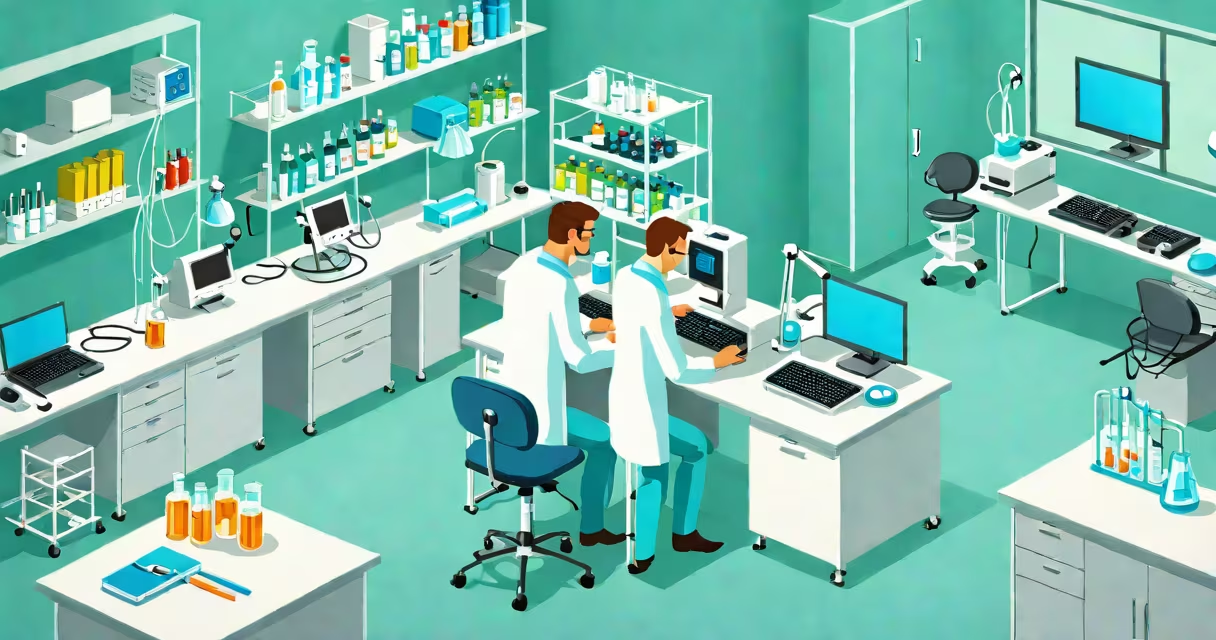
A bachelor of science in medical technology is an undergraduate degree program that trains students to perform diagnostic testing in clinical laboratories, interpret results, and support patient care through precise analysis of blood, tissue, and bodily fluids. The program combines classroom instruction in biology, chemistry, and medical ethics with hands-on training in laboratory techniques.
Graduates typically work as medical laboratory scientists (MLS), performing tests such as complete blood counts, urinalysis, microbiology cultures, and molecular diagnostics. These professionals operate automated analyzers, maintain quality control standards, and report findings to physicians. The degree is distinct from associate-level medical laboratory technician roles, which require less training and have limited scope in test interpretation.
The U.S. Bureau of Labor Statistics reports that medical laboratory scientists earn a median annual wage of $58,000, with employment projected to grow 7% from 2022 to 2032-faster than average for all occupations. This growth is driven by aging populations, increased demand for personalized medicine, and rising chronic disease rates requiring ongoing lab monitoring.
Students in a bachelor of science in medical technology program complete coursework in human anatomy, biochemistry, hematology, immunology, and microbiology. Core classes include clinical laboratory management, laboratory safety protocols, and regulatory compliance under CLIA (Clinical Laboratory Improvement Amendments).
Laboratory rotations are a central component. Students spend 600-1,000 hours in hospital labs or reference laboratories, gaining experience with instruments like flow cytometers, spectrophotometers, and automated coagulation analyzers. These rotations ensure graduates can perform complex assays under time-sensitive conditions.
For example, a student might analyze a patient's blood sample showing elevated troponin levels. They would confirm the result using a calibrated immunoassay machine, verify instrument calibration logs, and report the finding to the attending physician within four hours-critical for diagnosing acute myocardial infarction.
Accreditation by the National Accrediting Agency for Clinical Laboratory Sciences (NAACLS) is mandatory for programs leading to certification eligibility. Only NAACLS-accredited programs allow graduates to sit for the American Society for Clinical Pathology (ASCP) Board of Certification exam.
Curricula are structured around six core domains:
Most programs take four years to complete full-time. Some schools offer accelerated tracks or hybrid formats combining online theory with on-site lab sessions. Students must complete a capstone project involving a real-world lab process improvement, such as reducing turnaround time for critical tests by 25% through workflow redesign.
Many confuse a bachelor of science in medical technology with a bachelor of science in nursing or a medical assistant certificate. Unlike nurses, who focus on direct patient care, MLS professionals work behind the scenes. Their role is diagnostic-not therapeutic.
Another misconception is that the degree leads directly to clinical practice. While graduates enter labs immediately after certification, they do not diagnose diseases. That responsibility lies with physicians. Medical technologists provide the data that informs diagnoses and treatment plans.
A lesser-known fact: the ASCP board exam requires passing scores in both written and practical components. The practical exam includes identifying pathogens under a microscope, calibrating pipettes, and troubleshooting machine errors-all skills practiced during NAACLS-approved training.
Hospitals, reference labs, public health departments, and pharmaceutical research facilities hire medical laboratory scientists. In large urban hospitals, MLS staff process over 1,500 daily tests, including rapid antigen screens during flu season or PCR-based SARS-CoV-2 testing during outbreaks.
During the 2020-2022 pandemic, medical technologists processed millions of viral RNA tests across the U.S., often working 12-hour shifts with minimal staffing. The CDC reported that over 90% of confirmed cases were identified through lab testing conducted by trained MLS personnel.
Some graduates pursue advanced roles in forensic toxicology, blood banking, or research. Others move into sales or technical support for diagnostic equipment manufacturers, using their deep understanding of instrumentation and workflows.
While similar in scope, degrees in related fields differ in focus and outcome:
| Program | Focus | Typical Career Path | Required Certification |
|---|---|---|---|
| Bachelor of Science in Medical Technology | Diagnostic testing, clinical lab operations | Medical laboratory scientist, lab supervisor | ASCP Board of Certification (MLS) |
| Bachelor of Science in Engineering Technology | Equipment design, maintenance, automation | Lab equipment technician, systems analyst | None required; some employers prefer certifications like CompTIA A+ |
| Bachelor in Sports Science | Exercise physiology, athletic performance | Sports physiologist, fitness trainer | NSCA-CPT or ACSM-certified |
| Bachelor of Applied Technology | Technology implementation in industry | IT support, technical project coordinator | Vendor-specific credentials (e.g., Cisco, Microsoft) |
Each degree serves a different function. A bachelor of science in medical technology focuses on analytical precision and clinical relevance. Its graduates are essential in detecting infections, monitoring cancer progression, and guiding treatment decisions.
I once observed a student in a NAACLS-accredited program correctly identify a rare fungal infection in a blood culture-something a less-trained technician might have missed. The correct identification led to a change in antifungal therapy, preventing further complications. That moment highlighted how specialized training translates into real patient outcomes.
Graduates of a bachelor of science in medical technology program are qualified to work in accredited laboratories across the United States. They must pass the ASCP certification exam and meet state licensing requirements, which vary by jurisdiction. In California, for example, licensure requires 1,000 hours of supervised clinical experience and a passing score on the national exam.
A bachelor of science in medical technology is a rigorous, clinically grounded degree that prepares individuals for high-impact roles in healthcare diagnostics. It is not a stepping stone to medicine or nursing-it is a standalone profession with clear responsibilities, standardized training, and measurable impact on patient care.