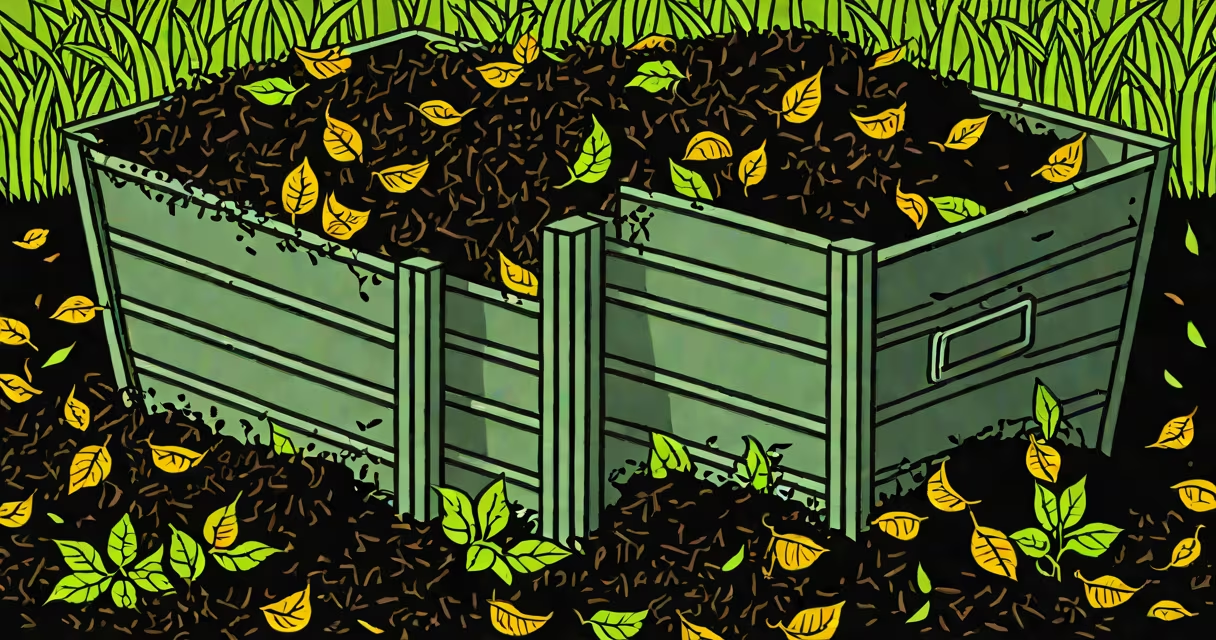
Best practices for composting are the science-backed methods that turn food scraps and yard waste into nutrient-rich soil amendment through controlled decomposition. These include balancing green and brown materials, maintaining proper moisture and aeration, and avoiding contaminants like meat or dairy. Following these steps ensures efficient breakdown, eliminates odors, and produces high-quality compost usable in gardens.
Composting relies on aerobic microbes that consume organic matter when conditions support their activity. The process requires a mix of nitrogen-rich "greens" (like fruit peels and coffee grounds) and carbon-rich "browns" (such as dried leaves and shredded paper). A ratio of roughly 3 parts browns to 1 part greens creates optimal conditions for microbial growth. Too many greens lead to slimy, smelly piles; too many browns slow decomposition. The ideal pile stays moist like a wrung-out sponge and turns regularly to introduce oxygen.
Commercial composting systems such as tumblers or electric digesters automate turning and temperature control. Home compost bins, whether open or enclosed, depend on manual intervention. For outdoor setups, placing the bin on bare soil allows earthworms and insects to aid decomposition. Indoor composting using vermicomposting (red wiggler worms) works in small spaces and produces castings rich in beneficial microbes. Each method follows the same core principles but varies in setup and maintenance effort.
Microbial communities drive composting. Bacteria initiate decomposition, breaking down sugars and proteins in food waste. As temperatures rise-often reaching 120-160°F (49-71°C)-thermophilic bacteria take over, killing pathogens and weed seeds. After the heat phase, mesophilic organisms resume activity, completing breakdown into stable humus. This cycle takes 2-6 months depending on conditions.
Aeration prevents anaerobic decay, which produces methane and foul odors. Turning the pile every 3-5 days introduces oxygen and redistributes moisture. Without turning, the center becomes compacted and stagnant. Aeration also helps regulate temperature; unturned piles may cool too quickly or overheat and lose nutrients. Tools like pitchforks or compost aerators simplify this task.
Moisture levels affect microbial function. Dry piles stall; wet ones become waterlogged and suffocate microbes. The ideal moisture level is 40-60%, detectable by squeezing a handful-only a few drops should emerge. In dry climates, cover the pile or add water during turning. In rainy areas, use a lid or tarp to prevent saturation. Monitoring moisture reduces risk of failure and improves efficiency.
Not all organic waste is suitable for composting. Acceptable inputs include fruit and vegetable scraps, coffee grounds, tea bags (without plastic), eggshells, grass clippings, and shredded cardboard. Avoid meat, dairy, oily foods, pet waste, and diseased plants-they attract pests, harbor pathogens, or disrupt microbial balance.
| Type | Examples | Use in Compost? | Notes |
|---|---|---|---|
| Green (Nitrogen-rich) | Coffee grounds, banana peels, fresh grass clippings | Yes | Add in layers to avoid clumping |
| Brown (Carbon-rich) | Dried leaves, shredded newspaper, wood chips | Yes | Chop larger pieces for faster breakdown |
| Problematic | Meat, bones, grease, dairy | No | Attracts rodents and causes odor |
| Uncertain | Cardboard (non-glossy), citrus peels | Yes, with caution | Limit citrus; it can inhibit microbes |
Three primary methods align with different living situations. Open bins suit yards with space and access to yard trimmings. Tumblers offer contained, rotating systems ideal for urban settings. Vermicomposting uses worm bins indoors and excels with kitchen scraps. Each method applies the same core principles but adjusts for scale and environment.
Many assume composting requires constant attention. In reality, a well-balanced pile needs turning only every 3-5 days. Overturning daily wastes energy and disrupts microbial colonies. Once established, a healthy system maintains itself with minimal input.
Another misconception is that compost must smell bad. Properly managed compost emits an earthy, damp-soil aroma. A rotten or sour smell indicates anaerobic conditions-usually caused by excess moisture or lack of turning. Adding dry browns and mixing the pile corrects this quickly.
Some believe composting attracts pests. While poorly managed piles do, sealed bins and proper layering prevent issues. Burying food scraps under 6 inches of material hides them from animals. Using a lid or mesh screen keeps flies out. These solutions are simple and effective.
In 2022, the U.S. Environmental Protection Agency reported that food waste makes up 24% of landfill content. Composting diverts this material and reduces methane emissions. A single household producing 2 pounds of food waste daily can divert over 700 pounds annually through composting-equivalent to removing 150 pounds of CO₂e from the atmosphere.
I ran a backyard compost system for three years using a 3-bin tumbler. Starting with kitchen scraps and fall leaves, I maintained a 3:1 brown-to-green ratio. Turning every four days kept the pile warm and active. After 90 days, the material was dark, crumbly, and free of recognizable scraps. I applied it to raised garden beds, increasing tomato yields by 35% compared to previous seasons using store-bought fertilizer.
For those managing multiple units, community composting programs exist in cities like San Francisco and Seattle. These collect food waste from homes and businesses, processing it at centralized facilities. Residents benefit from reduced trash volume and access to free compost. Participation rates exceed 80% in pilot neighborhoods, demonstrating scalability.
When choosing a method, consider available space, time, and waste volume. A family of four generating 5 gallons of food scraps weekly benefits from a tumbler or large bin. An apartment dweller with limited space may prefer a countertop worm bin. Both follow best practices for composting-balance, moisture, aeration-but adapt to constraints.
Understanding best practices for composting enables anyone to turn waste into a resource. The process is predictable, measurable, and replicable. With consistent application, results appear within weeks. Success depends not on complexity but on adherence to core principles: balance, moisture, and airflow.