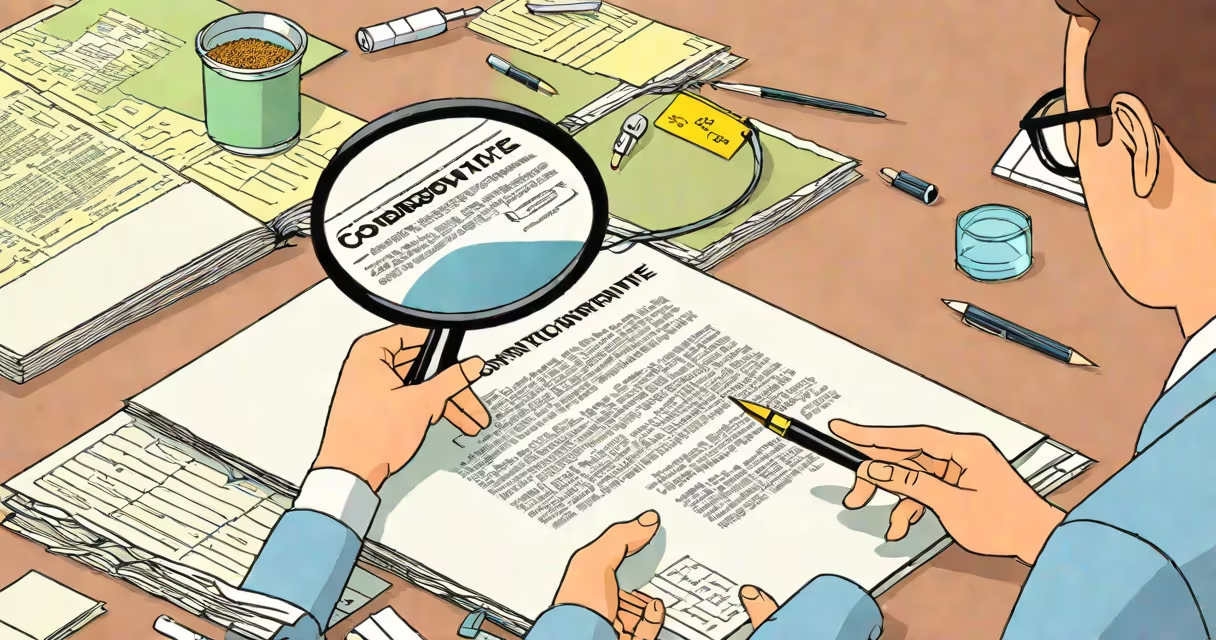
To corroborate is to provide supporting evidence or testimony that confirms the truth of a claim, statement, or event. It strengthens credibility by aligning multiple independent sources or pieces of data.
Corroboration occurs when two or more distinct accounts, physical traces, or records agree on key details. This agreement reduces the likelihood that a single source is mistaken or deceptive. For example, if two eyewitnesses describe the same suspect's clothing and actions during a robbery, their statements corroborate each other.
The term originates from Latin *corroborare*, meaning "to strengthen." It is widely used in law, science, journalism, and personal communication. In court, a witness's testimony may be dismissed unless it is corroborated by physical evidence or another witness. In research, findings gain weight when replicated across studies.
Corroboration functions by cross-checking information across independent channels. Independent sources reduce bias and error. A single piece of evidence may be misleading due to misinterpretation, faulty memory, or intentional deception. Multiple consistent sources lower uncertainty.
For instance, in a criminal investigation, a suspect's alibi is weak if only they claim to have been elsewhere. But if security footage shows them at a different location, and two coworkers confirm they were absent, the alibi is corroborated. The convergence of video, testimony, and timing creates a stronger case than any one element alone.
Corroboration does not prove absolute truth-it increases confidence. Even strong corroboration cannot eliminate all doubt, especially when sources are flawed or manipulated. However, it is essential for distinguishing credible claims from speculation.
Corroboration appears in several forms depending on context:
| Type | Source | Example |
|---|---|---|
| Testimonial | Witness statements | Two people report seeing the same car at a scene. |
| Physical | Forensic evidence | Fingerprints match a suspect's known prints. |
| Documentary | Records, logs, or metadata | Email timestamps align with a meeting time. |
| Scientific | Reproducible experiments | Multiple labs observe the same chemical reaction. |
Each type relies on independence. If two witnesses heard the same person speak but were standing together, their accounts aren't truly independent. True corroboration requires separation in time, space, or method.
A common mistake is equating repetition with corroboration. Saying something twice doesn't confirm it. Repeating a false story doesn't make it true. Corroboration demands alignment between unrelated sources.
Legal systems depend heavily on corroboration. In U.S. federal courts, prosecutors must present evidence beyond a single witness's word to secure a conviction. The Supreme Court ruled in *United States v. Guarino* (1969) that a defendant's conviction based solely on one witness's testimony violates due process if no independent proof exists.
Scientific research uses corroboration through replication. A study claiming a drug reduces cancer rates must be repeated by other teams. The National Institutes of Health (NIH) states that reproducibility is a core principle of valid science. Without it, results are treated as preliminary.
In journalism, reporters verify facts using multiple sources. The Associated Press mandates that major stories require at least two independent confirmations before publication. This standard prevents misinformation from spreading.
Even in daily life, people use corroboration. You might ask a friend to confirm a meeting time, then check your calendar. If both match, the plan is corroborated. If only one source agrees, uncertainty remains.
People often confuse corroboration with confirmation bias. Confirmation bias occurs when someone seeks or interprets evidence that supports a belief while ignoring contradictory data. Corroboration is the opposite-it requires seeking agreement across diverse sources, not just reinforcing existing views.
Another error is assuming that any supporting detail counts as corroboration. A photo of a person near a crime scene doesn't corroborate guilt unless it includes time, location, and context. A timestamped image showing the individual at the site during the incident period adds value. A vague image taken days later does not.
One non-obvious fact: Corroboration can fail if sources are compromised. In 2018, a high-profile court case collapsed when two police officers' testimonies were found to be coordinated after reviewing notes together. Their accounts aligned too closely, violating independence. Courts now require that witness interviews occur separately to prevent collusion.
Before the 2003 invasion of Iraq, U.S. intelligence claimed Saddam Hussein possessed weapons of mass destruction. The primary source was a single informant, "Curveball," whose identity was unknown. No independent verification existed.
Later investigations revealed Curveball had lied repeatedly. His story lacked corroboration from satellite imagery, defector reports, or inspections. The lack of independent evidence meant the claim wasn't substantiated. The failure to demand corroboration contributed to a war based on unverified assertions.
This case illustrates how absence of corroboration leads to flawed decisions-even at national levels. It underscores that even useful institutions must follow basic standards of evidence.
Corroboration strengthens trust but doesn't guarantee accuracy. False positives can occur when multiple sources share the same error. For example, if two lab technicians misread the same instrument due to poor calibration, their results agree-but are still wrong.
Also, corroboration can be faked. In 2019, a university researcher fabricated data across three papers. Colleagues reviewed each study independently and found similar results-until deeper analysis exposed inconsistencies. The initial corroboration masked fraud because reviewers didn't examine raw data.
Therefore, corroboration must be paired with scrutiny. Independent verification is not enough-sources must be evaluated for reliability, access, and potential bias.
When evaluating a claim, ask: Are the sources independent? Do they use different methods or data? Is there a pattern of agreement across time and place? If yes, the claim is more likely to be accurate.