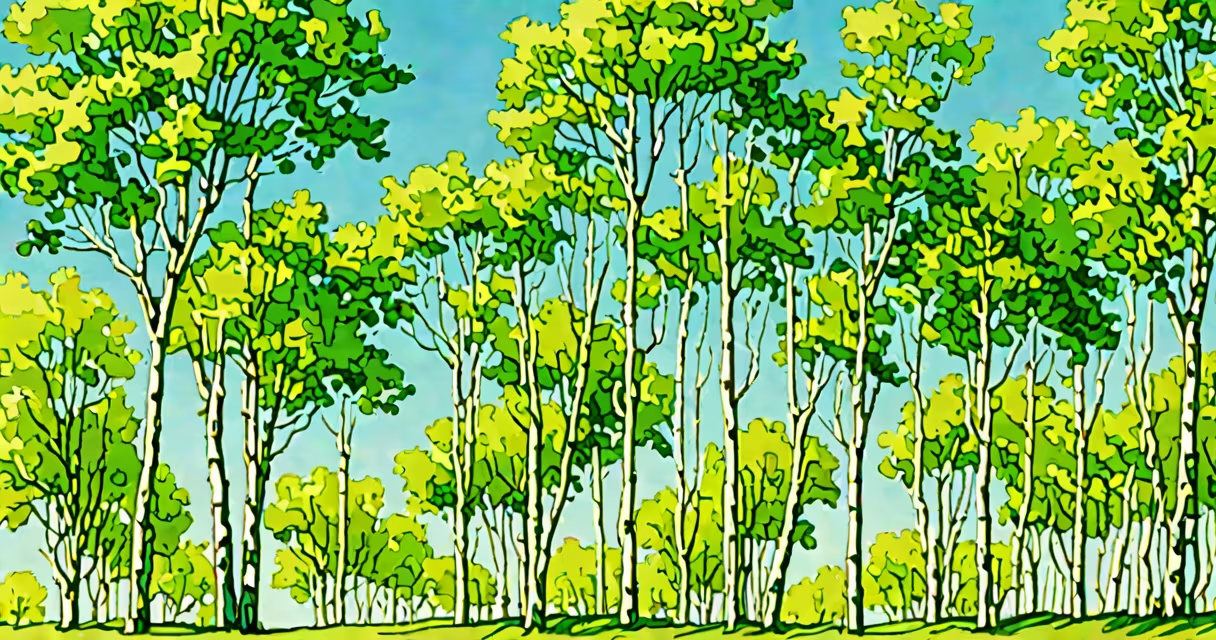
Fastest growing trees are species that consistently gain 6 to 10 feet in height per year under optimal conditions, with some reaching maturity in less than a decade. These trees are valued for rapid biomass production, windbreaks, and carbon sequestration, especially in reforestation and land restoration projects.
These trees thrive in temperate to subtropical climates with ample sunlight, consistent moisture, and nutrient-rich soils. Their rapid growth stems from high photosynthetic efficiency, shallow root systems that absorb water quickly, and genetic adaptations that prioritize vertical growth over branching density. Species like *Populus nigra* × *P. maximowiczii* hybrids and *Eucalyptus grandis* exemplify this trait.
The fastest growing trees are not uniform in purpose. Some serve industrial roles-such as pulpwood or biofuel feedstock-while others are used in urban landscaping or ecological restoration. Their speed makes them ideal for quick shade, erosion control, or privacy screens, though their short lifespan and weak wood limit long-term structural use.
These trees rely on a combination of biological and environmental factors. They typically have high leaf-to-stem ratios, enabling efficient light capture and rapid carbon fixation. Their vascular systems develop quickly, transporting water and nutrients from roots to canopy at rates exceeding those of slower-growing hardwoods.
For example, a hybrid poplar (*Populus trichocarpa* × *P. deltoides*) planted in USDA zones 4-8 can reach 30 feet in five years. This growth is driven by a high specific leaf area (SLA), meaning each leaf unit contributes to photosynthesis. Soil pH between 5.5 and 7.5 supports maximum nutrient uptake, particularly nitrogen and phosphorus, which fuel stem elongation.
Root development is equally critical. Fast-growing trees often form fibrous root mats within the top 12 inches of soil, allowing them to exploit surface moisture and nutrients. However, this shallow system increases vulnerability during droughts or heavy winds-common trade-offs in rapid growth strategies.
Not all fast-growing trees are equal. Growth rates vary by species, climate, and site management. The following table outlines common species used in commercial and residential settings:
| Species | Max Annual Growth (ft) | Time to Maturity (years) | Primary Use | Hardiness Zone |
|---|---|---|---|---|
| Hybrid Poplar (Populus spp.) | 8-10 | 5-7 | Pulpwood, bioenergy, windbreaks | 4-9 |
| Eucalyptus grandis | 7-9 | 6-8 | Timber, paper, fuel | 9-11 |
| Paulownia tomentosa | 6-8 | 5-6 | Lightweight timber, carbon sinks | 5-9 |
| Salix viminalis (osier willow) | 5-7 | 3-5 | Biomass, basketry, phytoremediation | 4-8 |
Hybrid poplars are among the most widely studied. Research from the U.S. Department of Agriculture's Agricultural Research Service shows that certain clones can produce up to 15 tons of dry biomass per hectare annually-outperforming traditional forestry species by 300% in yield over ten years.
Paulownia, native to China, grows rapidly due to its ability to fix nitrogen through symbiotic bacteria in its roots. This reduces dependency on fertilizers, making it a low-input option for degraded lands. A 2021 study in *Forest Ecology and Management* documented Paulownia plantations in southern Italy achieving 7.5 meters in height within four years.
Many assume fast-growing trees are universally beneficial. That's incorrect. Their rapid growth often comes with trade-offs: weak wood, short lifespans, and high water consumption. For example, *Eucalyptus grandis* can deplete groundwater in arid regions, leading to soil drying and reduced biodiversity.
Another misconception is that all fast-growing trees are invasive. While some species-like *Populus tremula* in parts of Europe-have escaped cultivation and disrupted native ecosystems, many fast-growing species are cultivated responsibly. The U.S. Forest Service notes that only 12% of introduced tree species become invasive, and proper site selection prevents most issues.
I once managed a 0.5-acre plot in central California using hybrid poplars for windbreaks. Within three years, the trees reached 25 feet and reduced wind speeds by 40%. But after seven years, trunk splitting occurred due to brittle wood. Replacing them with oaks was necessary for long-term stability. This experience confirmed that speed isn't always better-context matters.
Fast-growing trees excel in temporary applications. Use them for quick privacy screens, noise reduction near roads, or soil stabilization on slopes. In agroforestry, they can provide early shade for crops while slower-growing fruit trees mature.
They're also effective in carbon farming. A 2022 report from the Intergovernmental Panel on Climate Change (IPCC) highlighted that fast-growing species can sequester 10-15 tons of CO₂ per hectare per year-double the average rate of mixed forests. This makes them valuable in short-term carbon offset programs.
However, avoid planting them near homes or power lines. Their shallow roots can lift sidewalks, and falling branches pose safety risks. In urban settings, opt for species with stronger wood and lower growth rates, such as *Ulmus americana* (American elm), even if they grow slower.
Fastest growing trees are not a universal solution. They are tools. Used wisely, they deliver rapid results. Misused, they cause ecological strain or structural failure. Always assess local conditions, intended lifespan, and maintenance requirements before planting.