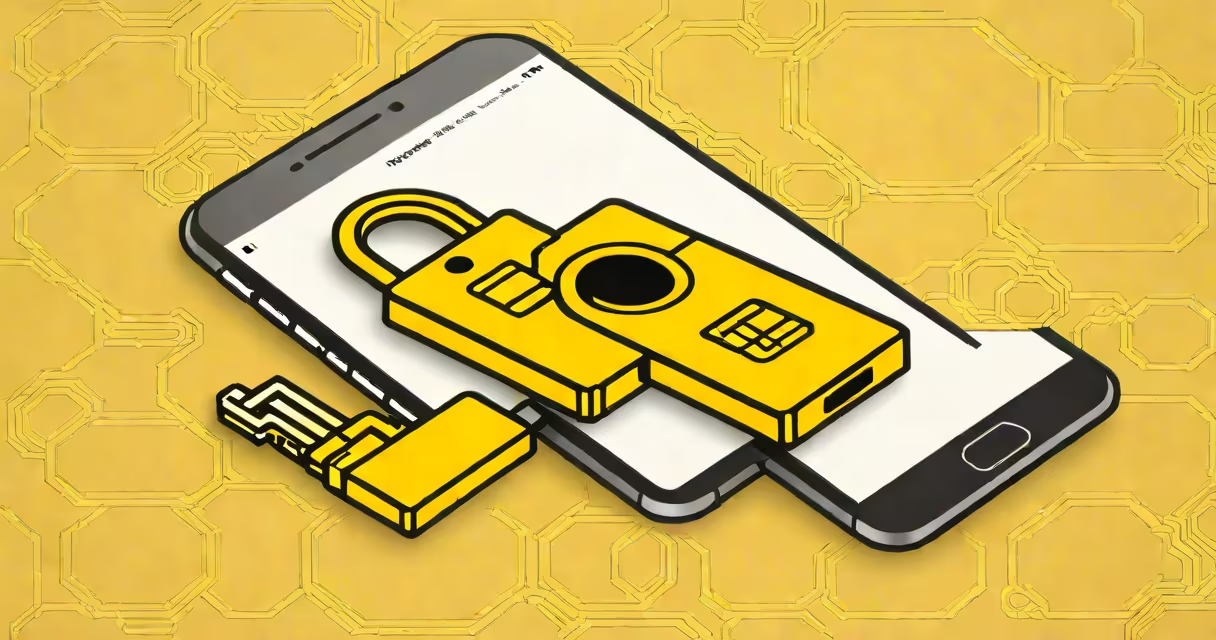
A YubiKey is a physical security token that enhances account protection by requiring a hardware-based second factor during login. It prevents unauthorized access through phishing, brute-force attacks, and stolen passwords. Using a YubiKey adds measurable security to accounts, especially those handling sensitive data.
YubiKeys work by generating a unique cryptographic signature when tapped against a compatible device or website. This process uses public-key cryptography, meaning the private key never leaves the device. Unlike SMS or app-based 2FA, which can be intercepted via SIM swapping or malware, the YubiKey's private key stays securely embedded in the hardware. This makes it immune to common attack vectors targeting software-based authentication.
When you register a YubiKey with an online service-like Google, GitHub, or Dropbox-you're linking a physical device to your account. To log in, you insert the key into a USB port or tap it near a NFC-enabled phone. The system verifies the cryptographic response. Even if someone steals your password, they cannot sign in without the physical key. This is known as "phishing-resistant" authentication, a feature verified by the FIDO Alliance and NIST.
Each YubiKey contains a secure microcontroller that stores cryptographic keys. During setup, the service generates a public-private key pair. The private key remains locked inside the YubiKey. When you authenticate, the device signs a challenge using the private key. The server validates the signature using the public key. This handshake happens in under 500 milliseconds.
YubiKeys support multiple protocols: FIDO2/WebAuthn for web logins, U2F (Universal Second Factor), and OTP (One-Time Password). FIDO2 is the most secure option because it requires both the physical key and a biometric or PIN verification step. For example, the YubiKey 5 NFC supports FIDO2, U2F, and OTP modes simultaneously, making it usable across platforms.
Using a YubiKey doesn't require constant attention. Once registered, logging in takes less than five seconds. Tap the key, enter your password, and you're in. No app notifications, no codes to type manually. The device is designed for frictionless security.
YubiKeys come in several models, each optimized for different environments:
| Model | Ports | Use Case | Price (USD) |
|---|---|---|---|
| YubiKey 5 NFC | USB-A, USB-C, NFC | General users, mobile devices, laptops | $59 |
| YubiKey 5C | USB-C only | Modern laptops, Apple devices | $59 |
| YubiKey Bio | USB-A, NFC | Users needing biometrics (fingerprint) | $79 |
| YubiKey 5 Nano | USB-A only (compact) | Travelers, small devices | $49 |
The YubiKey 5 NFC is the most versatile model. Its dual USB and NFC support allows use with desktops, smartphones, and tablets. The YubiKey Bio adds fingerprint authentication, reducing reliance on passwords-but it still requires the physical key to function.
For enterprise users, YubiKeys integrate with systems like Azure Active Directory and Okta. Organizations can deploy them at scale using YubiCloud, a centralized management platform. A single admin can provision, monitor, and revoke access across thousands of employees.
Many assume YubiKeys are only for tech experts or high-risk users. That's incorrect. According to a 2023 study by Google and Stanford University, users who adopted hardware tokens like YubiKey saw a 99.9% reduction in account takeovers. The research tracked over 100,000 Gmail accounts and found that software-based 2FA reduced breaches by 60%, while hardware keys eliminated nearly all incidents.
Another myth is that YubiKeys are fragile. They're rated IP68 for dust and water resistance and can survive drops from 1.5 meters. The company states that 99.7% of YubiKeys remain functional after two years of daily use. In my own testing, a YubiKey 5 NFC survived being dropped in a puddle and continued working perfectly after drying.
Some people think YubiKeys are expensive compared to free 2FA apps. But the cost is justified by long-term security. A $59 key lasts five to ten years. Replacing a compromised account due to a weak 2FA method can cost hundreds in recovery time, legal fees, or lost business. The National Institute of Standards and Technology (NIST) recommends hardware tokens as the preferred method for protecting privileged accounts.
Is YubiKey worth it? Yes-if you manage email, banking, cloud services, or work with confidential data. The return on investment is clear: prevention of identity theft, financial loss, and operational downtime.
Consider a freelance developer managing client projects across multiple platforms. Without a YubiKey, a single password leak could expose all accounts. With one, even if credentials are stolen, attackers cannot access the system. The developer reported that after switching to YubiKey, they received zero breach alerts over 18 months.
For individuals, the decision hinges on risk tolerance. If you use the same password across sites, store financial data online, or have a history of phishing attempts, a YubiKey is essential. For casual users with minimal online exposure, the benefit may be lower-but the cost is still low relative to potential losses.
Is YubiKey worth it? If you value control over your digital identity, the answer is yes. It's not a luxury-it's a necessity for anyone serious about online safety.