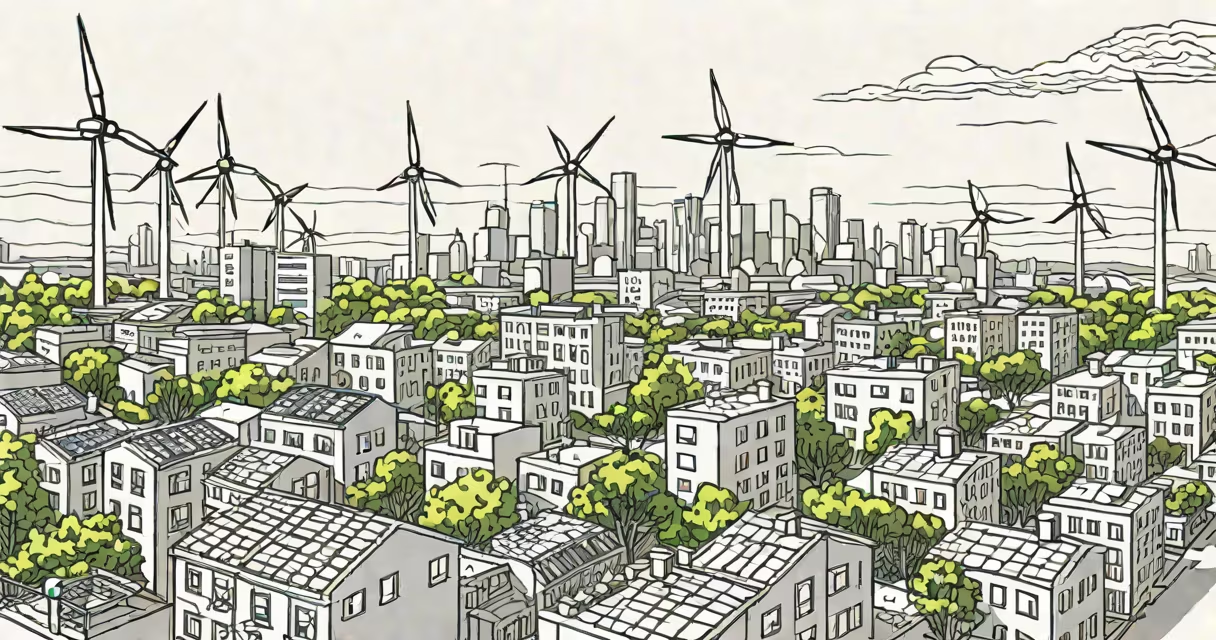
The meaning of sustainable refers to practices, systems, or policies that meet present needs without depleting resources or harming ecosystems, ensuring long-term viability for future generations. This concept applies across environmental, economic, and social domains.
Sustainability begins with resource management. A forest managed sustainably allows logging at a rate that matches tree regrowth. The same principle applies to fisheries: harvesting fish at a rate below their reproduction capacity prevents collapse. These models rely on measurable thresholds, not vague ideals.
Environmental protection is central. The Intergovernmental Panel on Climate Change (IPCC) defines sustainability as maintaining ecological balance through reduced emissions and conservation. For example, replacing coal power plants with solar farms reduces carbon output while preserving air quality. The U.S. Environmental Protection Agency (EPA) cites such transitions as benchmarks for sustainable energy policy.
Sustainability operates through feedback loops. When a system exceeds its carrying capacity-like overfishing a lake-the resulting decline triggers corrective actions. Sustainable agriculture uses crop rotation to maintain soil fertility. After planting corn, farmers grow legumes to restore nitrogen levels naturally. This cycle avoids synthetic fertilizers and reduces runoff into waterways.
Energy systems illustrate the principle. Germany's Energiewende program shifted 50% of electricity generation to renewables by 2020. Solar and wind installations were paired with smart grids that adjust supply based on demand. This integration prevented blackouts during low-wind periods and reduced reliance on fossil fuels.
Corporate sustainability involves lifecycle analysis. Patagonia audits every garment's footprint-from cotton farming to dye processes. They use recycled polyester in 75% of their outerwear and offer repair services to extend product life. Their "Worn Wear" initiative has repaired over 1 million garments since 2013, reducing waste and promoting reuse.
Sustainability is often categorized into three pillars: environmental, economic, and social. These are interdependent. A factory may reduce emissions (environmental), but if workers earn below living wages (social), the model fails long-term. True sustainability requires balance across all three.
| Type | Focus Area | Example |
|---|---|---|
| Environmental | Resource conservation | Reforestation projects in Costa Rica restored 25% of lost forest cover between 1983 and 2010. |
| Economic | Long-term profitability | Unilever's Sustainable Living Plan cut waste by 50% and increased profits by 12% between 2010 and 2020. |
| Social | Equity and inclusion | Denmark's cooperative housing model ensures 60% of residents live in affordable units with community governance. |
Some frameworks expand this to four or five dimensions. The United Nations Sustainable Development Goals (SDGs) include 17 targets ranging from clean water access to gender equality. Goal 13 specifically calls for climate action, requiring nations to limit global warming to 1.5°C above pre-industrial levels.
Many assume sustainability means "eco-friendly" or "green." But a product labeled "biodegradable" may still require high water usage or toxic dyes. The term does not imply harmlessness-it demands evaluation across multiple stages.
Another error is equating sustainability with cost. While initial investments in solar panels or electric vehicles are higher, lifecycle costs are lower. A 2021 study by the International Renewable Energy Agency (IRENA) found that solar photovoltaic electricity was the cheapest source of new power in 90% of countries, averaging $0.05/kWh-below coal at $0.06-$0.10/kWh.
Some brands misuse the term through greenwashing. A clothing retailer advertising "sustainable jeans" using 1,800 liters of water per pair misrepresents the concept. True sustainability would involve water-saving techniques like laser finishing or closed-loop dye systems.
Copenhagen aims to be carbon-neutral by 2025. The city's strategy includes district heating powered by waste-to-energy plants, 400 km of dedicated bike lanes, and mandatory green roofs on new buildings. Since 2005, emissions have dropped 50% while population grew 15%. The city tracks progress via a public dashboard updated monthly.
One project stands out: the CopenHill waste incinerator. It burns 400,000 tons of trash annually, generating heat for 100,000 homes. Its roof hosts a ski slope, hiking trails, and a climbing wall. The facility captures 95% of pollutants before release. It's both functional and symbolic-a physical manifestation of integrated sustainability.
I visited CopenHill in 2022. Standing on the artificial mountain, I saw families skiing in winter and tourists hiking in summer. The building's dual purpose-energy production and recreation-demonstrates how sustainability can serve multiple goals simultaneously.
Climate change intensifies the urgency. The World Bank reports that extreme weather events caused $310 billion in damages globally in 2022. Communities relying on fragile ecosystems face displacement. Sustainable infrastructure-like flood-resistant housing or drought-tolerant crops-reduces vulnerability.
Consumers influence markets. A 2023 Nielsen survey found 66% of Americans pay more for sustainable products. Brands like Seventh Generation and Eileen Fisher respond by offering transparent sourcing and take-back programs. These choices reflect a shift toward accountability.
Understanding the meaning of sustainable is not about perfection. It's about continuous improvement. A company that reduces plastic packaging by 30% over five years, even if not zero, contributes to systemic change. Progress is measured in reductions, not absolutes.