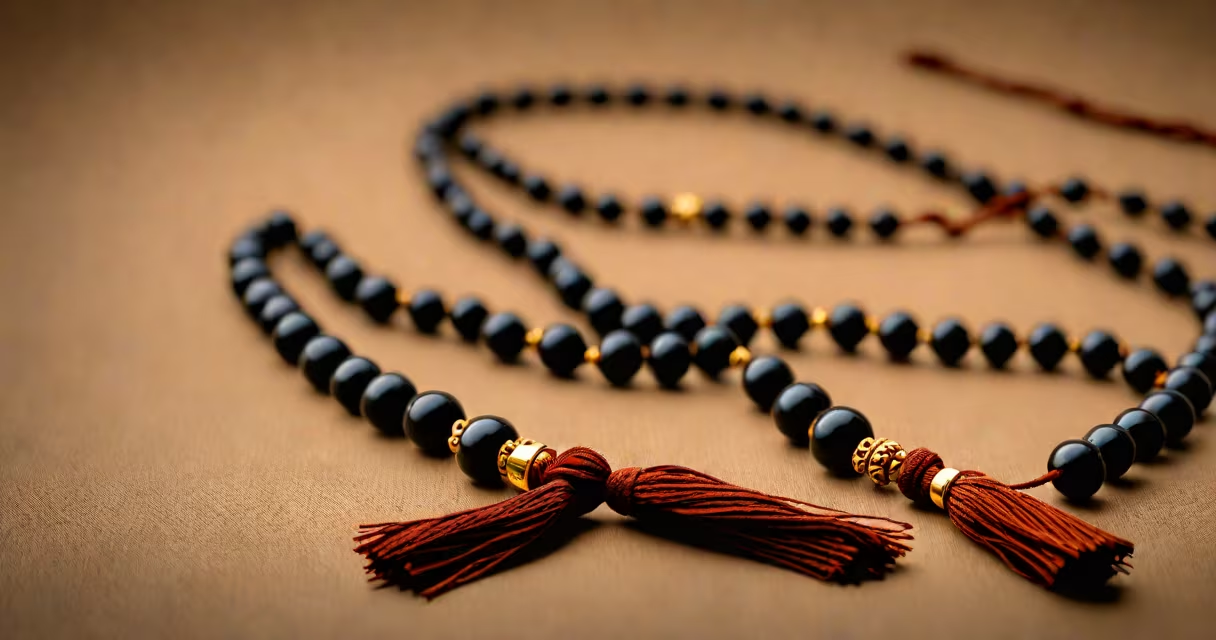
A mens mala bead necklace is a 108-bead string traditionally used in Buddhist and Hindu practices for counting mantras during meditation. Each bead represents a repetition of a sacred phrase, and the larger guru bead marks the completion of a cycle. These necklaces serve both ritual and personal wellness purposes.
Mala beads originate in ancient India, where they were used in Vedic traditions for chanting. Today, men wear them as spiritual tools, mindfulness aids, or symbolic accessories. The standard count-108 beads-is based on sacred geometry and cosmic cycles. For example, 108 corresponds to the number of breaths in a typical hour of mindful breathing, according to the Yoga Sutras of Patanjali.
The beads are strung on a durable thread or cord, often with a tassel or knot at the end. Common materials include rudraksha seeds, sandalwood, quartz, or amber. Men choose specific stones based on intended effects: black tourmaline for protection, amethyst for calm, or rose quartz for compassion. A single bead, usually larger and distinct, acts as the guru bead-the starting and ending point of each round.
Users hold the mala in one hand and move their thumb along each bead while silently repeating a mantra. After completing 108 repetitions, they turn the mala over and begin again. This physical motion grounds attention and reduces mental chatter. The tactile feedback enhances focus, especially during high-stress moments.
For example, a man meditating on "Om" might chant it once per bead. After reaching the guru bead, he pauses, reflects, and reverses direction. This process takes about 10 minutes per cycle. Over time, consistent use builds mental resilience and emotional clarity.
Scientific research supports the benefits of repetitive focus. A 2021 study published in *Mindfulness* journal found that participants who used tactile tools like malas reported higher levels of sustained attention compared to those using only mental visualization. The act of touching each bead created a neural anchor, reducing mind-wandering by 34% during sessions.
Mala beads come in several types based on material, size, and cultural origin. Not all are suitable for daily wear. Here's a comparison of common options:
| Type | Common Material | Typical Use | Key Benefit |
|---|---|---|---|
| Rudraksha | Dried seed from a Himalayan tree | Deep meditation, stress reduction | Highly valued in Tantra; believed to balance energy centers |
| Sandalwood | Indian sandalwood wood | Focus, mental clarity | Slow-burning scent promotes calm; used in temple rituals |
| Quartz | Natural crystal (clear, rose, amethyst) | Emotional healing, intention setting | Amplifies energy; rose quartz encourages self-love |
| Seed Beads | Various plant seeds (tagua, acacia) | Everyday wear, eco-friendly choice | Lightweight; biodegradable; affordable |
Some men prefer unisex designs, but true mens mala bead necklaces emphasize durability and masculine aesthetics. Larger beads (8mm-10mm diameter) feel substantial in the hand. Darker colors like black, deep brown, or charcoal tones reflect strength and groundedness.
One misconception is that all malas are religious. While rooted in spiritual tradition, many modern users treat them as secular tools. A software engineer in Portland uses his sandalwood mala during morning routines to center himself before work. He says, "I don't chant. I just touch each bead and breathe. It resets my nervous system."
People often mistake mala beads for prayer beads used in Christianity or Islam. Christian rosaries typically have 59 beads divided into decades, while Islamic tasbih uses 33 or 99 beads. Mala beads differ in structure, purpose, and cultural context. The 108-bead count is unique to Indian spiritual systems.
Another error is assuming that wearing a mala necklace automatically brings peace. The effectiveness depends on consistent use. A 2020 review in *Journal of Alternative and Complementary Medicine* found that participants who used malas daily for 21 days reported significant reductions in anxiety scores. Those who wore them occasionally saw no measurable change.
Some brands market "lucky" malas with gemstones claiming supernatural powers. The American Psychological Association cautions against attributing psychological benefits solely to material properties. The real effect comes from the ritual of repetition, not the stone itself. A mala made of glass beads works just as well as one made of gold if the user engages with intent.
Consider a man named James, 38, who works in construction. He wears a black rudraksha mala every morning before shift. He doesn't recite mantras-he focuses on his breath. After 108 slow inhales and exhales, he feels centered. His coworkers notice he's less reactive during conflicts.
He sets a routine: 5 minutes after waking, 5 minutes before bed. On weekends, he adds a 10-minute session. He keeps the mala in a small cloth pouch when not in use. This prevents fraying and maintains energetic integrity, according to traditional guidelines.
When choosing a mens mala bead necklace, prioritize craftsmanship. Look for even spacing, secure knots, and smooth beads. Avoid mass-produced versions with glued-on beads or uneven threading. Authentic malas are handmade, often by artisans in Nepal or India.