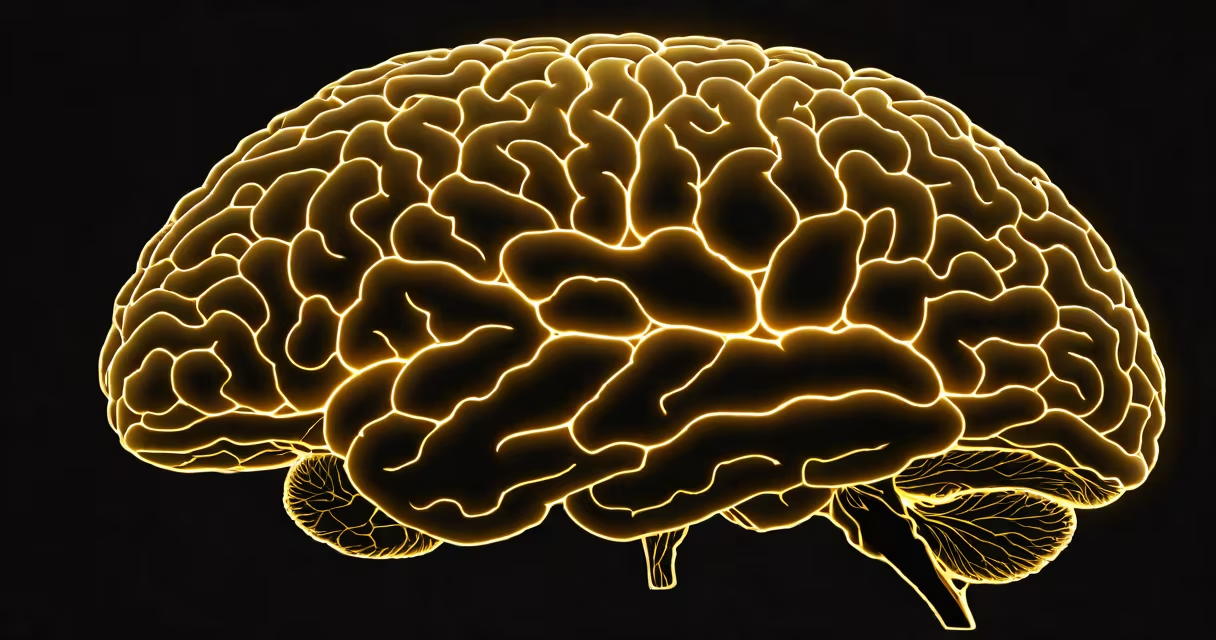
The mystery of mind refers to the unresolved scientific and philosophical challenge of how subjective experience-thoughts, emotions, self-awareness-arises from physical processes in the brain. Despite decades of research, no model fully explains why and how neurons generate conscious perception.
At its core, the mystery of mind centers on the hard problem of consciousness: why does the brain's electrical and chemical activity result in inner experience rather than mere computation? This distinction separates objective measurement-like EEG readings or fMRI scans-from the ineffable quality of feeling pain, seeing red, or remembering a childhood memory.
Neuroscientists have mapped brain regions tied to attention, emotion, and decision-making. But even with advanced tools, researchers cannot yet pinpoint how a cluster of firing neurons produces the sensation of "I am." The gap between neural data and lived experience remains the central puzzle.
When you see a sunset, light enters your eyes, travels through the optic nerve, and activates neurons in the visual cortex. These signals are processed into shapes, colors, and motion. Yet the experience of awe, the warmth in your chest, the sense of time slowing-all of that emerges from patterns of neural firing that science still cannot fully explain.
Some models propose that consciousness arises from integrated information. The Integrated Information Theory (IIT), developed by Giulio Tononi, suggests that consciousness corresponds to the amount of information a system generates through its internal connections. A brain with high integration-where parts communicate extensively-produces rich subjective states. But critics argue that IIT predicts consciousness in systems that lack it, such as simple computers.
Another theory, Global Workspace Theory (GWT), views consciousness as a broadcast mechanism. When information becomes globally available across multiple brain networks-such as when you notice a sudden sound-it enters conscious awareness. This model aligns with experimental findings showing that only certain stimuli trigger reportable experiences, even when they're processed subconsciously.
While the mind itself isn't a physical object, its functions can be grouped into domains that researchers study. These domains reflect different aspects of the mystery:
| Aspect | Description | Example |
|---|---|---|
| Phenomenal consciousness | Subjective experience-the "what it feels like" aspect. | Feeling joy during a conversation. |
| Access consciousness | Information available for verbal report or action. | Recalling your mother's birthday. |
| Self-consciousness | Recognition of oneself as a continuous entity. | Thinking "I am the same person I was yesterday." |
These categories help distinguish levels of awareness. For instance, you may access a memory without feeling it-like recalling a phone number while driving-but the emotional weight of that memory only emerges under phenomenal awareness.
A lesser-known but critical insight: the brain doesn't process reality directly. Instead, it constructs models of the world based on sensory input, past learning, and predictive coding. This means your experience of "reality" is a simulation-not a mirror. The mystery of mind includes why this simulation feels real, personal, and immediate.
Many assume that consciousness is a single phenomenon. In reality, it operates across multiple layers. People often confuse awareness with control. You can be aware of a thought without being able to stop it-like noticing a recurring worry during meditation. That disconnect highlights the complexity of mental processes.
Another misconception is that AI systems like large language models possess consciousness. They simulate understanding, generate coherent responses, and even express opinions. But they lack subjective experience. They don't feel confusion, doubt, or curiosity. Their outputs are statistical patterns, not inner life.
Even within neuroscience, some researchers treat consciousness as a byproduct of brain activity-"epiphenomenal"-meaning it has no causal role. But this view contradicts everyday evidence: decisions, actions, and moral choices depend on conscious reflection. If consciousness were useless, evolution would have eliminated it long ago.
Consider a patient with locked-in syndrome. They are fully awake and aware but unable to move or speak due to spinal cord injury. Brain imaging shows normal activity in higher-order regions, proving that consciousness persists despite physical isolation. This case underscores that awareness is not tied to movement-but to neural integrity.
Another example: patients undergoing general anesthesia. As anesthetic drugs take effect, brain waves slow and synchronize. Functional MRI shows reduced connectivity between brain regions. When patients wake up, they report no memory of the surgery. This demonstrates that consciousness depends on changing, distributed brain activity-not just the presence of neurons.
One study using fMRI measured brain activity in people who reported vivid dreams during sleep. Researchers found that specific areas-like the precuneus and medial prefrontal cortex-lit up during dream recall. These regions are linked to self-referential thinking and autobiographical memory. The findings suggest that dreaming involves a reconstructed version of self, not random noise. This supports the idea that consciousness isn't just passive-it actively builds narratives.
I've spent years observing how people manage mental clutter. During a mindfulness retreat, I sat silently for seven days, tracking my thoughts. On day three, I noticed a pattern: anxiety spiked not during events, but during internal monologues about future outcomes. That moment revealed a key insight: the mind creates suffering not from reality, but from stories about reality.
Simple practices reduce the noise. Regular meditation increases gray matter density in the prefrontal cortex-linked to attention and emotional regulation. Studies show that 20 minutes daily over eight weeks improves focus and reduces mind-wandering. These changes correlate with measurable shifts in brain activity.
For deeper understanding, try declutter the mind using journaling and structured reflection. Write down one thought per minute for five minutes. Then ask: "Is this thought useful? Does it serve me?" Most thoughts are repetitive or reactive. Letting go of them frees mental space.
These methods don't solve the mystery of mind-but they help you live within it more effectively. Awareness is not the answer. It's the tool.
The mystery of mind remains unsolved. But understanding its dimensions-neural mechanisms, subjective experience, and practical strategies-allows us to engage with our inner lives more intentionally. While science continues to explore the roots of consciousness, individuals can cultivate clarity, reduce suffering, and deepen presence.