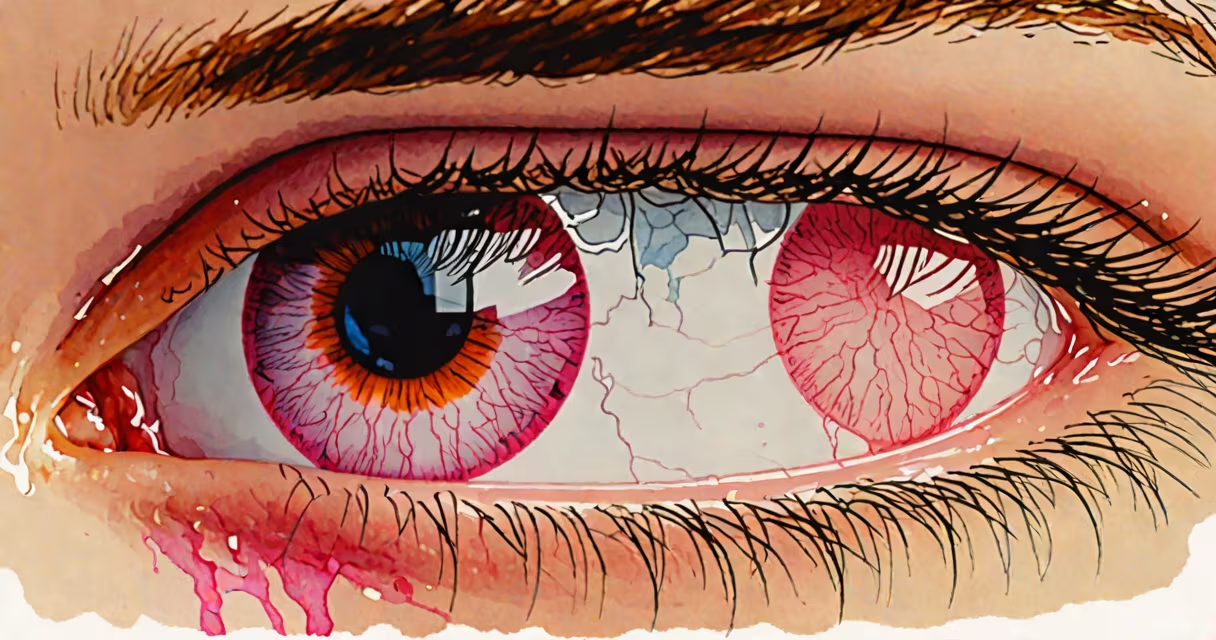
pink eye (conjunctivitis) is an inflammation of the clear membrane covering the white of the eye and inner eyelid, often caused by viruses, bacteria, or allergens. Irritated eye refers to discomfort from environmental triggers, dryness, or minor trauma, without infection or systemic involvement. The two conditions share redness and tearing but differ in cause, transmission risk, and treatment.
Conjunctivitis arises from pathogens or immune responses. Viral pink eye, most common, spreads through respiratory droplets or contact with contaminated surfaces. Bacterial cases involve organisms like *Streptococcus pneumoniae* or *Haemophilus influenzae*, often causing thick yellow discharge. Allergic conjunctivitis results from exposure to pollen, dust mites, or pet dander, triggering histamine release.
Irritated eyes stem from mechanical or chemical stress. Dry air, screen glare, or foreign particles like dust or sand cause surface friction. Contact lens wearers may develop irritation from protein buildup or improper fit. Environmental irritants such as smoke, chlorine, or cleaning agents inflame the ocular surface without infecting tissue.
The American Academy of Ophthalmology notes that viral conjunctivitis accounts for 60-90% of acute cases in adults, while allergic forms dominate in seasonal patterns. Irritation lacks pathogen presence, making it non-contagious and typically resolving within hours after removing the trigger.
While both conditions cause redness, itching, and watery eyes, their symptom profiles diverge. Viral pink eye often begins in one eye and spreads to the other within 2-5 days. Discharge is thin and clear or slightly mucous-like. Symptoms peak around day 3-5 and resolve in 7-14 days without antibiotics.
Bacterial pink eye features thick, yellow-green discharge that crusts eyelashes overnight. Onset is rapid, usually within 24 hours. Left untreated, it may persist beyond 10 days. Allergic conjunctivitis includes intense itching, bilateral swelling, and frequent rubbing. It often coincides with sneezing, runny nose, or asthma flare-ups.
Irritation presents with burning, grittiness, or a sensation of something in the eye. Redness is localized to the area of contact. Tears may be excessive but lack purulent material. Recovery occurs within minutes to hours after blinking, rinsing, or removing the irritant.
| Feature | Conjunctivitis (Pink Eye) | Eye Irritation |
|---|---|---|
| Onset | Sudden (viral/bacterial), seasonal (allergic) | Immediate upon exposure |
| Discharge | Clear (viral), thick yellow/green (bacterial), watery (allergic) | None or minimal |
| Itching | Presents in allergic form only | Uncommon; burning more typical |
| Contagious? | Yes (viral/bacterial); no (allergic) | No |
| Duration | 7-14 days (viral), longer if untreated (bacterial) | Minutes to hours |
Many assume red, watery eyes always indicate infection. This leads to unnecessary antibiotic use. A 2021 study in *JAMA Ophthalmology* found that 40% of patients visiting clinics with conjunctivitis were prescribed antibiotics despite no bacterial evidence. Viral cases resolve on their own; antibiotics offer no benefit and increase resistance risk.
Another error is treating all red eyes with antihistamines. Benadryl (diphenhydramine) reduces itching in allergic conjunctivitis but does nothing for viral or bacterial forms. Using it in non-allergic cases delays proper care and may worsen dryness due to its anticholinergic effects.
A critical distinction: conjunctivitis affects the conjunctiva, not the cornea. Corneal involvement signals a more serious condition-keratitis-often accompanied by pain, light sensitivity, and vision changes. If redness persists beyond 14 days or worsens, seek evaluation to rule out corneal damage.
A 32-year-old office worker reports red, itchy eyes after returning from a weekend trip. She used a new hand soap and wore contact lenses daily. Her left eye has mild redness and a gritty feeling. Right eye shows no symptoms. No fever, no discharge, no recent illness.
This presentation aligns with eye irritation from soap residue or contact lens overwear. No signs of infection or allergy. She rinsed her eyes with saline and removed contacts. Symptoms resolved within 30 minutes. No medical visit was needed.
Had she reported pus-filled discharge, bilateral redness, or a history of cold symptoms, viral conjunctivitis would have been suspected. If she had nasal congestion and seasonal pollen counts were high, allergic conjunctivitis would be likely. The absence of these markers confirms non-infectious, non-allergic irritation.
Redness lasting more than 14 days, worsening pain, blurred vision, or sensitivity to light indicates a need for ophthalmic evaluation. These signs suggest complications like corneal abrasion, uveitis, or glaucoma. Even if symptoms seem mild, persistent issues require testing to avoid permanent damage.