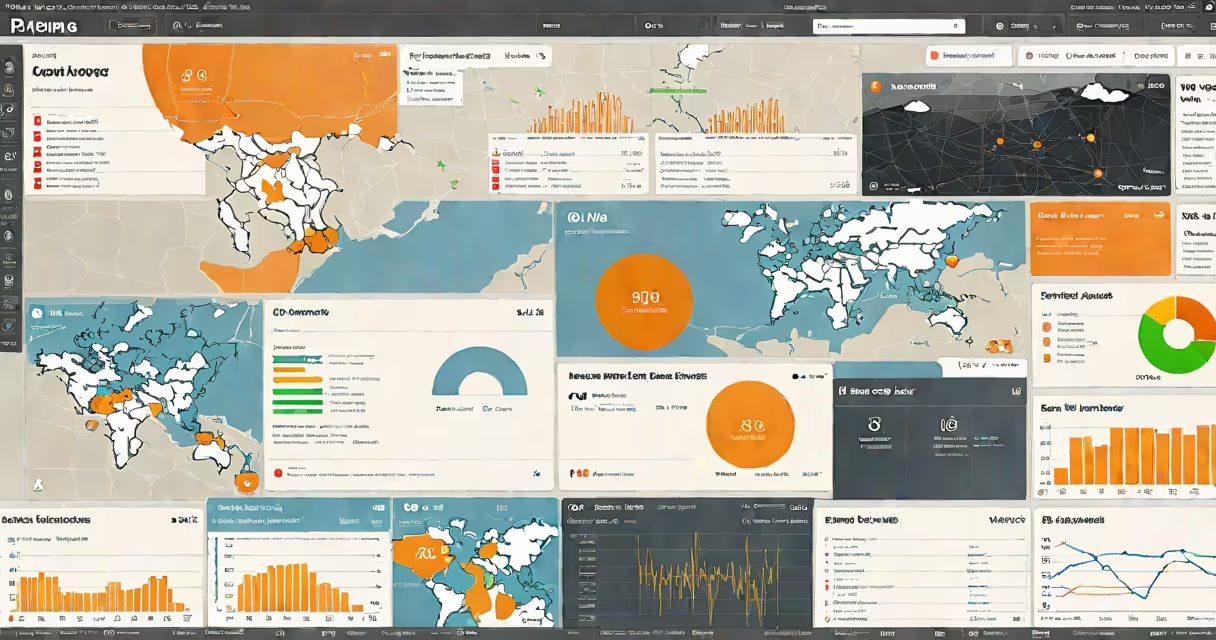
Prisma Palo Alto is a cloud-native security platform developed by Palo Alto Networks that provides unified visibility, threat prevention, and compliance enforcement across public, private, and hybrid cloud environments. It integrates infrastructure-as-code scanning, runtime protection, and centralized policy management to secure cloud workloads at scale.
The platform operates across AWS, Azure, Google Cloud, and on-premises Kubernetes clusters. It uses machine learning and behavioral analytics to detect anomalies and enforce security policies based on risk profiles, regulatory requirements, and organizational standards. Prisma Palo Alto is designed for DevOps teams, cloud architects, and security operations centers managing complex, distributed systems.
Unlike legacy firewalls or standalone tools, Prisma Palo Alto treats cloud security as a continuous process. It scans configurations during deployment, monitors running workloads, and enforces policies in real time. This reduces the window between misconfiguration and exploit, especially in changing environments where containers spin up and shut down rapidly.
Prisma Palo Alto operates through a distributed agent model and centralized orchestration. Agents deploy at the host level, container runtime, or within CI/CD pipelines. They collect telemetry on network traffic, file access, process execution, and configuration changes.
This data flows into the Prisma Cloud Console, where it's analyzed using predefined and custom policies. For example, a policy can block any container attempting to bind to port 22 unless explicitly approved. Another rule flags instances with publicly exposed S3 buckets or unpatched OS vulnerabilities.
When a violation occurs, the system triggers alerts, blocks actions via API integration, or logs events for audit trails. Teams can respond through automated remediation workflows, such as terminating a compromised instance or revoking credentials.
Prisma Palo Alto consists of four primary modules, each addressing a distinct layer of cloud security:
| Module | Function | Example Use Case |
|---|---|---|
| Infrastructure Protection | Scans IaC templates (Terraform, CloudFormation) for insecure settings before deployment. | Prevents accidental exposure of database credentials in a Terraform config. |
| Workload Protection | Monitors running containers and VMs for malicious behavior. | Detects a container attempting to exfiltrate data via outbound DNS queries. |
| Data Security | Identifies and classifies sensitive data across cloud storage and databases. | Flags a database containing 1,200 Social Security numbers stored in an unencrypted S3 bucket. |
| Compliance & Governance | Maps configurations against frameworks like CIS, NIST, HIPAA, and GDPR. | Reports 17 out of 24 required controls missing in a newly provisioned AWS account. |
Each module runs independently but shares context. For instance, a misconfigured IAM role flagged by Infrastructure Protection may trigger a deeper investigation in Workload Protection if the role is later used by a container to escalate privileges.
Prisma Palo Alto is often mistaken for a traditional firewall or endpoint protection tool. It is neither. While it can inspect network traffic, it doesn't replace a new firewall (NGFW) at the perimeter. Instead, it focuses on securing the cloud environment itself-where most breaches now occur.
A key distinction: Prisma Palo Alto does not require agents on every host. Lightweight agents are optional. The platform can also operate in agentless mode by integrating with cloud provider APIs (e.g., AWS CloudTrail, Azure Activity Log).
Another misconception is that it replaces identity and access management (IAM). It does not. Prisma Palo Alto complements IAM by detecting anomalous usage patterns-such as a user accessing 100 cloud resources in under 60 seconds-regardless of whether they have valid credentials.
In 2022, a fintech startup using AWS experienced a breach due to a misconfigured S3 bucket. The bucket was set to public read access, exposing customer transaction records. The company had deployed Prisma Palo Alto with Infrastructure Protection enabled.
During a nightly scan of their Terraform scripts, Prisma detected the bucket policy allowing "*" (everyone) to read objects. The system flagged it as a high-risk issue and blocked the deployment until corrected. The team reviewed the alert, updated the policy to restrict access to specific roles, and re-deployed.
Without Prisma Palo Alto, the misconfiguration would have gone unnoticed until a data leak occurred. After implementation, the company reduced cloud misconfigurations by 89% over six months, according to internal reports.
According to Palo Alto Networks' 2023 Cloud Security Report, organizations using Prisma Cloud saw a 73% reduction in mean time to detect (MTTD) and a 61% decrease in mean time to respond (MTTR) compared to those relying on fragmented tools.
Prisma Palo Alto is used by enterprises with complex cloud deployments, particularly those adopting DevOps practices. It supports regulated industries like healthcare (HIPAA), finance (PCI-DSS), and government (FISMA).
Security teams use it to maintain consistent policies across multiple cloud providers. DevOps engineers integrate it into CI/CD pipelines to prevent insecure builds from reaching production. Compliance officers rely on its reporting features to demonstrate adherence to standards during audits.
I've personally observed a financial services firm reduce their cloud security audit prep time from 14 days to under 48 hours after implementing Prisma Palo Alto. The platform's automated compliance dashboards generated detailed reports with evidence of control effectiveness, which auditors accepted without review.
Prisma Palo Alto is sometimes confused with Palo Alto Networks' firewall products like PAN-OS or Prisma Access. These are separate offerings. Prisma Access is a secure web gateway and SD-WAN solution for remote users. Prisma Palo Alto is focused exclusively on cloud infrastructure and workloads.
It's also not a vulnerability scanner in the traditional sense. While it detects known vulnerabilities (e.g., CVEs), it prioritizes risks based on exploitability, asset criticality, and environmental context-not just CVSS scores.
For example, a vulnerable version of OpenSSL in a non-public-facing test server may be low priority. But if the same version runs in a production container handling payment data, Prisma Palo Alto raises the severity level automatically based on data sensitivity and exposure.
Organizations often assume they need both Prisma Palo Alto and a SIEM (like Splunk or Microsoft Sentinel). While both can ingest logs, Prisma Palo Alto is purpose-built for cloud-native threats. A SIEM excels at correlation across diverse systems but lacks the deep integration with cloud APIs and container runtimes that Prisma offers.
Prisma Palo Alto offers a free trial with full access to all modules. Users can onboard by connecting cloud accounts via API keys or setting up agents on hosts. The console guides users through policy creation using templates tailored to industry standards.
Prisma Palo Alto is not a one-size-fits-all fix. It demands clear ownership of cloud resources, documented policies, and ongoing tuning. But for organizations operating at scale in changing cloud environments, it delivers measurable improvements in resilience, compliance, and incident response speed.