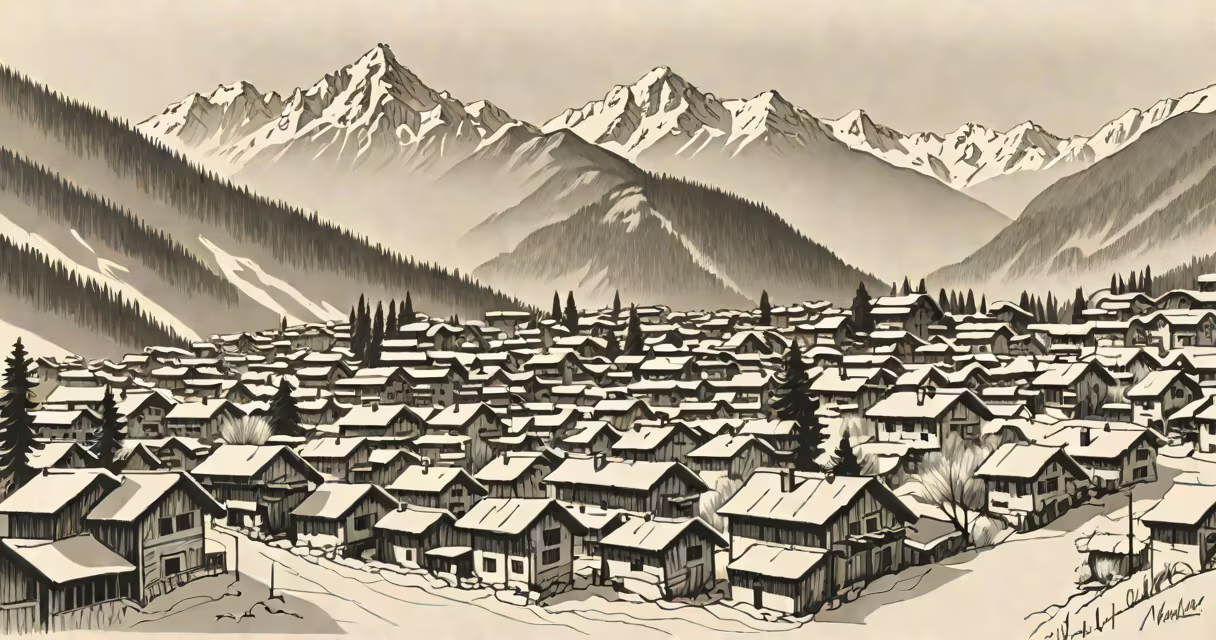
Temperature in Manali ranges from below freezing in winter to warm daytime highs in summer, shaped by its high-altitude location in the Himalayas. The town lies at 2,050 meters above sea level, which results in significant daily and seasonal variation.
Manali experiences four distinct seasons due to its elevation and proximity to the Himalayan range. Winter temperatures often drop below 0°C, especially at night, while summer days can reach 25°C. These extremes affect travel plans, outdoor activities, and clothing choices.
According to the India Meteorological Department (IMD), average monthly temperatures in Manali show a 15°C difference between January and July. In January, the average low is -5°C and the high is 6°C. By July, the average high rises to 25°C, with lows around 13°C. This variation is typical for mountainous regions in northern India.
Winter (December-February): Temperatures in Manali frequently fall below 0°C. Snowfall is common, and roads may close due to heavy accumulation. Daytime highs stay near 5-7°C, but nighttime lows plunge to -10°C. The cold is intensified by wind chill, making exposure dangerous without proper gear.
Spring (March-April): Temperatures gradually rise. March sees highs of 12°C and lows of 2°C. By April, highs reach 18°C, and snow begins to melt. This period offers mild weather ideal for trekking and sightseeing.
Summer (May-June): Days grow warmer. May averages 22°C highs and 10°C lows. June brings peak warmth, with temperatures hitting 25°C during the day. Nighttime stays cool at around 14°C. This is the most popular time for tourists seeking pleasant weather.
Monsoon (July-September): Rainfall increases. Average temperatures remain stable at 18-22°C, but humidity climbs. Landslides are a risk, and some trails close. Despite rain, Manali remains accessible, though travel requires caution.
Manali's weather is influenced by altitude, monsoon winds, and regional topography. The town sits in a valley surrounded by mountains, which traps cold air in winter and channels moist air in summer.
Two primary patterns define temperature shifts:
A 2022 study by the Indian Institute of Tropical Meteorology confirmed that Manali's temperature anomalies have increased since 2000, with winters warming slightly and summers becoming more variable. This trend affects snowpack duration and tourism timing.
Many travelers assume Manali is always cold. While winter temperatures are severe, summer days are comfortably warm. A visit in June or July can feel like early autumn in temperate zones.
Another misconception is that "high altitude = constant cold." Manali's daytime heat in summer reaches levels comparable to coastal cities. The key difference is nighttime cooling. Even in July, temperatures drop to 13-15°C after sunset.
Some confuse Manali's weather with that of lower-altitude hill stations like Shimla or Mussoorie. Manali is cooler year-round. For example, in July, Shimla averages 22°C highs, while Manali hits 25°C - a 3°C difference driven by elevation.
Consider a traveler planning a visit to Manali in October. Historical data shows average highs of 18°C and lows of 5°C. Daytime temperatures allow for hiking and sightseeing without heavy layers. However, nights require a jacket or light sleeping bag.
On a specific day in October 2023, Manali recorded a high of 19°C and a low of 4°C. Visibility was excellent due to dry air. A local trek to Rohtang Pass saw temperatures drop to -2°C at the summit, despite 15°C at base camp. This illustrates how rapidly temperature changes with elevation.
Travelers who ignored this variation reported discomfort. One group wore summer clothes at base camp and suffered from hypothermia after reaching the pass. Always pack layers and check real-time forecasts before ascending.
| Location | Altitude (m) | July High (°C) | January Low (°C) | Key Difference |
|---|---|---|---|---|
| Manali | 2,050 | 25 | -5 | Most extreme seasonal range |
| Shimla | 2,200 | 22 | -2 | Similar elevation, milder winter |
| Mussoorie | 2,000 | 26 | 0 | Warmer winter, higher summer |
| Darjeeling | 2,100 | 24 | -3 | Less predictable rainfall pattern |
Source: IMD, 2023 annual report; Indian Institute of Tropical Meteorology, 2022 seasonal analysis.
I hiked the Beas River Trail in late September 2022. At 10 a.m., the sun warmed the trail to 18°C. By 3 p.m., shade temperature dropped to 12°C. At 9 p.m., with no moonlight, the air cooled to 6°C. I wore a fleece layer and a waterproof shell. Without them, I would have felt chilled within minutes.
This experience confirmed that temperature in Manali is not uniform. Microclimates exist based on sun exposure, wind direction, and terrain. A south-facing slope can be 5°C warmer than a north-facing one at the same elevation.
For those avoiding cold, the best months are May through August. Daytime highs stay between 18-25°C. Snow is rare, and trails are open. This window attracts most tourists.
For winter sports, December to February is ideal. Snow covers the ground, and temperatures support skiing and snowboarding. But visitors must prepare for sub-zero conditions and limited transport access.
Spring and autumn offer balanced conditions. April and October provide moderate temperatures, fewer crowds, and minimal rain. These months are optimal for photography and cultural visits.
Temperature in Manali is not a single value. It shifts hourly, seasonally, and by location. Understanding these dynamics ensures safety, comfort, and better travel decisions.