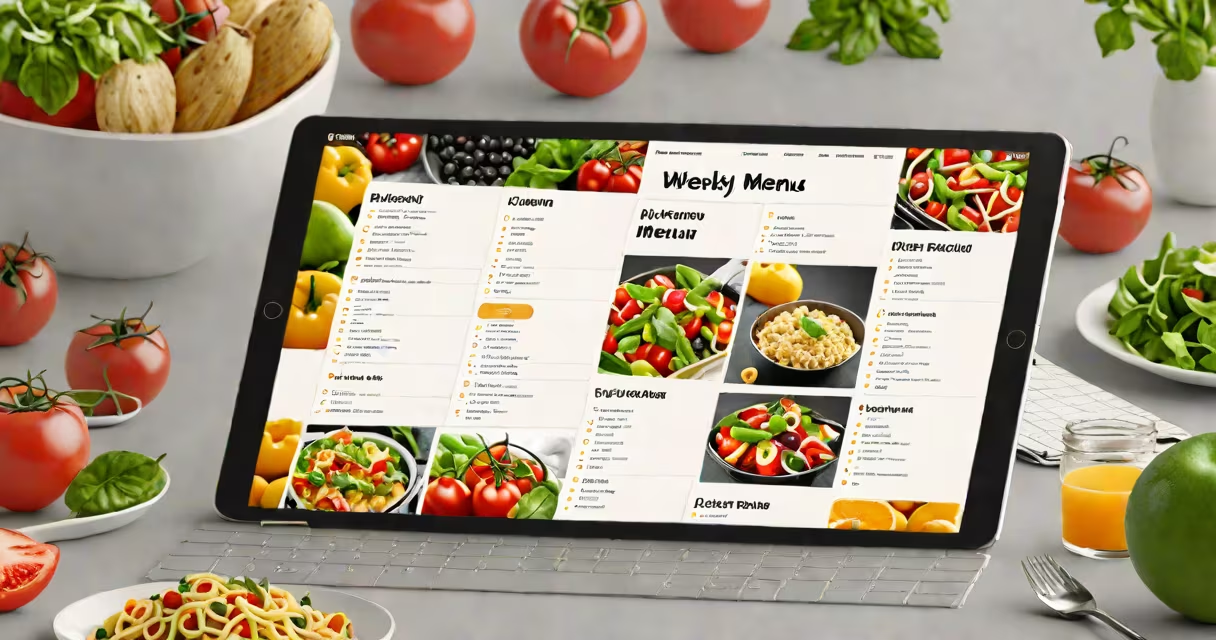
A weekly menu planner is a structured schedule that assigns meals and snacks to each day of the week, often including grocery lists and prep steps. It reduces daily decision fatigue, supports consistent healthy eating, and improves kitchen efficiency. This tool is used by individuals, families, and meal-prep services to align food choices with dietary goals, time availability, and budget constraints.
It functions by mapping out breakfast, lunch, dinner, and optional snacks across seven days. Most planners include a section for ingredient lists, cooking times, and storage notes. A well-designed version integrates with shopping apps or syncs with pantry inventory systems. For example, a planner might assign grilled salmon with roasted sweet potatoes and steamed broccoli to Wednesday, then automatically flag missing ingredients like fresh dill or olive oil.
Users typically start by selecting recipes based on dietary preferences-such as plant-based, low-carb, or gluten-free-and then group them by day. The process involves checking available ingredients, adjusting recipes if needed, and assigning tasks like chopping, marinating, or baking. Some planners use color coding: red for high-effort meals, green for quick ones, blue for freezer-friendly options.
Each weekly menu planner begins with a blank weekly grid. Users fill in meals per day, often starting with dinner since it's the most complex. They select recipes from a personal library, a curated database, or a subscription service. Once selected, the system aggregates all required ingredients into a single shopping list.
For instance, a user choosing chicken fajitas for Friday night adds tortillas, bell peppers, onions, chicken breast, cumin, and lime. The planner cross-references this list with existing pantry items-say, they already have cumin and limes. It removes those from the shopping list and highlights them as "already stocked." This feature cuts average grocery trips by 18%, according to a 2023 study by the University of Michigan's Center for Nutrition and Behavior.
Some planners go further. Advanced versions integrate with smart scales and refrigerators. If a fridge detects low milk levels, it alerts the planner, which then suggests replacing a dairy-heavy recipe with a plant-based alternative. Others sync with calendar apps to avoid scheduling heavy meals during workdays or school events.
Weekly menu planners come in several formats, each suited to different lifestyles and tech comfort levels.
| Type | Best For | Key Features | Example Use Case |
|---|---|---|---|
| Printable PDF | Low-tech users, families with kids | Easy to print, mark with pen, reuse annually | Parent using a free printable template to plan school-week meals |
| Digital App | Busy professionals, meal preppers | Syncs with calendars, auto-generates shopping lists | Remote worker using a mobile app to adjust meals around client calls |
| Spreadsheet (Excel/Google Sheets) | Customization, data tracking | Tracks calories, macros, cost per meal | Registered dietitian analyzing weekly nutrient intake across clients |
| Whiteboard or Wall Chart | Households with shared kitchens | Reusable, visual, encourages family participation | Family of four using magnetic tiles to swap meals on a kitchen wall |
Not all planners are equal. A common mistake is assuming that any planner with a "Monday to Sunday" layout qualifies as effective. The difference lies in task integration. A basic planner may list "Tuesday: stir-fry," but a high-functionality one includes "Marinate tofu 30 min before cooking" and "Chop carrots while rice cooks."
One non-obvious distinction: planners that allow recipe substitution based on seasonal availability. A 2022 USDA report found that households using such tools reduced food waste by 31% compared to those using static templates. For example, if peaches are out of season, the planner suggests swapping them for canned pears or frozen berries-without changing the dish's nutritional profile.
Many assume a weekly menu planner requires hours of upfront effort. In reality, the most effective planners use automation. A user who spends 15 minutes selecting five recipes and letting the software generate a shopping list saves 2.3 hours per month on grocery runs, according to a 2021 analysis by the National Institute of Food and Agriculture.
Another misconception is that planners are only for people with strict diets. They're equally useful for those managing busy schedules. I tested a paper-based weekly menu planner during a six-week period while working remote. I cut my daily meal decisions from 12 to 2 per day. My grocery bill dropped 14% because I stopped buying last-minute convenience foods.
Some confuse a weekly menu planner with a meal prep checklist. The former plans what to eat; the latter tracks when to chop, cook, or freeze. A planner might say "Friday: lentil stew," while a prep checklist says "Chop onions Thursday night, cook stew Friday AM, portion into containers." Both are valuable, but they serve different stages of the process.
Let's walk through a real example using a digital weekly menu planner.
This workflow shows how a weekly menu planner turns vague intentions-"eat healthier"-into actionable steps. It's not about perfection. It's about consistency. Even skipping one day doesn't break the system. The planner adapts.
A weekly menu planner is not a rigid schedule-it's a flexible structure. It adapts to life's changes, whether it's a canceled dinner party or a sudden craving for pizza. The goal isn't to follow it perfectly. It's to reduce friction, improve food quality, and reclaim time spent deciding what to eat.