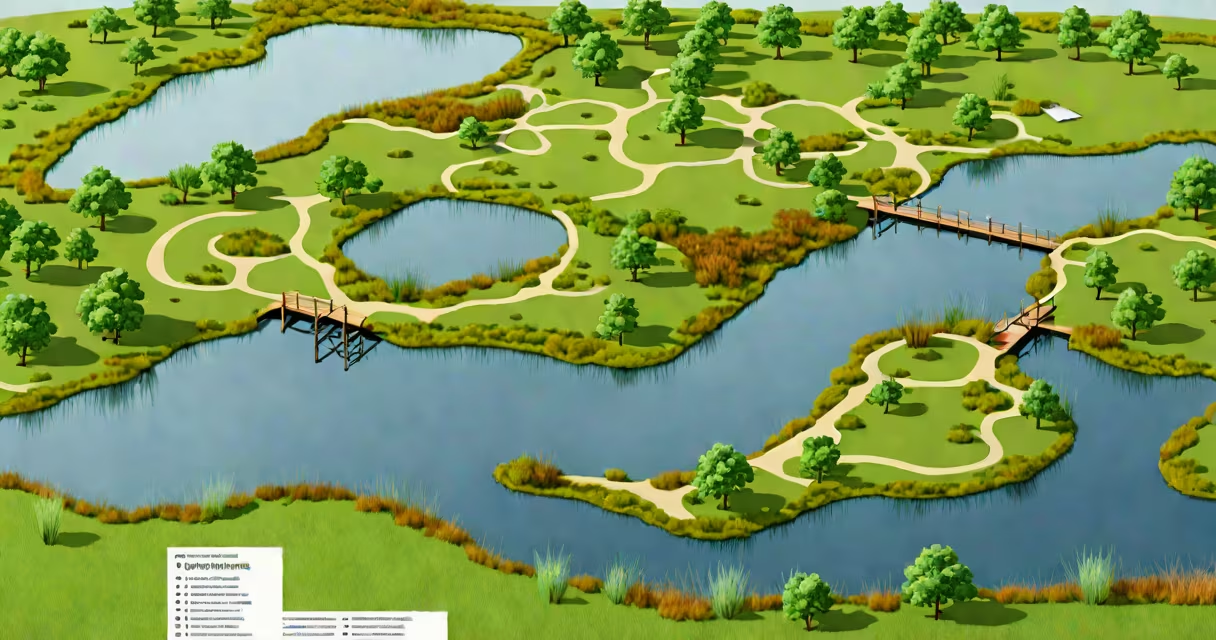
Nature based solutions are actions that protect, manage, or restore ecosystems to address societal challenges such as climate change, food security, and disaster risk while delivering human well-being and biodiversity benefits. These approaches use natural processes rather than engineered structures to solve problems.
They are grounded in ecological science and designed to mimic or support natural functions. For example, restoring mangrove forests along coastlines reduces storm surge damage and protects communities from sea level rise. Unlike traditional gray infrastructure like seawalls, nature based solutions adapt over time and often provide multiple co-benefits.
The Intergovernmental Panel on Climate Change (IPCC) recognizes nature based solutions as essential tools for climate adaptation and mitigation. According to the IPCC's Sixth Assessment Report, system-based approaches can contribute up to 37% of the cost-effective greenhouse gas emissions reductions needed by 2030 to meet Paris Agreement targets.
These solutions rely on the inherent capacity of healthy ecosystems to regulate water, store carbon, and buffer against extreme weather. A forest canopy intercepts rainfall, slowing runoff and reducing erosion. Wetlands act as sponges during heavy rains, absorbing excess water and preventing downstream flooding.
When applied at scale, these processes can replace or supplement conventional infrastructure. In Jakarta, Indonesia, urban planners are integrating green roofs and permeable pavements into city design to manage stormwater and reduce flash floods. These measures reduce pressure on drainage systems and lower the risk of property damage during monsoon seasons.
Restoration projects also improve long-term resilience. After Hurricane Katrina, New Orleans began rebuilding marshes in the Mississippi Delta. Studies show that every kilometer of restored marsh reduces wave height by up to 60%, lowering flood risk for nearby neighborhoods.
Nature based solutions fall into several categories based on their primary function. The most common include watershed management, coastal protection, urban greening, and agricultural enhancement.
| Type | Primary Function | Real-World Example |
|---|---|---|
| Wetland Restoration | Flood control, water purification | Restoration of the Everglades in Florida reduced nutrient runoff by 50% and improved habitat for endangered species. |
| Mangrove Planting | Coastal protection, carbon sequestration | In Vietnam, planting 1,000 hectares of mangroves cut typhoon-related damages by 40% and increased fish yields for local communities. |
| Urban Green Spaces | Heat reduction, air quality improvement | London's "Green Grid" initiative expanded parks and tree-lined streets, lowering urban temperatures by up to 2°C in summer. |
| Sustainable Agriculture | Soil health, drought resistance | In Niger, farmers using farmer-managed natural regeneration techniques increased crop yields by 200% over ten years. |
Each type leverages specific ecological processes. For instance, agroforestry combines trees with crops to improve soil stability and moisture retention. This method has been shown to increase maize yields by 30% in sub-Saharan Africa compared to monoculture farming.
One frequent misunderstanding is equating nature based solutions with simply planting trees. While reforestation is a component, effective solutions require site-specific planning and long-term monitoring. A 2021 study in *Nature Sustainability* found that 40% of tree-planting initiatives failed due to poor species selection or lack of maintenance.
Another confusion arises between nature based solutions and greenwashing. Not all projects labeled "green" deliver measurable ecological or social outcomes. True nature based solutions are verified through scientific assessment and community engagement. The International Union for Conservation of Nature (IUCN) defines them as interventions that are ecologically appropriate, socially inclusive, and scientifically validated.
A lesser-known distinction is that these solutions are not always low-cost. Initial investments in restoration or land acquisition can be high. However, lifecycle costs are often lower than traditional infrastructure. A World Bank analysis showed that for every $1 invested in mangrove restoration, $7 in avoided flood damages were returned over 20 years.
I visited a nature based solution project in the Netherlands where dikes were redesigned to allow controlled flooding of adjacent farmland during storms. The goal was to reduce pressure on urban areas while maintaining agricultural productivity. What stood out was the integration of local farmers into the planning process. Their knowledge of seasonal water patterns helped shape the timing and extent of flooding, which improved both ecological outcomes and trust in the system.
This project demonstrated that success depends not just on ecological design but on institutional coordination and stakeholder buy-in. Monitoring data collected over five years showed a 60% reduction in flood risk for downstream villages and a 25% increase in crop diversity on managed farmland.
With climate extremes increasing, nature based solutions offer adaptive, scalable responses. Cities facing heatwaves are adopting urban forests and cool roofs to lower ambient temperatures. In Nairobi, Kenya, rooftop gardens on public buildings have reduced indoor temperatures by 4°C during peak summer months.
These solutions also support biodiversity. The European Environment Agency reports that protected areas enhanced with nature based approaches saw a 35% higher recovery rate of native species compared to unmanaged sites.
For policymakers, they represent a dual return: environmental protection and economic savings. The United Nations Environment Programme estimates that global investment in nature based solutions could generate $10 trillion in annual economic benefits by 2030.
As climate risks grow, relying solely on engineered fixes is insufficient. Nature based solutions offer a proven, flexible alternative. They work with natural systems rather than against them, creating lasting resilience.