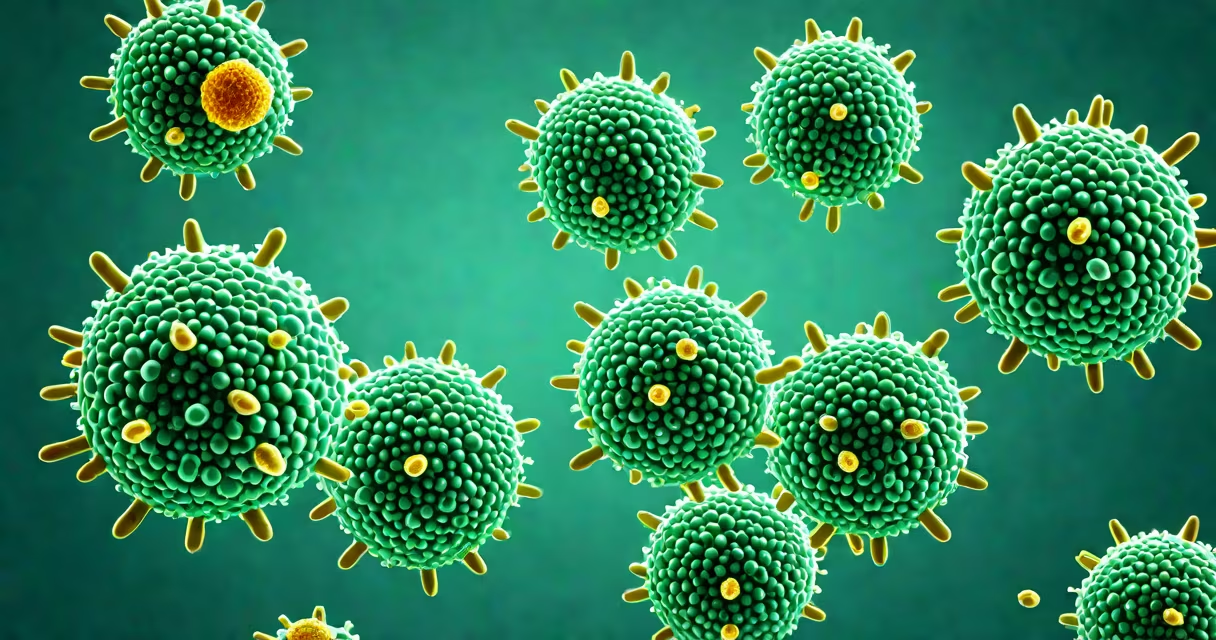
T cells and B cells are specialized white blood cells that form the core of the adaptive immune system. They recognize specific pathogens, mount targeted responses, and create long-term immunological memory. T cells primarily handle infected cells and coordinate immune activity, while B cells produce antibodies that neutralize free-floating threats like bacteria and viruses.
T cells mature in the thymus and circulate through blood and lymph. They detect antigens presented by major histocompatibility complex (MHC) molecules on infected or abnormal cells. When a T cell receptor binds to its matching antigen-MHC complex, the T cell activates and either kills the infected cell (cytotoxic T cells) or signals other immune cells to respond (helper T cells).
B cells develop in the bone marrow and patrol the bloodstream and lymph nodes. They recognize antigens directly via surface antibodies. Once activated by helper T cells, B cells differentiate into plasma cells that secrete large amounts of specific antibodies. These antibodies bind to pathogens, marking them for destruction by phagocytes or complement proteins.
Both cell types undergo clonal expansion-each activated cell divides into thousands of identical copies. This amplifies the immune response. After the threat clears, most effector cells die off, but memory T and B cells remain, enabling faster reactions upon re-exposure.
The table below outlines the main categories of T and B cells, their markers, and functions.
| Type | Surface Marker | Primary Function |
|---|---|---|
| Cytotoxic T cells | CD8+ | Kill virus-infected and cancerous cells |
| Helper T cells | CD4+ | Activate B cells, macrophages, and cytotoxic T cells |
| Regulatory T cells | CD4+, FoxP3+ | Suppress immune responses to prevent autoimmunity |
| Naive B cells | CD19+, IgD+ | Wait for antigen encounter to initiate response |
| Plasma cells | CD38+, CD138+ | Produce and secrete antibodies |
| Memory B cells | CD27+, IgG+ | Prolonged protection against recurring infections |
CD4+ helper T cells are essential for initiating B cell responses. Without their signal, B cells fail to fully activate. This interdependence highlights why deficiencies in T cell function often lead to poor antibody production.
T cells and B cells are central to vaccine efficacy. Vaccines introduce harmless forms of pathogens or their components to train these cells. For example, the mRNA COVID-19 vaccines prompt dendritic cells to present spike protein fragments to CD4+ and CD8+ T cells, leading to both T cell activation and B cell antibody production.
Chronic infections like HIV specifically target CD4+ T cells. As their numbers drop, the immune system loses coordination. This leads to opportunistic infections and cancers, defining AIDS. Monitoring CD4 counts remains a standard clinical measure in HIV care.
Autoimmune diseases occur when T or B cells mistakenly attack self-tissues. In type 1 diabetes, autoreactive T cells destroy insulin-producing beta cells in the pancreas. In systemic lupus erythematosus, B cells produce autoantibodies that attack DNA and other cellular components. Treatments often aim to suppress these cells selectively.
Many assume B cells produce T cells or vice versa. This is incorrect. B cells originate in the bone marrow; T cells mature in the thymus. Their development paths are distinct and irreversible.
Another misconception is that antibodies alone stop infections. While critical, antibodies cannot eliminate intracellular pathogens like viruses inside host cells. That task falls to cytotoxic T cells, which destroy infected cells directly.
A less obvious point: not all T cells are CD4+ or CD8+. Some rare subsets, such as γδ T cells, express neither marker. These cells bridge innate and adaptive immunity, responding quickly to stress signals on epithelial surfaces. They are especially active in mucosal tissues like the gut and skin.
After contracting measles, a person develops lifelong immunity. This results from both T and B cell activity. During infection, dendritic cells present measles antigens to CD4+ T cells in lymph nodes. Activated helper T cells then stimulate B cells to produce high-affinity IgG antibodies that neutralize the virus.
Simultaneously, CD8+ T cells recognize and kill infected cells. Memory T and B cells persist for decades. If exposed again, these cells rapidly expand and eliminate the virus before symptoms appear. This is why measles vaccination provides lasting protection.
In my lab work, we measured T cell responses in vaccinated individuals using flow cytometry. We found that those with strong CD4+ T cell activation had higher antibody titers and better viral neutralization. This confirmed the synergy between T and B cells in effective immunity.
T cells and B cells are distinct yet complementary arms of adaptive immunity. T cells act as coordinators and assassins, while B cells serve as antibody factories. Their collaboration ensures precise, useful, and lasting defense against pathogens.
Understanding their roles helps explain why certain immunodeficiencies affect only one arm. It also informs therapies targeting specific cell types, such as checkpoint inhibitors in cancer treatment or B cell depletion in autoimmune disorders.