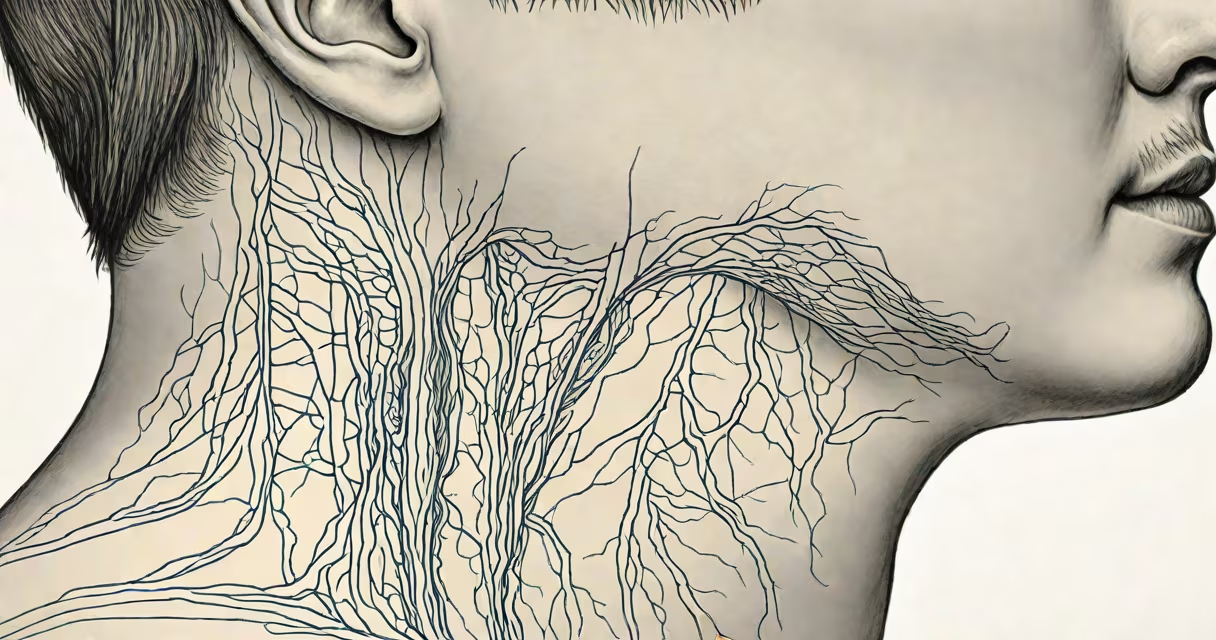
A swollen thyroid gland, known clinically as a goiter, occurs when the gland enlarges due to hormonal imbalance, nutrient deficiency, or structural changes. This enlargement may be diffuse or nodular and can result from iodine deficiency, autoimmune disorders, or benign or malignant growths.
Goiter develops when the thyroid increases in size to compensate for insufficient hormone production or to respond to abnormal stimuli. The most common cause globally remains iodine deficiency, affecting over 200 million people worldwide according to the World Health Organization. In regions with adequate dietary iodine, autoimmune conditions such as Hashimoto's thyroiditis and Graves' disease account for the majority of cases.
Swelling typically appears as a visible or palpable lump in the front of the neck, below the Adam's apple. While mild cases may cause no symptoms, larger goiters can press on the trachea or esophagus, leading to breathing difficulty, swallowing issues, or hoarseness. Not all thyroid swelling indicates disease-some individuals have a normal-sized gland that appears enlarged on imaging due to anatomical variation.
The thyroid gland produces hormones that regulate metabolism, heart rate, body temperature, and energy levels. When hormone production drops, the pituitary gland releases more thyroid-stimulating hormone (TSH), which signals the thyroid to grow larger in an attempt to increase output. This compensatory mechanism leads to gland enlargement over time.
In iodine-deficient areas, the thyroid cannot synthesize sufficient thyroxine (T4), triggering TSH release and stimulating cell proliferation. Over decades, this results in diffuse goiter. In contrast, nodular goiters form when tissue grows abnormally into lumps-some of which may produce excess hormones independently, causing hyperthyroidism.
Autoimmune diseases disrupt immune tolerance, leading the body to attack its own thyroid tissue. In Hashimoto's thyroiditis, chronic inflammation destroys thyroid cells, prompting compensatory growth. In Graves' disease, antibodies mimic TSH, continuously stimulating the gland and often resulting in both hyperthyroidism and goiter.
Goiters fall into several categories based on underlying cause. The classification guides diagnosis and treatment decisions.
| Type | Primary Cause | Prevalence | Key Features |
|---|---|---|---|
| Iodine-deficiency goiter | Lack of dietary iodine | Most common globally | Diffuse, symmetrical swelling; prevalent in mountainous or inland regions |
| Endemic goiter | Geographic iodine deficiency | Common in parts of Africa, Asia, South America | Often affects entire populations in specific regions |
| Autoimmune goiter | Hashimoto's or Graves' disease | High in North America, Europe | May include fatigue, weight gain (Hashimoto's); eye bulging, tremors (Graves') |
| Nodular goiter | Benign or cancerous nodules | Increases with age; more common in women | Can be multinodular; requires ultrasound and biopsy |
Non-toxic nodular goiters are the most frequent type seen in clinical practice. A 2020 study published in *The Journal of Clinical Endocrinology & Metabolism* found that nearly 50% of adults over 60 in the U.S. have at least one thyroid nodule, though only 5% are cancerous. This highlights the importance of distinguishing harmless nodules from those requiring intervention.
One lesser-known fact: some goiters develop due to medications. Amiodarone, used to treat irregular heart rhythms, contains high levels of iodine and can trigger either hypothyroidism or hyperthyroidism in susceptible individuals. Patients on long-term amiodarone therapy require regular thyroid function monitoring.
Many assume that any neck swelling is a goiter. However, lymph nodes, salivary gland tumors, or cysts can mimic thyroid enlargement. A physical exam and imaging are essential to differentiate.
Another misconception is that all goiters require surgery. Most small, asymptomatic goiters do not. The American Thyroid Association recommends observation unless the goiter causes symptoms, grows rapidly, or shows signs of malignancy on ultrasound.
There is also confusion between goiter and thyroid cancer. While a goiter may contain a cancerous nodule, the presence of a goiter does not mean cancer is present. Only 5% of thyroid nodules are malignant, and most are papillary thyroid cancers-slow-growing and highly treatable.
In rural Nepal, a 34-year-old woman presented with a visible neck mass and fatigue. She lived in a mountainous region with limited access to iodized salt. Blood tests revealed low T4, elevated TSH, and positive antithyroid peroxidase antibodies. Ultrasound showed a diffusely enlarged thyroid with no nodules.
She was diagnosed with iodine-deficiency goiter secondary to Hashimoto's thyroiditis. After starting levothyroxine and switching to iodized salt, her symptoms improved within six weeks. Her goiter reduced in size over 12 months, confirming that early intervention prevents irreversible enlargement.
This case illustrates that goiter is not always a sign of serious disease. Correct diagnosis avoids unnecessary procedures and ensures appropriate treatment.
For those experiencing persistent neck swelling, especially with unexplained weight changes, fatigue, or heart palpitations, medical evaluation is essential. A simple blood test for TSH, free T4, and thyroid antibodies can clarify the cause. Imaging via ultrasound helps assess structure and rule out malignancy.
Understanding what causes thyroid gland to swell enables timely action. Early detection and targeted treatment prevent complications and improve quality of life.