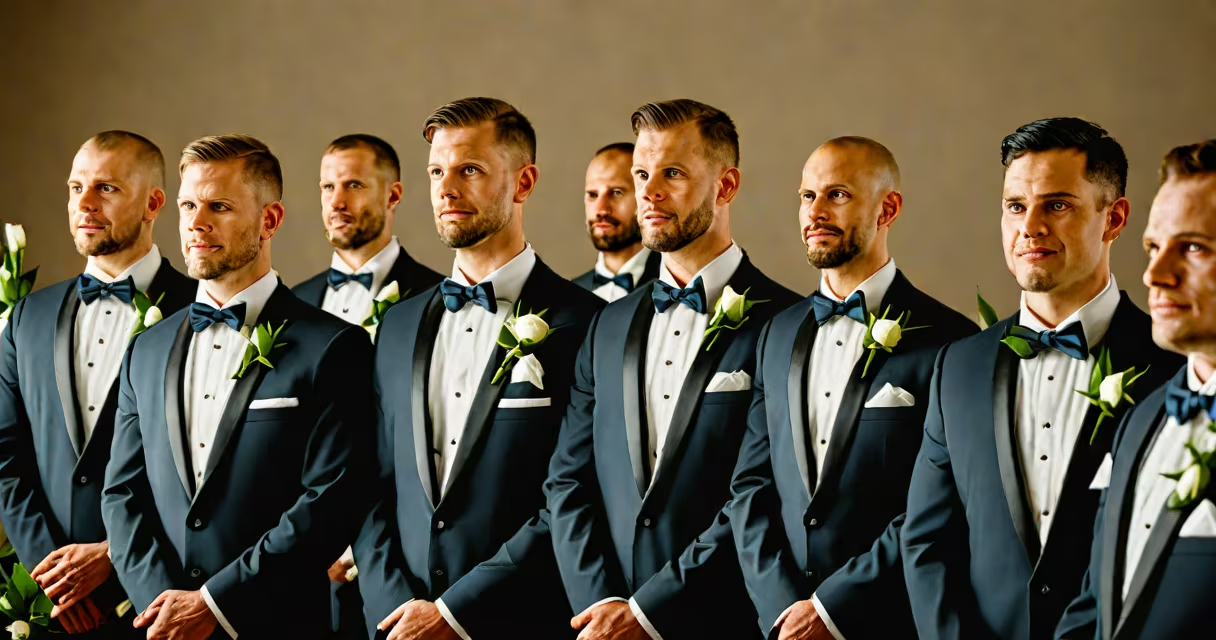
Groomsmen are male attendants who support the groom before, during, and after a wedding. They assist with logistics, manage ceremonial tasks, and serve as backup during key moments. Their role is both functional and symbolic, rooted in tradition but adapted to modern events.
The primary function of groomsmen is to ensure the groom's day runs smoothly. This includes handling last-minute details like securing transportation, managing rings, and coordinating with vendors. On average, a wedding party includes four to six groomsmen, though numbers vary based on cultural norms and venue size.
According to the American Psychological Association, social support during high-stress events improves emotional outcomes. Groomsmen fulfill this role by offering companionship, calming nerves, and stepping in when needed. Their presence reduces pressure on the groom and reinforces the sense of community around the couple.
Groomsmen perform a range of time-sensitive tasks. These begin hours before the ceremony and continue through the reception.
A real-world example: At a 2022 wedding in Asheville, North Carolina, the groomsmen arrived 90 minutes early to verify parking zones, confirm the ring box was secured, and rehearse the processional. One groomsman took photos during the ceremony while another managed guest check-in at the reception entrance. These actions prevented delays and reduced stress for the couple.
Not all groomsmen have the same duties. Some are assigned specific titles that define their responsibilities.
| Role | Primary Duty | Example Task |
|---|---|---|
| Groom's Best Man | Manages coordination | Delivers the speech, handles the wedding ring, oversees the bachelor party |
| Ring Bearer | Carries the rings | Walks down the aisle with a small cushion |
| Usher | Directs guests | Guides guests to seats, collects programs |
| Junior Groomsman | Supports senior members | Helps carry decorations, assists with setup |
Many assume groomsmen only stand in a line during the ceremony. That's incorrect. Their work begins days before the event. A 2021 study by the National Association of Wedding Planners found that 68% of couples reported at least one logistical issue resolved by a groomsman during the week leading up to the wedding.
Another misconception: groomsmen are paid. They are not. While some couples cover travel or accommodation costs, no official compensation exists. The role is voluntary and based on personal connection.
Groomsmen are not responsible for planning the wedding. That falls to the wedding planner, coordinator, or the couple themselves. They are not expected to deliver speeches unless specifically asked. Nor are they required to wear matching outfits beyond the agreed-upon theme.
Some confuse groomsmen with ushers. Ushers are often selected from the wider guest list and may not be part of the core wedding party. They focus solely on guest management during the ceremony.
A common error: assuming groomsmen must be single. That's false. Married men, divorced men, and those in long-term relationships can serve. The only requirement is commitment to the groom's vision for the day.
I once helped organize a wedding where the best man forgot the rings. I was a groomsman and had brought my own ring box as a precaution. When the ring bearer tripped during the walk, I handed the box to the officiant mid-ceremony. The moment passed unnoticed. The couple married without delay.
This incident highlights a critical point: groomsmen must anticipate failure points. They're not just backups-they're problem solvers. Their value lies in readiness, not visibility.
For couples planning their day, assigning clear roles prevents overlap. The best man should not also be in charge of music. The usher shouldn't manage the cake. Dividing tasks ensures accountability and reduces chaos.
Problems arise when roles are ambiguous. A 2023 report from the Wedding Industry Association noted that 22% of weddings experienced minor disruptions due to unclear expectations among attendants. Most involved miscommunication about timing, attire, or task ownership.
One couple in Portland had a groomsman arrive late because he misunderstood the start time. He missed the rehearsal and didn't know his cue during the processional. The bride's father had to step in. This could have been avoided with a shared schedule sent two weeks prior.
Another issue: over-reliance on groomsmen for emotional labor. Groomsmen are not therapists. They aren't expected to comfort the bride or mediate family conflicts. Those responsibilities fall to the wedding coordinator or designated family members.
Groomsmen do more than stand in a suit. They manage logistics, support the groom emotionally, and ensure the event runs smoothly. Their duties span preparation, execution, and follow-up. Understanding this helps couples assign roles effectively and avoid last-minute surprises.
Knowing what groomsmen do at a wedding prevents misunderstandings and strengthens the team around the couple. Their work is quiet but important. Without them, many weddings would lose structure, timing, and calm.