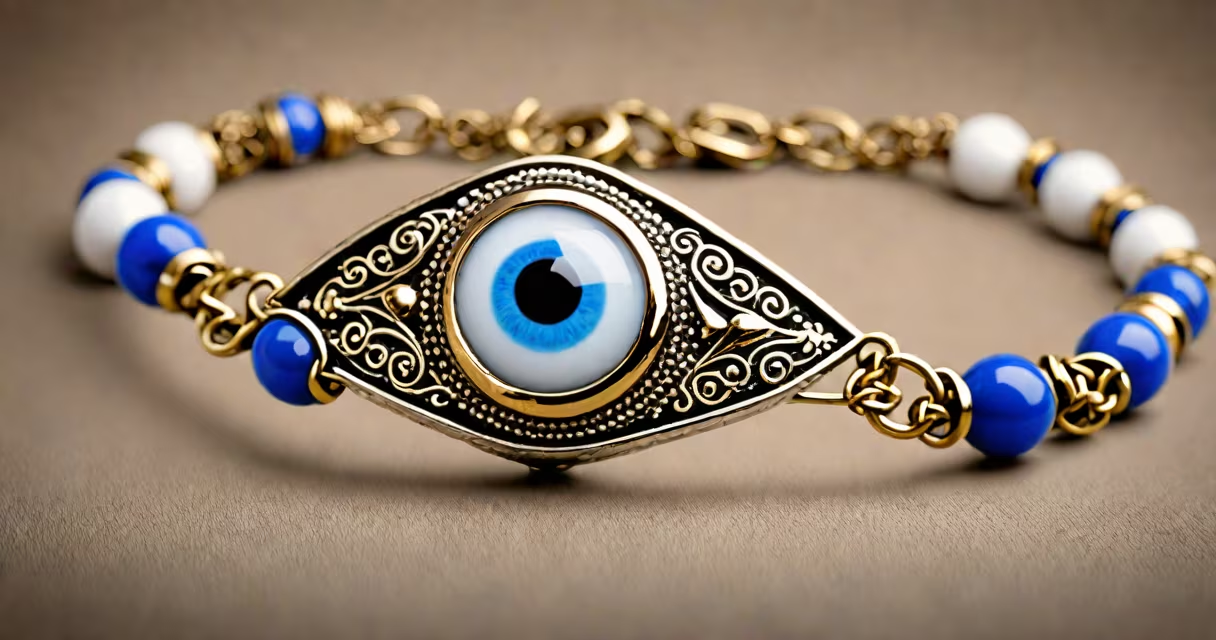
An evil eye bracelet is a protective talisman believed to deflect jealousy, ill will, and harmful intentions through symbolic imagery of the eye. Rooted in ancient Mediterranean and Middle Eastern traditions, it functions as both spiritual armor and personal adornment.
The concept of the evil eye dates back over 2,500 years. Ancient Greeks and Romans wore eye-shaped amulets to ward off curses tied to envy. The belief persists today in countries like Turkey, Greece, Egypt, and parts of Latin America, where the eye motif appears on jewelry, home decor, and clothing. According to the British Museum, early versions of the eye were carved into stone and placed in temples as divine guardians.
Modern evil eye bracelets typically feature a blue-and-white eye design, though variations exist in red, green, gold, and black. The color choice often reflects regional customs. For example, Turkish designs favor deep cobalt blue, while Mexican artisans may use turquoise or obsidian. The eye is not meant to represent literal vision but rather a metaphysical watchfulness against unseen threats.
Evil eye bracelets operate under the principle of sympathetic magic-the idea that objects resembling a threat can absorb or redirect it. The eye symbol acts as a mirror: when someone casts a jealous glance, the bracelet captures the negative energy and redirects it harmlessly. This belief is documented in ethnographic studies by anthropologist Ernesto de Martino, who noted similar practices in Southern Italy during the 1950s.
Wearing the bracelet is not passive. Many users report feeling a sense of calm or grounding when they touch the eye charm. Some people say the bracelet "feels heavier" when around people with intense emotions, though this is anecdotal. There's no scientific evidence that the bracelet blocks psychic energy, but the psychological effect of ritualized protection is well-documented in behavioral psychology.
A study published in the journal *Psychology of Religion and Spirituality* (2021) found that individuals who wore protective symbols like the evil eye reported lower anxiety levels in high-stress environments compared to those who didn't. While the effect wasn't causal, participants described increased confidence and mental resilience linked to the object's symbolic weight.
Not all evil eye bracelets are the same. The design, materials, and intended function vary widely by region and tradition.
| Type | Common Materials | Cultural Origin | Symbolic Meaning |
|---|---|---|---|
| Traditional Turkish | Blue glass beads, silver clasp | Turkey | Deflects envy; often gifted at weddings |
| Mediterranean Beaded | Colored glass, seed beads | Greece, Sicily | Protects children; worn by infants |
| Modern Fashion | Leather, metal chains, cubic zirconia | Global (U.S., Europe) | Style statement; spiritual symbolism optional |
| Black Evil Eye | Onyx, black stone, leather | West Africa, Afro-Latin communities | Grounds energy; protects against spiritual attacks |
One lesser-known fact: in some Balkan regions, people believe the evil eye must be broken or removed after absorbing too much negativity. A cracked bead signals that the bracelet has done its job and should be retired. This practice reflects a deeper understanding of the object as a living vessel of protection, not just decoration.
Today, evil eye bracelets are worn globally-not just for spiritual reasons but also as fashion accessories. They appear in celebrity streetwear, music videos, and social media aesthetics. Rihanna wore a blue evil eye ring during her 2019 tour, sparking renewed interest among younger audiences.
They're especially popular in urban settings where people seek symbolic anchors amid uncertainty. A 2023 survey by the Pew Research Center found that 17% of Americans aged 18-34 have worn or purchased a protective charm like the evil eye, citing emotional comfort as the primary reason.
Some people wear the bracelet during transitions-moving to a new city, starting a new job, or recovering from illness. In these cases, it serves as a tangible reminder of intention and resilience. I once met a woman in Istanbul who wore hers daily during chemotherapy. She said it helped her feel "less alone" in the treatment process.
People often confuse the evil eye bracelet with other symbols. It is not a fertility charm, nor is it associated with witchcraft in most traditions. The eye is not meant to see-you're not supposed to look through it. Its power lies in being seen, not in seeing.
Another myth: the bracelet only works if you believe in it. While belief enhances personal meaning, the object itself holds cultural weight beyond individual faith. In Turkey, even secular people wear evil eye jewelry during holidays. The symbol transcends religion-it's part of national identity.
Also, the bracelet doesn't attract bad luck. That's a common mix-up with certain African or Asian amulets. The evil eye repels misfortune, it doesn't invite it. Wearing one doesn't increase risk-it reduces perceived vulnerability.
What does an evil eye bracelet mean? It's a centuries-old symbol of defense against unseen forces-envy, fear, and ill intent. Whether worn for spiritual protection, cultural connection, or personal style, it represents a human desire to feel safe in uncertain times. The meaning lives not in the object alone, but in the act of wearing it with awareness.