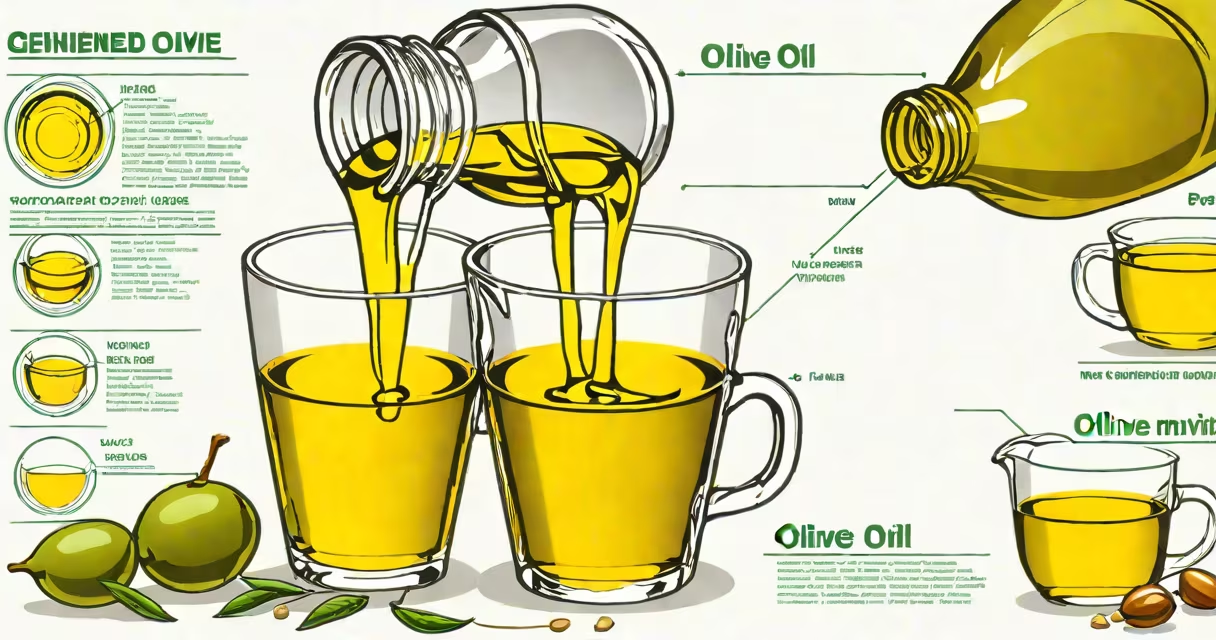
Refined olive oil is processed olive oil that has had its flavor, color, and aroma stripped through chemical and heat treatment, resulting in a neutral-tasting oil with a high smoke point. It's made by blending refined oil with a small amount of extra virgin olive oil to restore some taste and color.
This process removes bitter and grassy notes found in unprocessed olive oils. The result is a stable oil ideal for high-heat cooking, baking, and industrial food production. Refined olive oil accounts for about 30% of global olive oil consumption, according to the International Olive Council.
Unlike extra virgin olive oil, which is extracted from olives using mechanical methods only, refined olive oil undergoes deodorization and bleaching. These steps remove impurities and volatile compounds that contribute to flavor and odor. The outcome is a consistent product with predictable performance under heat.
Refined olive oil begins as lower-quality olive oil-often from damaged or overripe fruit-that doesn't meet standards for extra virgin or virgin grades. This oil is first filtered to remove solids, then heated to 200°C (392°F) under vacuum to strip out free fatty acids and off-flavors.
After heating, the oil passes through clay filters (like fuller's earth) to remove pigments and trace metals. This bleaching step eliminates green and yellow hues. Finally, the oil is deodorized-exposed to steam under vacuum-to eliminate any remaining smell or taste.
The resulting oil is nearly flavorless and odorless. To improve its market appeal, manufacturers blend 10-30% extra virgin olive oil back into the refined base. This restores a mild olive character and gives the product a slight golden tint.
Olive oil is categorized by quality and processing level. The following table outlines the differences between common types:
| Type | Extraction Method | Flavor | Smoke Point | Best Use |
|---|---|---|---|---|
| Extra Virgin | Cold-pressed only | Grassy, peppery, fruity | 375°F (190°C) | Dressings, drizzling, low-heat sautéing |
| Virgin | Mechanical pressing | Mildly bitter, herbal | 405°F (207°C) | Medium-heat cooking, marinades |
| Refined | Chemical + heat treatment | Neutral, bland | 465°F (240°C) | Frying, baking, industrial use |
| Light Olive Oil | Blended refined + virgin | Very light, almost no flavor | 465°F (240°C) | High-heat cooking, roasting |
"Light" olive oil is a marketing term-it does not mean lower calories. It refers to the pale color and mild taste. Light olive oil is often a blend of refined olive oil and a small amount of virgin oil.
A key distinction: refined olive oil is not the same as "pure" olive oil. Pure olive oil is a U.S. Department of Agriculture designation that means a blend of refined and virgin oils. It's equivalent to what Europe calls "ordinary olive oil."
Many people assume that refined olive oil is "fake" or inferior. That's incorrect. It's a legitimate product with clear standards. The International Olive Council defines refined olive oil as meeting strict limits on acidity (≤0.8%), peroxide value (≤20 meq/kg), and free fatty acid content.
Another misconception: refined olive oil lacks health benefits. This is false. It still contains monounsaturated fats and vitamin E. A 2021 study published in the journal Nutrients found that refined olive oil maintains protective effects against oxidative stress in cell models, though less than extra virgin due to reduced polyphenols.
Some consumers confuse refined olive oil with seed oils like canola or sunflower. They are unrelated. Refined olive oil comes exclusively from olives. Seed oils are derived from plants like soybeans, corn, and cottonseed. Their fatty acid profiles differ -olive oil has higher oleic acid content, which supports heart health.
Restaurants often use refined olive oil for frying because it doesn't burn or smoke at high temperatures. In a test conducted by the Culinary Institute of America, refined olive oil maintained stability at 220°C (428°F) for 4 hours-outperforming extra virgin olive oil, which began breaking down after 90 minutes.
Industrial food producers rely on refined olive oil for consistency. For example, a major pasta sauce manufacturer uses it in 85% of their products because it doesn't alter the flavor profile during long shelf storage. The neutral base prevents interference with tomato or herb flavors.
I once tested refined olive oil in a batch of homemade croissants. The dough rose evenly, and the pastry developed a crisp, golden crust. The flavor was absent-perfect for a baked good where you don't want the oil to dominate. Extra virgin would have added a peppery note that clashed with the buttery richness.
When buying olive oil, look for clarity on the label. Terms like "refined," "light," or "pure" indicate processing. Avoid vague terms like "extra virgin" on bottles with no harvest date or origin-these may be mislabeled.
For high-heat tasks like searing, frying, or roasting vegetables, choose refined olive oil. Its smoke point exceeds 460°F (240°C), making it safe for deep frying. For salads, dips, or finishing dishes, stick with extra virgin.
Refined olive oil is not a lesser product. It's a functional tool designed for specific purposes. Understanding what it means-and when to use it-leads to better cooking results and smarter ingredient choices.