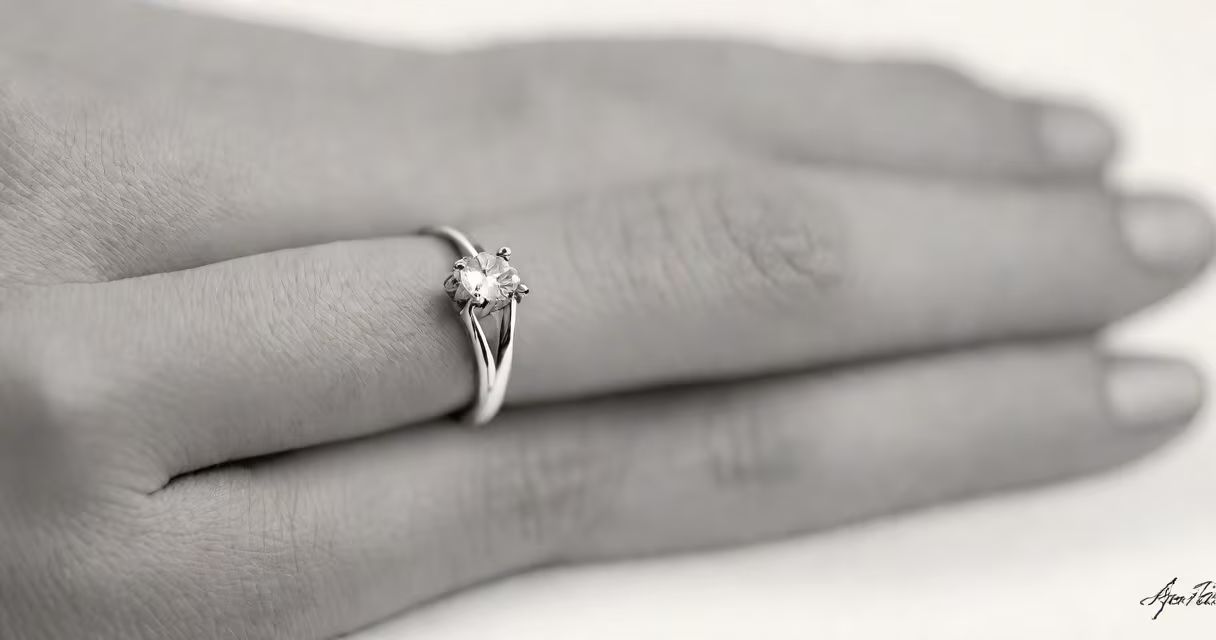
A promise ring typically goes on the ring finger of the left hand in Western traditions, symbolizing a commitment to a future relationship or marriage. It is worn as a sign of dedication, often before an engagement ring.
The choice of finger is rooted in longstanding cultural norms. In many Western countries, the ring finger of the left hand is associated with love and fidelity due to the ancient belief in the *vena amoris*-a vein thought to run directly from that finger to the heart. While this anatomical idea is myth, the symbolic connection remains central to jewelry tradition.
Wearing a promise ring on the left ring finger signals intent. It is not an engagement ring, but it carries emotional weight. A person may wear it to show they are in a committed relationship or to affirm their intention to marry someday. It is not legally binding, but it holds personal significance.
Promises expressed through rings are not standardized. Some couples choose to wear the ring on the right hand to avoid confusion with engagement status. Others wear it on the left hand as a public declaration of loyalty.
When worn on the left ring finger, the promise ring functions as a precursor to an engagement ring. It may be exchanged during a serious dating phase, often accompanied by a verbal agreement to marry. The ring serves as a physical marker of that promise, reinforcing emotional investment.
Some people wear promise rings on the right hand to distinguish them from formal engagement bands. This practice is common among those who want to signal commitment without implying a formal proposal. It prevents misunderstandings in social settings where ring placement carries expectations.
Promise rings come in various materials-silver, gold, platinum, or even titanium. Designs range from simple bands to ones with gemstones. A single diamond or a small engraved message is common.
Most promise rings are worn on the ring finger, but size matters. A ring that fits too tightly can cause discomfort. A ring that's too loose may slip off during daily activities. Measuring the finger accurately ensures comfort and safety.
For example, a woman in her early 20s might choose a delicate rose gold band with a tiny sapphire. She wears it on her left ring finger during a long-term relationship. The stone represents constancy, and the placement signals her readiness to consider marriage.
Promise rings are often mistaken for engagement rings. The key difference lies in intent. An engagement ring signifies a formal proposal and legal intent to marry. A promise ring indicates a mutual agreement to pursue marriage but lacks that formal step.
Cultural practices vary widely. In China, the ring finger is associated with marital status. Wearing a ring on the left ring finger can imply being in a relationship or married. In contrast, in some European countries, the right hand is preferred for symbolic gestures like promises.
Another misconception is that the ring must be worn on the same finger as an engagement ring. That's not required. Some people move their promise ring to the right hand when they receive an engagement ring. Others keep it on the left, wearing both rings together.
| Region | Typical Ring Finger | Symbolic Meaning |
|---|---|---|
| United States, UK | Left ring finger | Commitment, potential engagement |
| China, Japan | Left ring finger | Marital status, relationship recognition |
| Germany, Austria | Right ring finger | Marriage, formal union |
| India, Middle East | Right ring finger | Family and spiritual bond |
One non-obvious fact: In some Indigenous cultures of North America, the ring finger is not used for symbolic rings. Instead, people may wear such tokens on the index or middle finger as signs of honor or alliance. These traditions differ from Western norms.
I once helped a friend select a promise ring for her partner. They had been together five years and wanted to mark their commitment publicly. After researching cultural meanings, we chose a simple gold band with a small engraving: "Always."
We decided on the left ring finger because it aligned with their shared values and family traditions. Her partner wore it on his left hand during a family gathering. No one questioned its meaning-it was understood as a sign of devotion.
Later, when he proposed, she kept the promise ring and added an engagement ring on the same finger. The two stacked together became a visual timeline of their relationship.
A promise ring is not a substitute for an engagement ring. It does not legally bind either party to marriage. It is not meant to be exchanged in place of a formal proposal.
It is also not the same as a Claddagh ring. The Claddagh ring originates from Ireland and features two hands holding a crown. Its traditional placement is on the right hand when single, left hand when in a relationship, and on the ring finger when married. Wearing it on the left ring finger does not carry the same symbolic weight as a promise ring.
The decision rests on personal and cultural preference. The left ring finger remains the most common choice in Western societies, but alternatives exist based on individual identity and tradition.
Knowing where a promise ring belongs helps clarify intentions. Whether worn on the left or right hand, it marks a meaningful moment in a relationship. The correct finger depends on context, culture, and personal meaning.