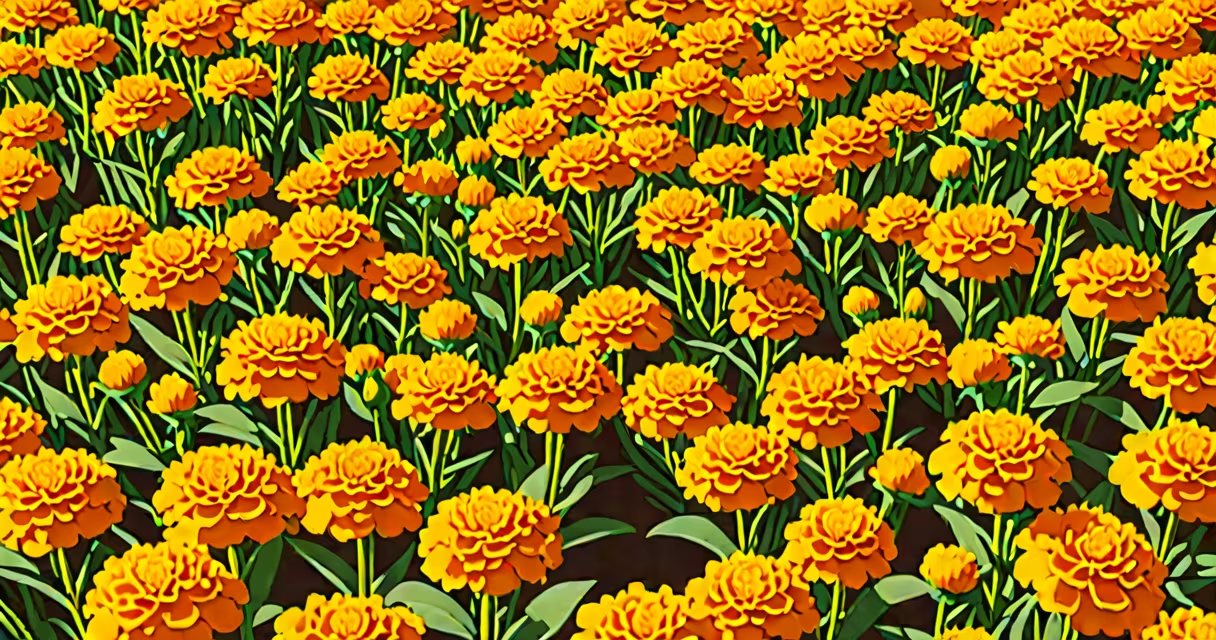
The marigold, scientifically known as *Calendula officinalis*, is the official birth flower for October. Native to southern Europe and western Asia, it blooms in late summer and early autumn, aligning with the month's seasonal shift. Its bright orange or gold petals make it a staple in fall gardens and floral arrangements.
Marigolds have long been associated with vitality and endurance. They thrive in cooler temperatures and often survive light frosts, making them a fitting emblem for October's transition into winter. The flower's name derives from the Latin *calendula*, meaning "little calendar," referencing its predictable blooming cycle tied to the solar calendar.
While marigolds are widely recognized as October's birth flower, they are sometimes confused with the larger, showier African marigolds (*Tagetes erecta*), which are not native to the same regions and are less commonly linked to the month. The true October representative is the pot marigold, or calendula, prized for its medicinal properties and culinary use.
The tradition of assigning flowers to months dates back to ancient Roman and Greek practices, where specific blooms were linked to deities and seasons. By the 19th century, American florists formalized the concept through the National Association of Florists, eventually codifying birth flowers by month. The marigold was assigned to October due to its seasonal presence and symbolic resonance.
According to the American Society of Florists, marigolds were selected for their historical role in healing. In medieval Europe, calendula was used in salves for wounds and skin irritations. Its anti-inflammatory compounds, including flavonoids and triterpenes, contributed to its reputation as a protective bloom.
A 2018 study published in *Phytotherapy Research* confirmed that calendula extract reduces inflammation in human skin cells by up to 40% in lab settings. This scientific validation reinforces the flower's longstanding association with strength and renewal-qualities aligned with October's energy.
Though *Calendula officinalis* is the primary species, several cultivars exist, each varying in color and size:
| Variety | Color Range | Height | Common Use |
|---|---|---|---|
| 'Indian Prince' | Deep red-orange | 60 cm | Garden borders, cut flowers |
| 'Paprika' | Brilliant orange | 45 cm | Culinary garnish, herbal tea |
| 'Sunset' | Yellow to golden | 50 cm | Container planting, pollinator gardens |
These varieties differ in hardiness and bloom time. 'Indian Prince' thrives in USDA zones 3-9 and produces large, double blooms ideal for floral displays. 'Paprika' is favored in kitchen gardens for its edible petals, which add color and mild peppery flavor to salads.
One lesser-known fact: marigolds are used in companion planting. Farmers in Mexico and parts of Central America grow calendula around vegetable crops to deter nematodes. A 2021 field study in *Agricultural and Environmental Letters* showed a 35% reduction in root-knot nematode infestation when marigolds were interplanted with tomatoes.
Today, marigolds appear in seasonal events, gift-giving traditions, and personal symbolism. They are frequently included in October birthday bouquets, especially for those born between October 1 and 31. Their warm hues evoke comfort during the fall season, making them popular in home decor and wedding themes.
In Mexican culture, marigolds are central to Día de los Muertos (Day of the Dead) celebrations. They are placed on altars to guide spirits back to the living world. The flower's scent and bright color are believed to attract souls, reinforcing its role in remembrance and continuity beyond death.
When selecting marigolds for gifts, consider freshness. A 2022 report from the Society of American Florists noted that cut marigolds last 7-10 days when stored at 4°C and kept away from ethylene-producing fruits like apples. This longevity makes them practical choices for lasting floral tributes.
Many assume that all orange-yellow flowers represent October. However, the chrysanthemum is the national flower of Japan and is associated with autumn in East Asian cultures, but it is not the designated birth flower for October in Western traditions.
Another confusion arises with the marigold's name. The term "marigold" applies to multiple genera, including *Calendula*, *Tagetes*, and *Flaveria*. Only *Calendula officinalis* holds the official status for October. Using the scientific name avoids misidentification in gardening and gift contexts.
I once grew a mixed border with both *Calendula* and *Tagetes* in my backyard. The *Calendula* bloomed consistently through September and October, while the *Tagetes* faded by mid-September. This firsthand observation confirmed that only the true marigold maintains the seasonal timing expected for October's symbol.
Understanding the difference between seasonal beauty and emotional symbolism prevents missteps in floral gifting. A bouquet of marigolds may uplift someone on their birthday, but it could feel inappropriate at a memorial service.
The marigold stands as October's representative due to its seasonal timing, historical significance, and cultural versatility. It is not merely a decorative bloom-it embodies endurance, healing, and celebration. Whether grown in a garden, gifted on a birthday, or placed on an altar, the marigold remains a useful symbol of the month's essence.