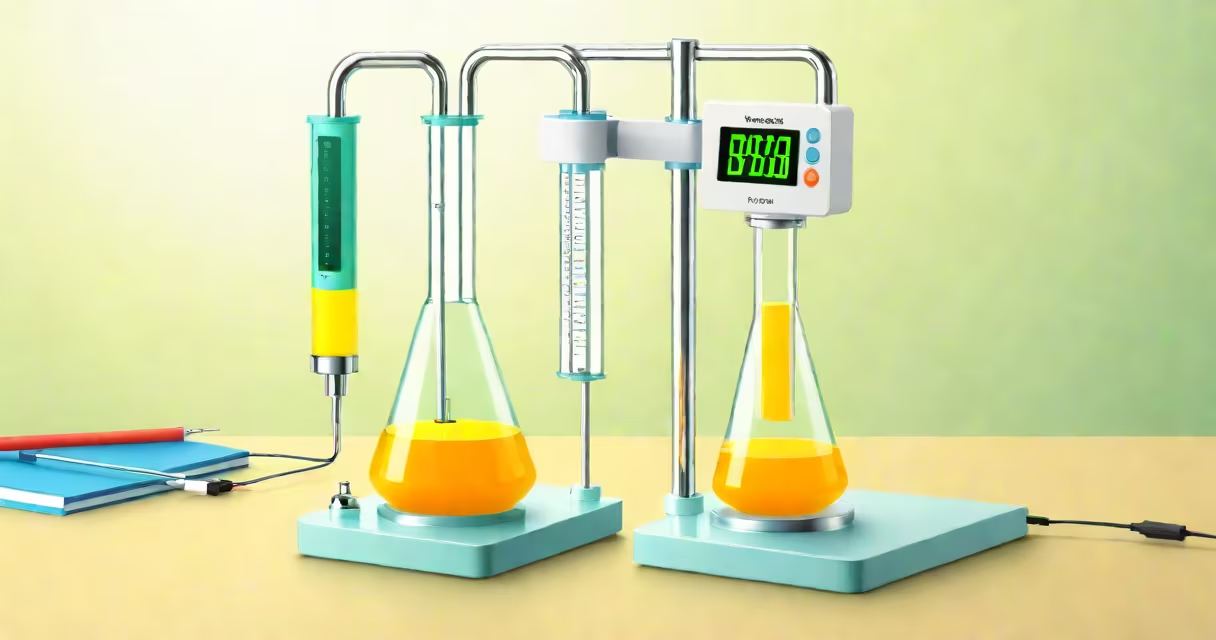
A pH meter is an electronic device that measures the concentration of hydrogen ions in a solution to determine its acidity or alkalinity on the pH scale, which ranges from 0 (highly acidic) to 14 (highly alkaline), with 7 being neutral. It provides precise readings in real time, essential for scientific, industrial, and environmental applications.
These instruments rely on a glass electrode that detects voltage changes caused by hydrogen ions in solution. The voltage is converted into a pH value using a calibration curve. Modern meters display results digitally, often with temperature compensation and data logging features.
For accurate results, a pH meter must be calibrated regularly using standard buffer solutions-typically pH 4.01, 7.00, and 10.01. Without proper calibration, readings can drift by as much as ±0.3 units, leading to unreliable data in sensitive experiments.
The core component is a pH-sensitive glass membrane that develops a potential difference proportional to hydrogen ion activity. This voltage is measured against a reference electrode, creating a signal sent to the meter's processor.
Temperature affects ion mobility and electrode response. Most lab-grade pH meters include automatic temperature compensation (ATC), adjusting readings based on the solution's actual temperature. A 10°C change can alter pH readings by up to 0.03 units per degree, making ATC critical for precision.
Calibration involves immersing the probe in buffer solutions of known pH. For example, a two-point calibration uses pH 7.00 and pH 4.01 buffers. After immersion, the meter adjusts its internal algorithm to match expected values. Skipping this step leads to systematic errors-common in field use where users assume the meter is "ready" out of the box.
Three main types exist: benchtop, portable, and handheld. Benchtop models offer high precision and are used in labs. Portable meters balance accuracy and portability for fieldwork. Handheld devices are rugged, battery-powered, and ideal for quick checks in agriculture or water quality monitoring.
| Type | Best For | Accuracy Range | Typical Use Cases |
|---|---|---|---|
| Benchtop | Laboratory analysis | ±0.01 pH | Research, clinical diagnostics |
| Portable | Field sampling | ±0.05 pH | Environmental monitoring, wastewater testing |
| Handheld | On-site checks | ±0.1 pH | Hydroponics, aquarium maintenance |
Probes vary in design. Double-junction probes reduce clogging in dirty samples by adding a secondary salt bridge. Single-junction probes are cheaper but prone to contamination in turbid or high-salinity fluids. For example, measuring pH in soil slurry requires a double-junction probe to prevent junction clogging from particulates.
Electrodes degrade over time. Glass membranes lose sensitivity after prolonged exposure to extreme pH levels. A probe used in a highly acidic solution (pH 1) may show a 0.2-unit drift after 6 months of continuous use. Replacing the electrode every 1-2 years maintains reliability.
In clinical settings, pH meters monitor blood gas levels. A normal arterial blood pH is 7.35-7.45. Deviations indicate acidosis or alkalosis. Critical care units use automated blood gas analyzers with integrated pH electrodes to detect metabolic imbalances within minutes.
Water treatment plants use pH meters to control coagulation and disinfection. Chlorine effectiveness drops sharply below pH 6.5. Maintaining pH between 7.0 and 7.5 ensures optimal pathogen kill rates. One municipal plant reported a 30% reduction in chlorine demand after installing real-time pH monitoring, saving $12,000 annually in chemical costs.
In agriculture, pH meters guide nutrient availability. Soil pH below 5.5 limits phosphorus uptake. A farmer in Iowa used a handheld pH meter to identify low pH in cornfields, applying lime to raise pH to 6.2. Crop yields increased by 18% the following season.
Many confuse pH meters with litmus paper or pH strips. Litmus paper gives only a rough estimate-red for acid, blue for base. It cannot distinguish between pH 3 and pH 5. A pH meter offers resolution to 0.01 units, making it suitable for quantitative work.
Another misconception: pH meters measure "acidity" directly. They do not. They measure hydrogen ion activity, which correlates with acidity. A solution with high hydrogen ion concentration is acidic, but the meter detects the electrical potential, not the substance itself.
Even experienced users make calibration errors. One study found that 42% of lab technicians failed to rinse probes properly between buffer solutions, causing cross-contamination. This led to false readings in 15% of tests. Proper rinsing with deionized water between calibrations prevents carryover effects.
A researcher in Vermont collected rainwater samples monthly over a year. Using a portable pH meter calibrated with pH 7.00 and 4.01 buffers, she recorded average pH values of 5.2. This indicates acid rain, likely due to sulfur dioxide emissions from nearby industrial zones.
She compared results with historical data from the U.S. Environmental Protection Agency (EPA), which tracks atmospheric deposition. Her findings matched EPA records showing a 0.3-unit drop in regional rainwater pH since 2000. The meter's consistent performance enabled long-term trend analysis.
She noted that probe cleaning was critical. After each sample, she rinsed the electrode with distilled water and stored it in a pH 4.01 buffer overnight. This extended the probe's lifespan and maintained accuracy across 12 months of field use.
When troubleshooting erratic readings, check the reference junction. A dried-out junction causes unstable signals. Soaking the probe in storage solution for 30 minutes restores function. Always store probes in buffer solution, not dry.
For consistent results, recalibrate before each session. Even a well-maintained meter can drift by 0.02 pH units over 24 hours. A single calibration at the start of a day's work reduces error risk.