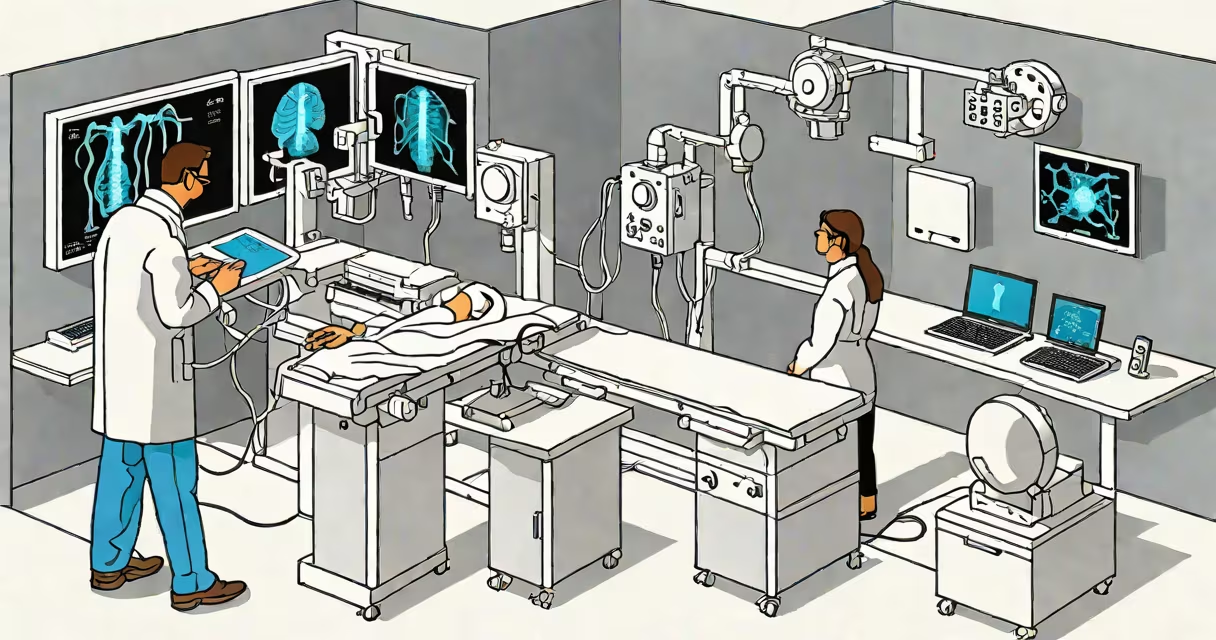
A radiologic technologist is the formal title for a professional who performs diagnostic imaging procedures using ionizing radiation, such as X-rays, computed tomography (CT), and fluoroscopy. These technicians capture images of internal body structures to assist physicians in diagnosing injuries, diseases, and abnormalities.
Radiologic technologists work in hospitals, outpatient clinics, imaging centers, and sometimes mobile units. They position patients correctly, adjust equipment settings based on body type and area being imaged, and ensure radiation exposure remains within safe limits. Their role requires precision, attention to detail, and direct patient interaction.
The term "x ray tech" is commonly used in everyday conversation, but the official designation in healthcare and credentialing systems is radiologic technologist. This title reflects the breadth of skills involved in acquiring diagnostic images across multiple modalities, not just plain X-rays.
When a patient arrives for an imaging exam, the technologist begins by reviewing the physician's order and confirming the correct procedure. They explain the process to the patient, address concerns, and ensure informed consent is documented when required.
During the scan, the technologist operates the imaging equipment from behind a protective barrier. They adjust collimation, exposure time, kVp, and mAs settings to balance image quality with minimal radiation dose. For complex exams like CT scans or angiography, they may work with a radiologist to tailor protocols.
After acquisition, the technologist reviews the images for technical quality-checking for motion blur, incorrect positioning, or artifacts. If issues arise, they may repeat the study. Final images are sent to a radiologist for interpretation and then stored in the patient's electronic health record.
To become a radiologic technologist, individuals typically complete an accredited associate degree program in radiologic technology. Programs take 2 years and include classroom instruction in anatomy, physiology, radiation physics, and patient care, along with hands-on clinical rotations.
Upon graduation, candidates must pass the American Registry of Radiologic Technologists (ARRT) certification exam. Passing this exam grants the credential RT(R), which is required for employment in most U.S. states. Continuing education credits are needed every two years to maintain certification.
Technologists can specialize in areas such as mammography (RM), computed tomography (CT), magnetic resonance imaging (MRI), or interventional radiology. Specialization requires additional training and certification through ARRT or other approved bodies.
Many people assume that x ray techs simply press buttons and leave the room. In reality, they make real-time decisions about technique, patient safety, and image quality. A single mispositioned limb can obscure a fracture or tumor, requiring a repeat exposure.
Another common error is confusing radiologic technologists with medical physicists or radiologists. Radiologists are physicians who interpret images and diagnose conditions. Medical physicists manage radiation safety and equipment calibration. Radiologic technologists perform the imaging-physicians interpret it.
Even within the field, there's confusion between radiologic technologists and sonographers. While both perform diagnostic imaging, sonographers use ultrasound waves, not ionizing radiation. Ultrasound is safer for pregnant women and children, but it cannot visualize bone or air-filled organs as as X-rays or CT scans.
Technologists work across several imaging platforms. The table below outlines the primary modalities, typical applications, and required credentials.
| Modality | Primary Use | Required Credential |
|---|---|---|
| X-ray (radiography) | Bone fractures, lung infections, dental imaging | RT(R) |
| Computed Tomography (CT) | Internal bleeding, tumors, stroke evaluation | CT certification via ARRT |
| Mammography | Breast cancer screening and diagnosis | RH(M) or RM certification |
| Fluoroscopy | Barium swallow, joint injections, cardiac catheterization | FL certification |
Each modality demands specific training. For example, fluoroscopy exposes patients and staff to continuous low-dose radiation, requiring strict adherence to ALARA principles (As Low As Reasonably Achievable).
In a busy emergency department, a 28-year-old woman presents with wrist pain after falling on her outstretched hand. The ER physician orders a wrist X-ray to rule out fracture.
The radiologic technologist meets the patient, confirms identity and procedure, and positions the wrist in three views: anteroposterior (AP), lateral, and oblique. They adjust the machine settings to account for the patient's small frame and minimize radiation exposure.
Images are acquired quickly. The technologist checks for proper alignment and clarity. One view shows a subtle hairline fracture near the distal radius. The image is flagged for the radiologist's review. The patient is referred for follow-up care.
This entire process takes under 15 minutes. The technologist ensures accuracy, safety, and patient comfort throughout.
I once observed a technologist in a rural clinic who had to adapt a standard protocol for a patient with severe arthritis. The usual wrist X-ray positions caused pain and limited mobility. The technologist modified the setup using foam padding and a custom support device, capturing usable images without increasing the patient's discomfort. This demonstrated the practical problem-solving required in daily practice.
For those interested in advancing beyond entry-level roles, pursuing a bachelor's degree in radiologic sciences opens doors to leadership, education, or research. Some technologists go on to earn a master's degree in medical imaging or health administration.
Understanding the precise role of a radiologic technologist clarifies their essential contribution to patient care. They are not just operators-they are skilled clinicians who enable accurate diagnoses and improve health outcomes.