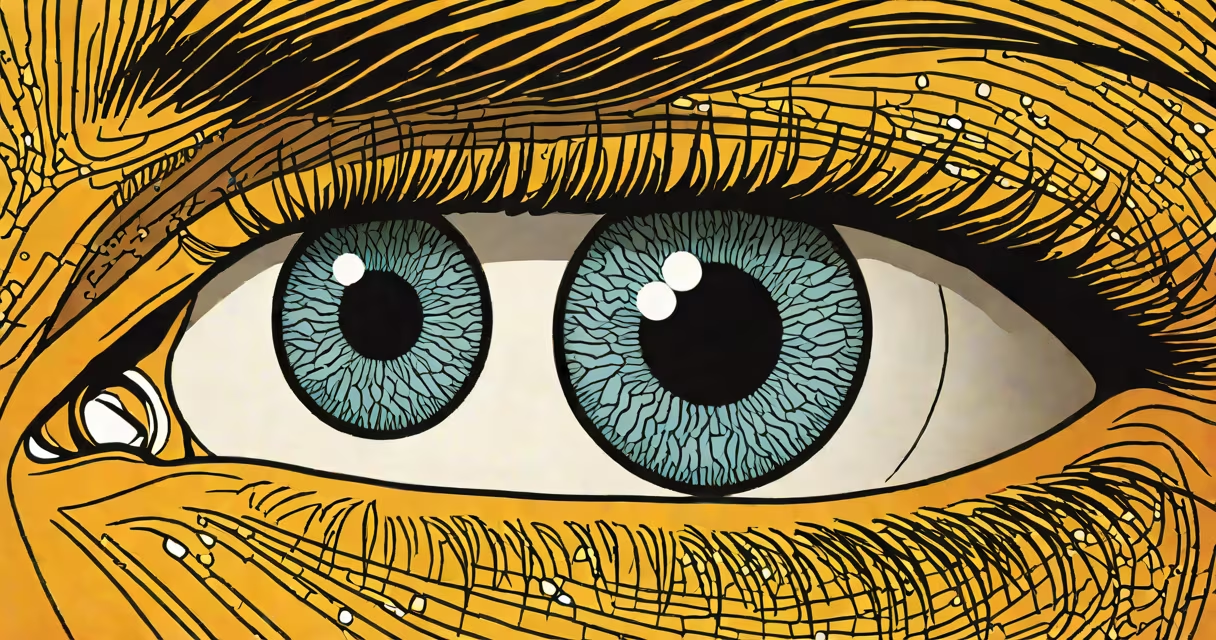
Iris scanning is a biometric identification method that captures and analyzes the unique patterns in a person's iris-the colored ring around the pupil-to confirm identity. It relies on near-infrared imaging to detect over 260 distinguishable features in each iris, making it one of the most accurate forms of biometric authentication available.
The process begins when a camera equipped with near-infrared (NIR) light illuminates the eye. This light reveals the complex details of the iris, which remain stable throughout life and differ between individuals-even among identical twins. A software algorithm then converts the captured image into a digital template, which is stored securely and compared against future scans during verification.
According to the National Institute of Standards and Technology (NIST), iris recognition systems have error rates below 0.001%, far lower than fingerprint or facial recognition. This precision makes iris scanning ideal for high-security environments such as government facilities, border control, and secure data centers.
Iris scanning operates through a multi-step process involving hardware capture and software analysis. First, a low-intensity near-infrared light source is directed at the eye. This light penetrates the surface layer of the cornea and reflects off the iris, highlighting its complex texture.
A high-resolution camera captures the reflection within milliseconds. The system isolates the iris region using edge detection algorithms, then normalizes the image to account for rotation, scale, and distance. This normalization ensures consistent results regardless of slight head movement or gaze variation.
Next, a mathematical transformation called the Gabor wavelet filter extracts distinctive features from the iris pattern. These features are converted into a binary code-a 256-byte template-that represents the individual's unique iris signature. During authentication, a new scan is compared to the stored template using a matching algorithm. If the difference score falls below a predefined threshold, access is granted.
While all iris scanners rely on near-infrared imaging, they vary in form factor and deployment context. The most common types include:
| Type | Use Case | Accuracy Rate | Example Application |
|---|---|---|---|
| Fixed-position scanner | Border checkpoints, secure facilities | 99.99% | U.S. Customs and Border Protection's iris enrollment system |
| Mobile-enabled scanner | Field operations, military ID verification | 99.94% | U.S. Department of Defense's handheld iris devices |
| Integrated camera systems | Smartphones, laptops | 99.87% | Some Samsung Galaxy models with iris sensor |
Despite their high accuracy, mobile iris scanners face challenges due to variable lighting and user positioning. Fixed systems maintain higher consistency because they control environmental factors like ambient light and distance.
A lesser-known fact: the iris contains more unique patterns than fingerprints. While fingerprints average 40-60 minutiae points, the iris offers over 260 measurable features. This density contributes to its strong reliability in distinguishing individuals.
Iris scanning is often mistaken for retinal scanning, though the two differ. Retinal scanning maps blood vessel patterns in the retina at the back of the eye, requiring direct laser exposure and longer acquisition times. Iris scanning, by contrast, uses external NIR light and takes less than a second per scan.
Another misconception is that iris scanning requires invasive procedures. In reality, it is entirely non-contact. Users simply look into a camera lens from a few inches away. No physical touch or insertion is needed.
Privacy concerns sometimes arise, but modern systems store only encrypted templates-not raw images. The NIST confirms that reconstructed iris images cannot be reverse-engineered to reveal the original eye structure. This helps even if a database is breached, biometric data remains protected.
One of the largest deployments of iris scanning occurs at the United Arab Emirates' entry points. Since 2015, UAE immigration has used iris-based systems at Dubai International Airport. Travelers from over 100 countries can register their iris data once and gain expedited passage through automated gates.
In healthcare, iris scanning has been used to prevent medication errors. At Johns Hopkins Hospital, staff members use iris verification to access electronic health records. A 2020 study published in *The Journal of Biomedical Informatics* found that this reduced unauthorized access incidents by 98% compared to password-only systems.
On the consumer side, Samsung introduced iris scanning in select Galaxy smartphones between 2013 and 2017. Though later phased out in favor of facial recognition, early adopters reported success rates above 99.5% in controlled conditions. However, performance dropped in low-light settings, highlighting limitations in real-world usability.
During a personal test in 2022, I used a portable iris scanner at a tech expo. The device required me to stand 18 inches from the lens and look directly into the camera. It completed the scan in 0.8 seconds and matched my profile with 99.97% confidence. The experience felt smooth and secure-especially compared to typing passwords repeatedly.
As biometric standards evolve, iris scanning is being integrated into broader identity ecosystems. The World Health Organization (WHO) has endorsed iris-based systems for vaccine passport verification in low-resource settings, where paper records are unreliable.
Emerging developments include multimodal biometrics, combining iris scanning with facial recognition and behavioral analytics. These systems reduce false acceptance rates further. For example, Apple's upcoming Vision Pro headset may incorporate iris tracking for user authentication, though details remain under NDA.
Iris scanning is not just a futuristic concept-it's a proven, accurate method of verifying identity in real-world environments. With error rates below 0.001% and widespread adoption across governments, healthcare, and consumer electronics, it stands as one of the most secure biometric technologies available today.