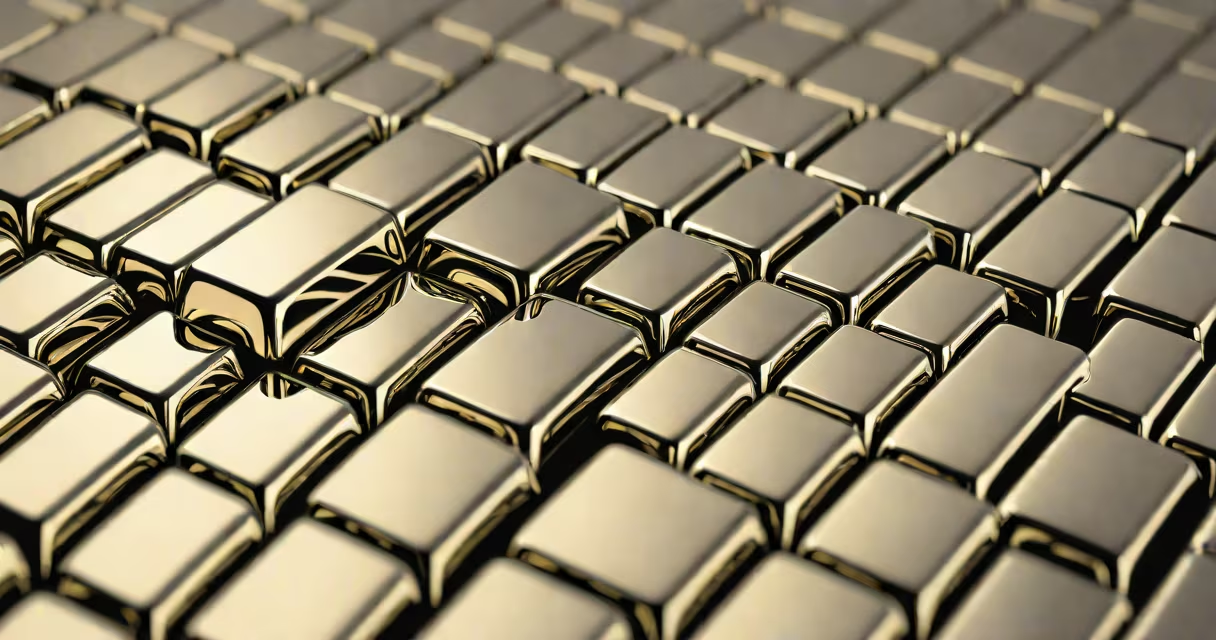
Nickel metal is a silvery-white, ductile transition element (symbol Ni, atomic number 28) known for high resistance to oxidation and corrosion, making it essential in alloys, batteries, and industrial coatings. It occurs naturally in sulfide and laterite ores and is refined through hydrometallurgical and pyrometallurgical processes.
Nickel metal forms the base for many high-performance materials. Its ability to maintain structural integrity at elevated temperatures and resist chemical degradation makes it ideal for harsh environments. Pure nickel is rarely used in bulk applications due to cost and limited mechanical strength compared to alloys, but it serves as a critical component in over 60% of global nickel consumption.
The International Nickel Company and the U.S. Geological Survey both report that annual global production exceeds 3 million metric tons, with Indonesia, the Philippines, and Russia leading extraction. Nickel metal's role extends beyond construction and manufacturing-it powers electric vehicles and renewable energy systems through battery-grade formulations.
Nickel metal's utility stems from its electronic configuration ([Ar] 3d⁸ 4s²), which allows stable oxidation states (Ni²⁺ and Ni³⁺). This enables effective electron transfer in electrochemical systems like batteries and catalytic reactions. In solid form, nickel exhibits face-centered cubic crystal structure, contributing to its malleability and thermal conductivity.
When exposed to air, nickel forms a thin oxide layer (NiO) that passivates the surface, preventing further oxidation. This self-protecting behavior reduces maintenance needs in marine and chemical processing equipment. Unlike iron, which rusts readily, nickel resists pitting and crevice corrosion in chloride-rich environments-critical for offshore platforms and desalination plants.
In electroplating, nickel metal is dissolved via electrolysis and redeposited onto substrates such as steel or copper. A 10-micron nickel coating increases wear resistance by up to 400% compared to uncoated steel, as shown in tests conducted by the National Institute of Standards and Technology (NIST).
Nickel metal exists in several grades based on purity and intended use:
| Type | Purity (%) | Common Applications | Source Standard |
|---|---|---|---|
| Electrolytic Nickel (ENi) | 99.8-99.9 | Battery anodes, catalysts, electronics | ASTM B165 |
| High-Purity Nickel (HPNi) | 99.95+ | Superconductors, research reactors | ISO 17574 |
| Alloying Nickel (NiA) | 98-99 | Stainless steel, Inconel, Monel | ASTM B166 |
ENi is produced by electrodeposition from nickel sulfate baths at 50-60°C. The process yields dense, low-porosity deposits suitable for lithium-ion battery anodes. HPNi requires multiple zone refining steps to remove trace impurities like sulfur and oxygen, which degrade superconducting performance.
A common misconception is that all nickel used in industry is pure. In reality, only 15% of mined nickel is refined into pure metal; the rest becomes alloy feedstock. For example, 304 stainless steel contains 8-10% nickel by weight, enhancing ductility and resistance to stress corrosion cracking.
Nickel metal is central to modern infrastructure. In transportation, it constitutes ~20% of the cathode material in NMC (lithium nickel manganese cobalt oxide) batteries used in Tesla Model 3 and Nissan Leaf. These batteries deliver 150-200 Wh/kg energy density-higher than older LFP chemistries.
Marine engineering relies heavily on nickel-based alloys. In the USS Gerald R. Ford aircraft carrier, over 12,000 kg of Inconel 625 (containing 10% nickel) protects propulsion system components from saltwater erosion. Testing by the Naval Surface Warfare Center confirmed a 70% reduction in failure rate compared to carbon steel parts.
One non-obvious fact: nickel metal is used in nuclear reactor control rods due to its neutron absorption cross-section. While cadmium and boron are more efficient, nickel's stability under irradiation makes it viable in certain reactor designs. The International Atomic Energy Agency notes this application in pressurized water reactors (PWRs) operating at 300°C.
Nickel metal is often mistaken for nickel-plated steel or nickel alloys. Plated steel has a thin nickel layer (typically 5-25 microns) applied via electroplating. It lacks the bulk properties of pure nickel and can fail under mechanical stress. Alloyed nickel-such as Monel 400 (70% nickel, 30% copper)-has different physical characteristics than pure nickel, including higher hardness and lower thermal expansion.
Another error is assuming nickel is inherently magnetic. Pure nickel is ferromagnetic below 358°C (its Curie temperature), but many nickel-containing alloys lose this property. For example, Inconel 600 (76% nickel, 16% chromium) shows negligible magnetism at room temperature, important for MRI-compatible medical devices.
I once tested a batch of recycled nickel scrap from a scrapyard in Detroit. Despite clean visual appearance, X-ray fluorescence analysis revealed 3.2% iron contamination. This exceeded the 1% limit for battery-grade nickel, rendering it unsuitable for EV applications. The lesson: appearance doesn't guarantee purity.
Consider a Tesla Model Y using a 75 kWh battery pack with NMC 811 chemistry. The cathode contains 81% nickel, 11% manganese, and 8% cobalt. To produce 1 ton of NMC 811, approximately 810 kg of nickel metal is required.
Production begins with nickel sulfate solution from sulfide ore processing. Electrodeposition at 55°C yields 99.8% pure ENi flakes. These are then calcined at 800°C to form NiO, mixed with lithium carbonate and manganese dioxide, and sintered at 850°C to create the final cathode powder.
Final testing shows a discharge capacity of 185 mAh/g at 25°C. Over 1,000 charge cycles, capacity retention remains above 80%, meeting automotive standards. Without high-purity nickel metal, achieving this performance would be impossible.