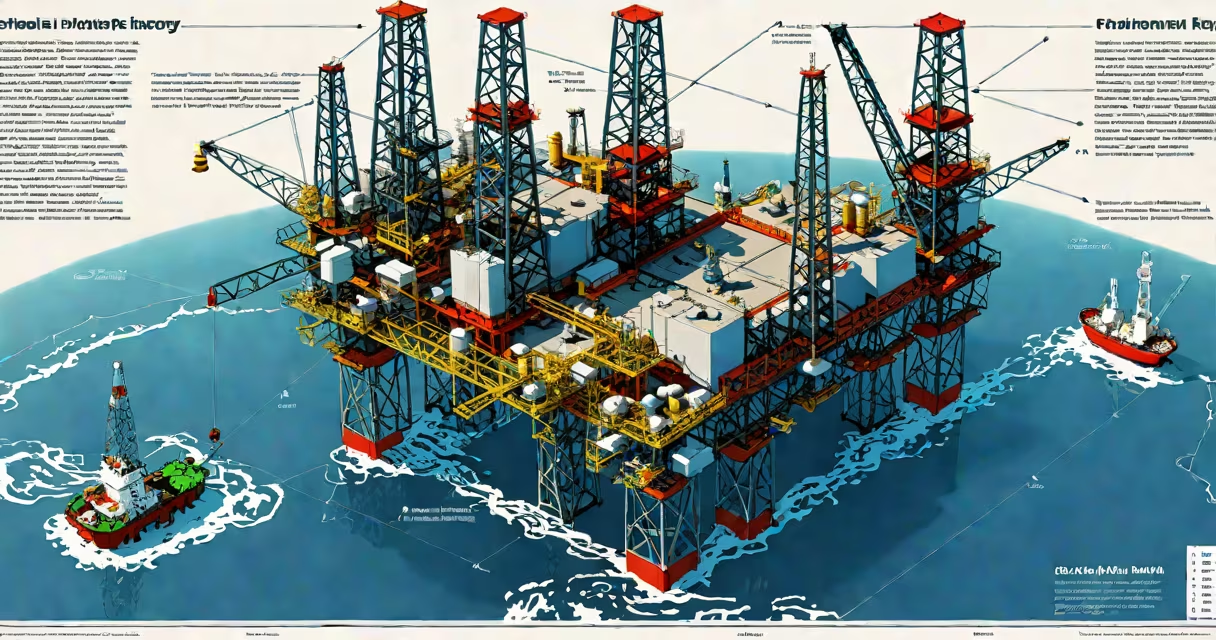
Petroleum energy is the power derived from crude oil, a naturally occurring hydrocarbon mixture formed over millions of years from buried organic matter. It fuels transportation, generates electricity, and serves as a raw material for plastics and chemicals. This energy source dominates global infrastructure due to its high energy density and established refining networks.
Crude oil forms in sedimentary basins where dead marine organisms accumulate and decompose under heat and pressure. Over time, these deposits change into liquid hydrocarbons trapped beneath impermeable rock layers. Extraction begins with drilling wells-onshore or offshore-using rigs that can reach depths exceeding 10,000 feet. Once pumped to the surface, crude oil undergoes distillation in refineries to separate components like gasoline, diesel, and jet fuel.
The U.S. Energy Information Administration (EIA) reports that petroleum supplied 33% of total U.S. energy consumption in 2023, with transportation accounting for 70% of that share. Globally, oil remains central to energy systems, providing 31% of primary energy demand according to the International Energy Agency (IEA).
When burned, petroleum-based fuels release stored chemical energy as heat and motion. In internal combustion engines, gasoline ignites in cylinders, creating rapid expansion that drives pistons. This mechanical energy turns the crankshaft, powering vehicles. In power plants, diesel or fuel oil burns to produce steam, which spins turbines connected to generators.
Refining transforms crude oil into usable products through fractional distillation. Crude is heated to around 360°C (680°F), vaporizing different hydrocarbon chains based on boiling points. Lighter fractions like naphtha and gasoline rise to the top, while heavier ones like asphalt settle at the bottom. Further processing includes cracking, reforming, and blending to meet performance standards.
A single barrel of crude oil (42 gallons) yields approximately 19 gallons of gasoline, 11 gallons of diesel, and 4 gallons of fuel oil. The remainder becomes petrochemical feedstocks or waste. This efficiency makes petroleum energy highly practical for mass-scale applications.
Not all crude oil is the same. Composition varies by region, affecting yield and quality. Light sweet crude contains low sulfur and high API gravity (above 31.1°), making it easier and cheaper to refine. Heavy sour crude has higher sulfur content and lower API gravity, requiring more complex processing.
| Type | API Gravity | Sulfur Content | Common Regions | Refining Cost |
|---|---|---|---|---|
| Light Sweet | 31.1-45.0 | < 0.5% | U.S. Gulf Coast, North Sea | Low |
| Medium | 22.0-31.0 | 0.5-1.0% | Middle East, Mexico | Medium |
| Heavy Sour | 10.0-22.0 | > 1.0% | Venezuela, Canada (oil sands) | High |
Oil sands in Alberta, Canada, contain bitumen-a thick, tar-like form of petroleum requiring thermal extraction and upgrading. Extracting one barrel of oil from sands uses 2.5 barrels of water and emits 1.5 times more CO₂ than conventional oil. Despite environmental costs, these reserves hold over 170 billion barrels, making them a major source of supply.
Transportation accounts for 55% of global oil demand. Cars, trucks, planes, and ships rely on liquid fuels because they offer high energy density and quick refueling. A gallon of gasoline stores about 115,000 BTUs-enough to power a 100-watt bulb for nearly 13 days. No battery system currently matches this energy-to-weight ratio.
Industrial processes such as cement production, steel manufacturing, and chemical synthesis depend on petroleum-derived fuels and feedstocks. Ethylene, produced from cracked naphtha, is the basis for polyethylene plastic. Without petroleum, modern packaging, textiles, and medical devices would face severe supply constraints.
Despite growing investment in renewables, oil remains essential in remote and developing regions. In sub-Saharan Africa, diesel generators provide 60% of electricity in off-grid communities. Replacing them with solar microgrids requires upfront capital that many nations lack. Petroleum energy fills critical gaps where alternatives are not yet viable.
Petroleum energy is often conflated with all fossil fuels. While coal and natural gas are also fossil sources, petroleum specifically refers to liquid hydrocarbons. Natural gas, though extracted alongside oil, is gaseous and requires different handling. Confusing them leads to inaccurate policy analysis and misdirected investments.
Another error is assuming petroleum energy is inherently unsustainable. While burning oil releases CO₂, the term "energy" describes a process, not a moral judgment. The issue lies in usage patterns, not the substance itself. Countries like Norway use petroleum revenues to fund renewable projects, demonstrating that oil can coexist with decarbonization goals.
One non-obvious fact: petroleum energy contributes to atmospheric nitrogen oxides (NOx) not from combustion alone, but from refinery emissions. Nitrogen compounds in crude oil react during refining, releasing NOx that contribute to smog and acid rain. The EPA estimates refineries emit 15% of U.S. industrial NOx-higher than many power plants.
A Boeing 787 Dreamliner flying from New York to London consumes approximately 110,000 pounds of jet fuel. This fuel comes from crude oil extracted in Texas and refined in Louisiana. The refining process separates kerosene, the component used in jet engines, through precise temperature control and catalytic cracking.
Each flight burns about 25,000 gallons of jet fuel. That's equivalent to 1,200 barrels of crude oil. The carbon footprint of one transatlantic flight exceeds 100 tons of CO₂-over 20 times the average person's annual emissions. Yet, replacing this with electric or hydrogen-powered aircraft remains decades away due to energy storage limitations.
Even as the world shifts toward cleaner options, petroleum energy remains embedded in daily life. Its dominance stems not from preference but from infrastructure, energy density, and reliability. Transitioning away from it requires systemic change-not just technological advances.