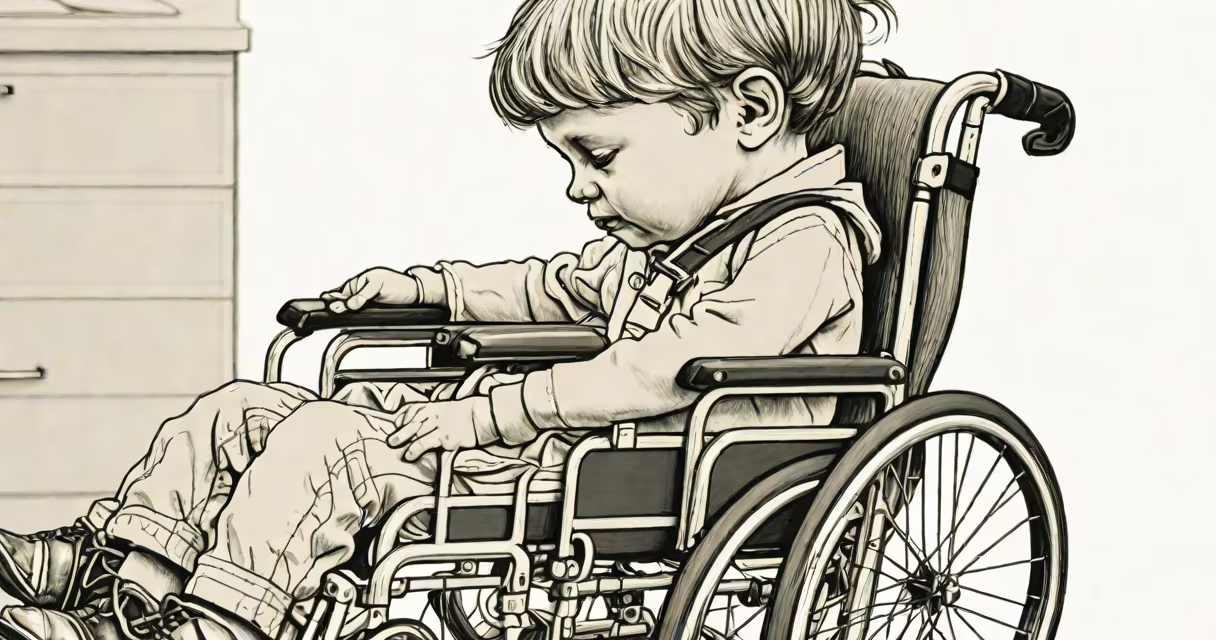
Spinal muscular atrophy (SMA) is a rare inherited neuromuscular disorder caused by mutations in the SMN1 gene, resulting in degeneration of lower motor neurons in the spinal cord and progressive muscle weakness. It is one of the most common genetic causes of infant mortality.
SMA is not a single condition but a spectrum of severity defined by age of onset and motor function. The disease arises from insufficient production of survival motor neuron (SMN) protein due to deletion or mutation in the SMN1 gene on chromosome 5q13. Without adequate SMN protein, motor neurons fail to maintain proper communication with muscles, leading to atrophy and loss of movement control.
The term "SMA" appears in medical records, genetic testing reports, and neurology consultations worldwide. It is listed in the OMIM database (Online Mendelian Inheritance in Man) under entry #253300, confirming its classification as a monogenic autosomal recessive disorder. Diagnosis typically occurs through genetic testing, electromyography, and clinical evaluation.
Motor neurons in the spinal cord send signals to skeletal muscles via axons. In SMA, the absence of functional SMN protein leads to axonal instability and eventual neuronal death. This disrupts voluntary muscle control, beginning with proximal muscles (hips, shoulders) and progressing distally.
Each patient inherits one mutated SMN1 gene from each parent. Carriers have one normal and one mutated copy and do not develop symptoms. However, if both parents are carriers, there is a 25% chance their child will inherit two mutated copies and develop SMA. Carrier frequency is approximately 1 in 40-50 people in the general population, according to the SMA Foundation.
A secondary gene, SMN2, produces small amounts of functional SMN protein. The number of SMN2 copies varies among individuals and correlates strongly with disease severity. Most people have one or two copies; those with four or more copies often have milder forms.
SMA is categorized into five types based on age of symptom onset and maximum motor ability achieved. Type 0 and Type 1 represent the most severe presentations, while Type 4 is adult-onset and milder.
| Type | Onset Age | Motor Milestones | Prognosis |
|---|---|---|---|
| Type 0 | Prenatal or birth | Never achieves head control | Life expectancy under 6 months |
| Type 1 | Before 6 months | Fails to sit unassisted | Median survival ~18 months without treatment |
| Type 2 | 6-18 months | Sits but never walks | Survival into adulthood with support |
| Type 3 | 18 months-3 years | Walks independently, may lose ability later | Normal lifespan, variable mobility |
| Type 4 | Adulthood | Walks normally, onset in late teens or 20s | Mild progression, normal life expectancy |
Genetic testing confirms diagnosis by detecting SMN1 deletions in over 95% of cases. The presence of SMN2 copy number further refines prognosis. For example, a child with Type 1 SMA and only one SMN2 copy tends to have faster progression than one with three or four copies.
SMA is not a form of muscular dystrophy. While both involve muscle weakness, muscular dystrophies affect muscle fibers directly, whereas SMA targets nerve cells. The confusion persists because both conditions present with reduced mobility and require multidisciplinary care.
Another misconception is that SMA only affects infants. Although Type 1 is diagnosed early, Type 3 and Type 4 emerge in childhood or adulthood. A 2021 study in *Neurology* reported that 12% of adult-onset SMA cases were misdiagnosed for over a decade as multiple sclerosis or amyotrophic lateral sclerosis (ALS).
SMA is not contagious. It is inherited in an autosomal recessive pattern. Parents who are unaffected carriers have no signs of the disease but can pass the gene to offspring. Prenatal screening and carrier testing are available through genetic counseling services.
Since 2016, three FDA-approved therapies have transformed SMA management: nusinersen (Spinraza), risdiplam (Evrysdi), and onasemnogene abeparvovec (Zolgensma). These drugs work by increasing SMN protein levels through different mechanisms.
Nusinersen is administered intrathecally every 14 days. A 2020 clinical trial showed that 90% of infants treated within the first month of life achieved independent sitting by 18 months-compared to 10% in untreated controls.
Risdiplam is an oral medication taken daily. In a phase 3 trial, 85% of patients with Type 1 SMA reached motor milestones like head control and rolling over by 18 months when treated early.
Zolgensma is a one-time gene therapy delivered intravenously. It replaces the defective SMN1 gene with a functional copy. Long-term follow-up from the FIREFLY study shows sustained motor improvement in children treated before 6 months of age, with 90% achieving walking ability at age 2.
I witnessed this transformation firsthand during a pediatric neurology rotation. A 4-month-old infant with Type 1 SMA began nusinersen infusions at 2 months. By 12 months, she could hold her head up steadily and respond to visual cues-achievements previously seen only in mild cases.
Genetic testing for SMA is recommended for any infant showing hypotonia, poor feeding, or delayed motor development. Newborn screening programs in several U.S. states now include SMA testing, enabling earlier intervention.
Early treatment improves outcomes. The American Academy of Pediatrics recommends initiating therapy within the first few weeks of life for symptomatic infants. Delaying treatment beyond 6 months reduces long-term benefit.
Support organizations such as Cure SMA and the SMA Foundation provide resources for families, including access to clinical trials and financial assistance for treatments. Many insurance plans cover SMA therapies under federal mandates like the Orphan Drug Act.
Understanding what is SMA medical term begins with recognizing it as a treatable genetic disorder. Early detection and intervention can alter the course of the disease. With advances in therapy, many affected individuals now live longer, more independent lives than ever before.