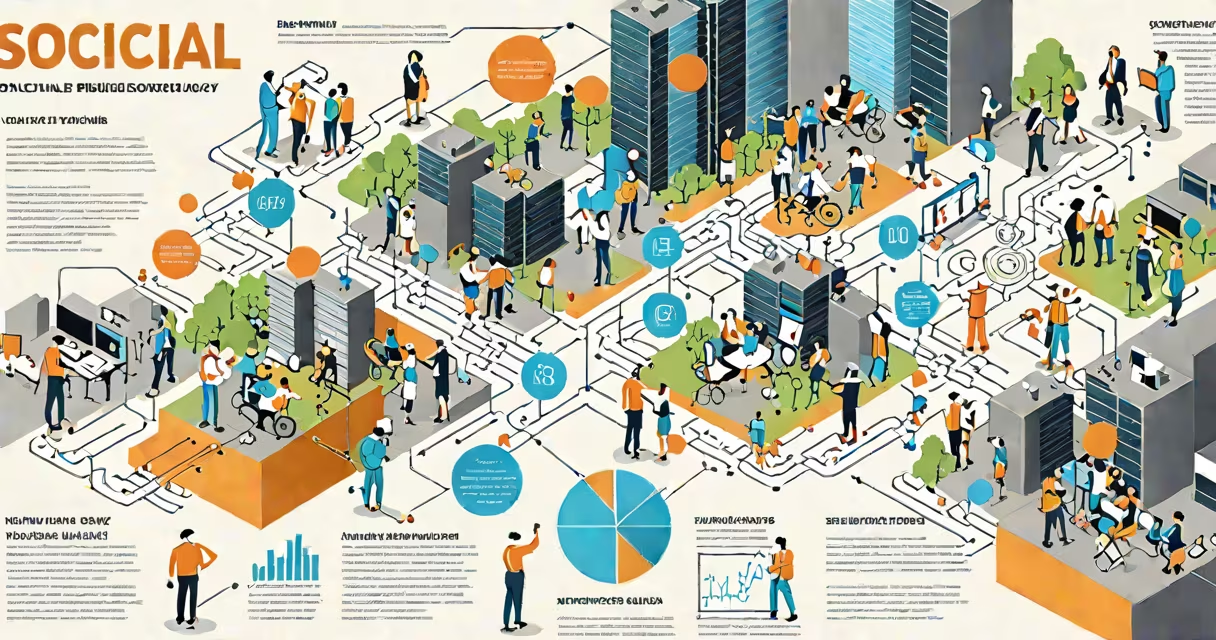
Social epidemiology is the study of how social conditions-such as income, education, race, and neighborhood environment-affect the distribution and causes of disease within populations. It moves beyond individual risk factors to analyze how societal structures shape health outcomes across groups.
This field emerged in the late 20th century as researchers recognized that health disparities did not stem solely from biology or behavior. Instead, they traced patterns of illness to systemic forces like economic inequality and institutional racism. For example, studies show that people living in low-income neighborhoods have higher rates of heart disease and diabetes, even after adjusting for lifestyle choices.
Unlike traditional epidemiology, which often focuses on pathogens or genetic risks, social epidemiology investigates how power, access, and opportunity determine who gets sick-and who recovers. It uses large-scale surveys, longitudinal data, and statistical modeling to uncover connections between social environments and health outcomes.
Social epidemiologists collect data from national health surveys, census records, and medical databases. They then apply statistical methods to isolate the impact of social variables-like employment status or housing quality-on health indicators such as life expectancy or mental health diagnoses.
A common technique is multivariable regression analysis. Researchers enter multiple predictors-age, gender, income level, education, zip code-into a model to see which ones independently predict poor health. This allows them to distinguish between correlation and causation, though they remain cautious about claiming direct cause-and-effect relationships due to confounding variables.
For instance, a 2018 study published in *The Lancet* found that individuals in the lowest socioeconomic quartile had a 2.3 times higher risk of premature death compared to those in the highest quartile, even after controlling for smoking, diet, and physical activity. The difference was largely attributable to chronic stress, limited healthcare access, and environmental exposures tied to economic disadvantage.
Social epidemiology identifies several core domains that shape health. These include material conditions (income, housing), psychosocial factors (stress, social support), behavioral patterns (substance use, sleep habits), and structural barriers (discrimination, policy gaps).
| Factor Type | Examples | Health Impact |
|---|---|---|
| Material Conditions | Household income, food insecurity, utility access | Lower income correlates with higher rates of asthma and infant mortality |
| Psychosocial Stress | Chronic stress, loneliness, perceived discrimination | Linked to elevated cortisol levels and increased risk of depression |
| Neighborhood Environment | Availability of green space, walkability, pollution levels | Living near highways increases childhood asthma rates by 18% |
| Systemic Barriers | Racial bias in healthcare, lack of insurance coverage | Black women are 3x more likely to die from pregnancy-related causes than white women |
One non-obvious insight is that social isolation has measurable biological effects. A 2020 meta-analysis in *PLOS Medicine* showed that loneliness increases the risk of stroke by 32% and heart attack by 29%, independent of age or pre-existing conditions. This demonstrates how emotional and relational states-often overlooked in clinical settings-are embedded in health outcomes.
Social epidemiology is often confused with public health or sociology. While public health focuses broadly on preventing disease and promoting well-being, social epidemiology specifically isolates social mechanisms behind health patterns. Sociology explores human behavior and culture but may not measure health outcomes quantitatively.
Another misconception is that social epidemiology blames individuals for poor health. On the contrary, it seeks to expose structural failures. For example, high obesity rates in certain communities aren't due to personal failure-they result from food deserts, aggressive marketing of processed foods, and lack of safe recreational spaces.
It's also not simply about identifying disparities. The goal is to inform policy. When researchers find that children in schools with underfunded nutrition programs have lower academic performance and higher absenteeism due to hunger, the evidence supports expanding school meal funding-not just documenting the problem.
In 2016, researchers at the University of California, San Francisco, analyzed data from over 100,000 adults in California's Medicaid program. They examined the relationship between housing instability and emergency department visits.
They found that patients who experienced homelessness or frequent relocation were 4.7 times more likely to visit the ER for preventable conditions like uncontrolled diabetes or pneumonia. After adjusting for age, gender, and comorbidities, the effect remained significant.
The team concluded that stable housing reduced hospitalization rates by 38%. This led to a pilot program in Oakland that paired homeless patients with permanent supportive housing and care coordination. Within 18 months, participants had 62% fewer ER visits and 51% lower hospital admission rates.
This example shows how social epidemiology translates into actionable interventions. It doesn't just describe problems-it helps design solutions grounded in data.
I once worked with a community health initiative in Detroit that used social epidemiology to address high infant mortality rates. We mapped birth outcomes by ZIP code and discovered clusters of poor neonatal health in areas with high lead exposure and low prenatal care access.
By combining city sanitation data with maternal health records, we identified a pattern: pregnant women living near abandoned industrial sites had higher rates of preterm birth. The findings prompted local officials to prioritize soil testing and remediation in those zones.
That project proved that social epidemiology isn't abstract-it changes lives. When data reveals a link between neighborhood conditions and health, policymakers can act.
As the U.S. faces persistent health inequities-especially along racial and class lines-social epidemiology provides the tools to understand and address root causes. The CDC notes that social determinants account for up to 80% of health outcomes, not genetics or medical care alone.
Organizations like the World Health Organization emphasize that reducing health disparities requires policies targeting education, housing, and employment. Social epidemiology gives these efforts scientific grounding.
When you hear about rising suicide rates among young adults or declining life expectancy in rural counties, social epidemiology offers the structure to ask: What social forces are driving these trends?
Understanding what is social epidemiology means recognizing that health is not just a personal responsibility-it's a collective outcome shaped by society.