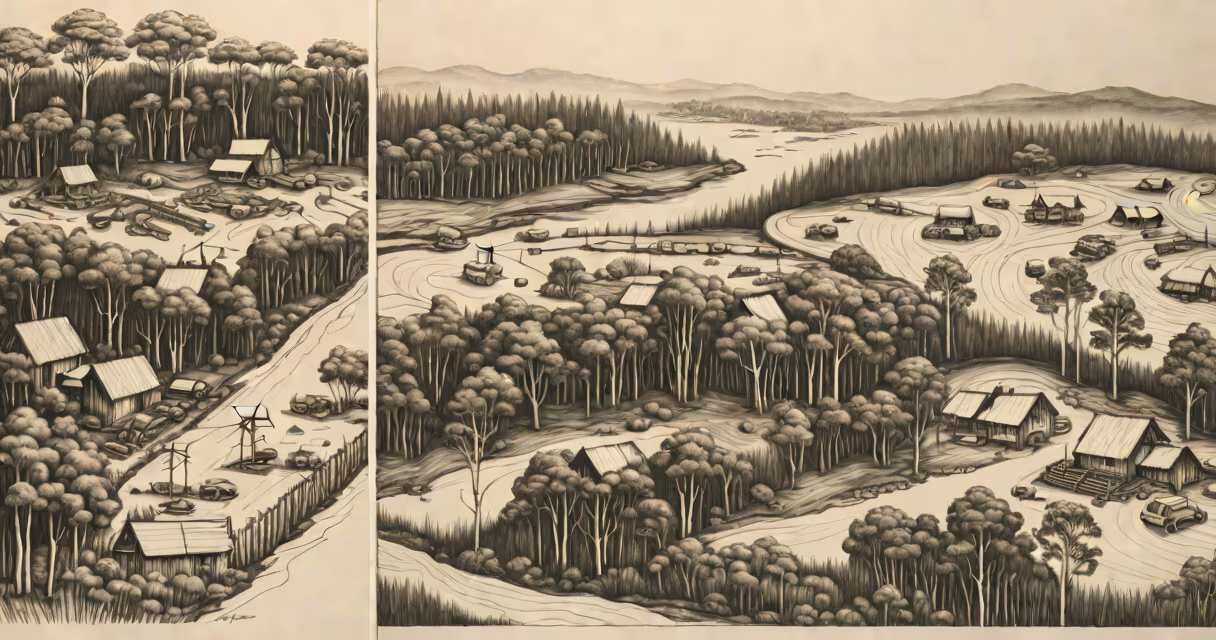
Conserving natural resources preserves ecosystems, ensures long-term availability of essentials like water and timber, and maintains planetary health for future generations. This practice prevents irreversible environmental damage and supports sustainable development.
Natural resources include air, water, forests, minerals, fossil fuels, and biodiversity. These are finite or slow-renewing systems. Overuse depletes them faster than nature can replenish, leading to scarcity, habitat loss, and climate disruption. Conservation slows this process by managing consumption and protecting supply chains.
The United Nations Environment Programme states that over 60% of Earth's ecosystems are degraded due to human activity, including excessive extraction of natural resources. Without intervention, this trend threatens food security, clean water access, and climate resilience. Conservation is not optional-it is foundational to survival.
Conservation involves reducing waste, recycling materials, using renewable alternatives, and enforcing regulations. For example, switching from single-use plastics to biodegradable packaging reduces pollution and conserves petroleum-based feedstocks. Water-saving fixtures in homes cut household usage by up to 30%, according to the U.S. Environmental Protection Agency (EPA).
Industrial-scale conservation includes closed-loop manufacturing, where materials are reused in production cycles. A 2022 study by the Ellen MacArthur Foundation found that circular economy models could reduce global material use by 28% by 2030. This lowers emissions and decreases dependency on raw material imports.
Protected areas such as national parks and marine reserves act as living laboratories for conservation. The World Wildlife Fund reports that protected areas cover 17% of terrestrial land and 10% of oceans-critical zones where species and habitats recover from exploitation.
Resources fall into two categories: renewable and nonrenewable. Renewable resources regenerate within human timescales-sunlight, wind, water, and sustainably managed forests. Nonrenewable resources form over millions of years and cannot be replaced quickly-coal, oil, uranium, and rare earth metals.
| Type | Examples | Conservation Focus |
|---|---|---|
| Rare Earth Metals | Neodymium, dysprosium | Recycling electronics to reclaim materials; reducing mining impacts |
| Freshwater | Rivers, aquifers | Limiting agricultural runoff; investing in drip irrigation |
| Forests | Tropical rainforests, boreal woodlands | Preventing illegal logging; promoting reforestation projects |
| Fossil Fuels | Oil, coal, natural gas | Phasing out subsidies; transitioning to solar and wind power |
Each category demands different strategies. For instance, freshwater conservation focuses on watershed management and reducing industrial discharge. Forest conservation prioritizes land-use zoning and community-led stewardship programs.
Many assume conservation is solely about saving animals or trees. While wildlife protection matters, the core goal is maintaining functional systems that support human life. A forest isn't saved just because it hosts endangered birds-it's preserved because it regulates climate, filters air, and stabilizes soil.
Another myth is that conservation slows economic growth. Data from the World Bank shows countries with strong environmental policies grow at comparable rates to those with lax standards. Costa Rica, which protects 25% of its land and earns revenue from ecotourism, saw GDP grow 3.2% annually between 2010 and 2020-outpacing regional averages.
A lesser-known fact: urban areas consume 75% of global energy and produce 80% of carbon emissions. Yet cities are also where conservation efforts yield the highest return. Green roofs, urban tree planting, and district heating systems reduce demand on distant resource hubs.
In Australia, the Great Barrier Reef faces threats from warming seas, ocean acidification, and runoff from farming. Since 2009, the Australian government implemented a reef recovery plan that included limiting fertilizer use near rivers, banning certain fishing methods, and expanding marine protected zones.
By 2023, coral cover had stabilized after decades of decline. The program reduced nitrogen runoff by 40% and increased fish biomass in protected areas by 50%. This success was not accidental-it resulted from coordinated conservation policies backed by science and enforcement.
Without such measures, the reef would have faced irreversible collapse. Its value extends beyond tourism: it supports fisheries, protects coastlines from storms, and stores vast amounts of carbon in its structure.
Resource conservation underpins national security. Countries dependent on imported oil face instability during geopolitical crises. The U.S. Department of Defense estimates that climate-related disruptions cost $10 billion annually in military readiness. Reducing reliance on volatile supply chains enhances strategic resilience.
Health outcomes are tied to resource quality. Air pollution from burning fossil fuels causes 7 million premature deaths yearly, per the World Health Organization. Cleaner energy and better land use reduce respiratory diseases and lower healthcare costs.
I once visited a small village in northern Kenya where water shortages had driven conflict. After installing solar-powered pumps and teaching rainwater harvesting, the community reduced water collection time from six hours daily to under 30 minutes. Children returned to school. Women gained time for income-generating work. This change wasn't just environmental-it transformed lives.
Understanding why it is important to conserve natural resources leads to informed choices at every level-from individual habits to national legislation. The consequences of inaction are measurable, urgent, and avoidable.