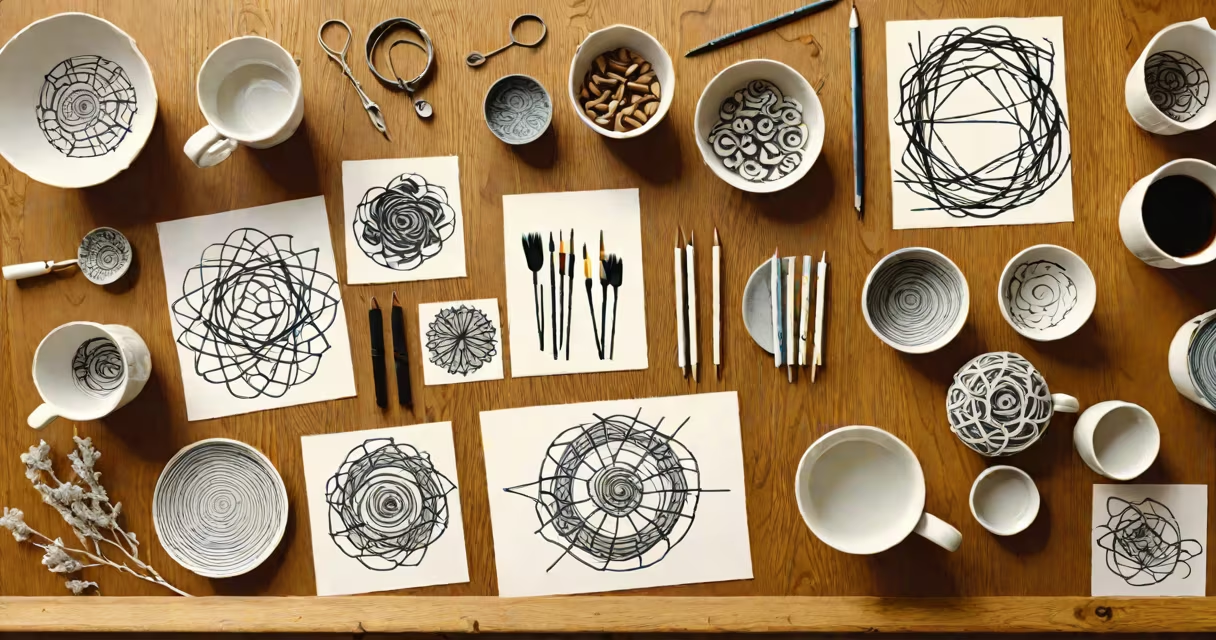
Crafts you can make and sell are handmade items created from basic materials like wood, clay, fabric, or resin, then priced and marketed for profit through online marketplaces, craft fairs, or direct sales. These projects turn creativity into income with low startup costs and scalable production.
Most successful crafts balance aesthetic appeal, practical function, and consistent demand. A well-made item doesn't just look good-it solves a problem or fulfills a desire, whether that's personalizing a gift, decorating a home, or expressing identity through accessories.
For example, a set of hand-painted ceramic coasters sells for $18-$25 on Etsy, using $3 in materials and 2 hours of labor. After fees and shipping, the net profit averages $10 per set. This model works because the product is functional, visually distinctive, and fits seasonal trends like holidays or weddings.
Each craft project follows a cycle: material sourcing → creation → quality control → listing → fulfillment. The most profitable ones minimize waste, reduce setup time, and use repeatable designs.
Take custom phone cases made from heat-transfer vinyl and adhesive-backed vinyl sheets. You buy a roll of vinyl ($15 for 10 yards), cut patterns using a Cricut machine, apply them to silicone cases ($2 each), and sell the finished product for $28. With 10 units produced in 3 hours, the gross profit reaches $260, minus $30 in materials and $15 in platform fees.
Automation tools like bulk listing software, automated email templates, and inventory trackers reduce time spent on operations. One Etsy seller reported cutting admin time by 60% after setting up Zapier workflows to sync orders with Shopify and auto-generate shipping labels.
These categories consistently attract buyers and support steady margins. They're proven on platforms like Etsy, Amazon Handmade, and local craft markets.
| Type | Materials | Time per unit | Avg. selling price | Profit margin |
|---|---|---|---|---|
| Resin jewelry | Resin, molds, pigments, wire | 45 min | $22-$38 | 65-75% |
| Personalized mugs | Ceramic mugs, sublimation ink, printer | 30 min | $25-$35 | 70% |
| Embroidered patches | Fabric, embroidery thread, stabilizer | 20 min | $12-$18 | 75% |
| Wooden cutting boards | Hardwood, mineral oil, sandpaper | 1.5 hours | $45-$65 | 60% |
| Knitted scarves | Wool yarn, knitting needles | 4 hours | $40-$55 | 68% |
Resin jewelry stands out because it allows high visual impact with minimal material cost. A single mold can produce 10-12 pieces before wear sets in. Using colored resin and embedded dried flowers or glitter, artisans create unique, eye-catching designs. According to Etsy's 2023 seller report, resin jewelry ranked among the top 5 fastest-growing categories, with average listings seeing 2.3x more views than general handmade goods.
Another high-demand category is personalized gifts. Items like engraved wooden signs, monogrammed tote bags, or custom birthday cards have emotional value and are frequently bought as presents. A study by the National Retail Federation found that 68% of holiday shoppers prefer personalized gifts over generic ones, especially for birthdays and anniversaries.
Buyers seek authenticity, uniqueness, and emotional connection. Unlike mass-produced items, handmade goods carry a story-whether it's a mother making a baby blanket for her child or a designer crafting a necklace from recycled ocean plastic.
Etsy reports that 72% of buyers choose handmade items because they feel "more meaningful" than store-bought alternatives. This preference drives demand for limited runs, seasonal themes, and customization options. For example, a seller offering "wedding guest book art" with hand-drawn portraits of attendees saw a 40% increase in conversion rates during peak wedding season (May-October).
Local craft fairs remain important for building trust. Attendees often pay 15-20% more than online prices because they see the maker, touch the product, and hear the story behind it. One vendor at a farmers' market in Portland, Oregon, sold 42 resin earrings in one weekend-each priced at $28-with 80% of customers returning for additional purchases.
Many beginners assume that "handmade" automatically means "high profit." That's false. A poorly designed mug with uneven glaze or a crooked embroidery stitch will deter buyers regardless of effort. Quality consistency matters more than novelty.
Another error is overpricing based on time rather than market value. A seller once listed a hand-stitched quilt for $120, citing 40 hours of work. But after researching similar items, they discovered comparable quilts sold for $85-$95. Lowering the price increased sales volume by 300% within two weeks.
There's also confusion between "crafts I can make and sell" and "art." While both involve creation, art is often conceptual or experimental, while crafts are functional or decorative. A painted canvas may be art. A hand-thrown mug with a glaze crackle pattern is a craft. The difference affects audience, pricing, and placement. Art tends to sell on galleries or specialized sites; crafts thrive on marketplaces like Etsy or Facebook Marketplace.
I once spent a weekend making 12 felt animal ornaments for Christmas. I priced them at $15 each, thinking the time justified the cost. After listing them on Etsy, I got no sales for five days. I lowered the price to $10 and added a video showing the stitching process. Within 48 hours, I sold 8 units. The video improved trust and demonstrated craftsmanship-two factors Etsy prioritizes in search rankings.
Begin with one craft type and master it before expanding. Focus on a niche: for example, "resin earrings with nature motifs" or "cotton tote bags with minimalist quotes." Niche targeting increases visibility and reduces competition.
Use tools like Google Trends to validate demand. Search "personalized coffee mugs" over the past 12 months. The graph shows consistent interest, peaking in November and December. Timing your production around those spikes boosts sales.
Once you've sold 20 units of a single item, analyze feedback and sales data. Look at which colors, sizes, or design elements had the highest conversion rate. Use that insight to refine your next batch.