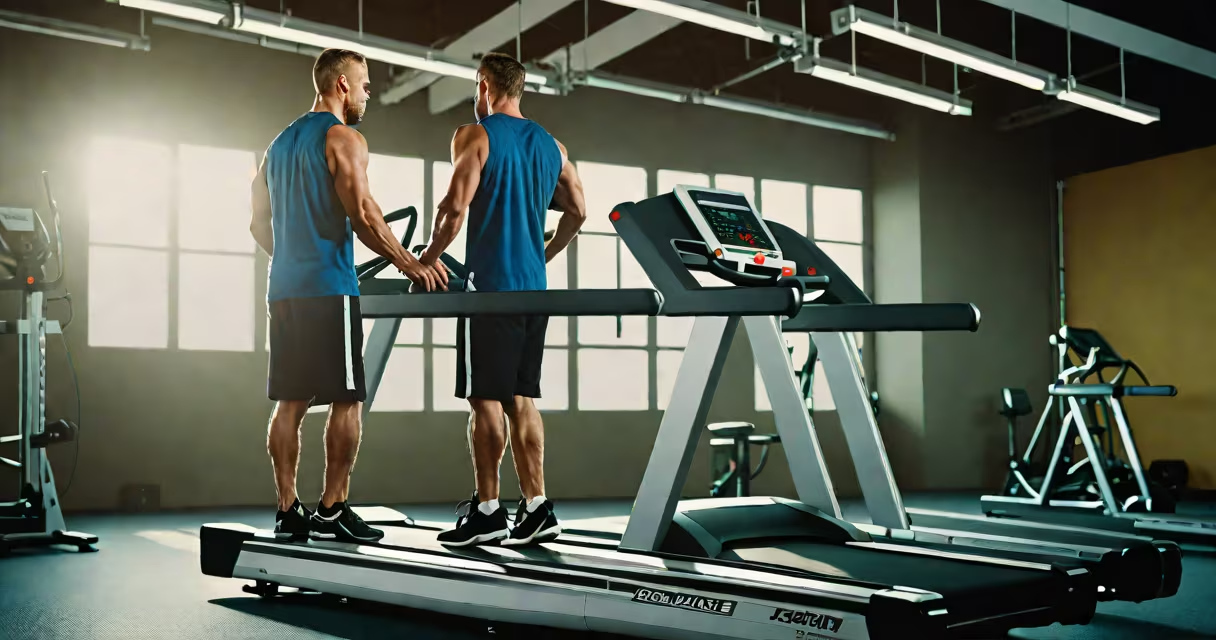
Fitness machine technicians are certified professionals who install, service, troubleshoot, and repair commercial exercise equipment such as treadmills, ellipticals, strength machines, and stationary bikes. They ensure machines operate safely and reliably in gyms, fitness centers, and rehabilitation facilities.
These technicians work under manufacturer guidelines and industry standards. Their tasks include diagnosing electrical faults, replacing worn belts or pulleys, calibrating resistance systems, and performing routine preventive maintenance. A qualified technician must understand mechanical systems, electrical circuits, and safety protocols specific to each piece of equipment.
According to the U.S. Bureau of Labor Statistics, roles in industrial machinery repair and maintenance are projected to grow 6% from 2022 to 2032, outpacing average job growth. Fitness machine technicians often hold certifications from manufacturers like Life Fitness, Precor, or Cybex, which validate their ability to service proprietary systems.
Technicians begin by assessing equipment performance through visual inspection, operational testing, and error code reading. Most modern machines have embedded diagnostic systems that log issues such as motor overload, belt slippage, or sensor failure. Technicians use handheld diagnostic tools or software interfaces to retrieve this data.
Once a fault is identified, they disassemble components to access motors, control boards, or drive mechanisms. For example, a treadmill that stops unexpectedly may have a failing DC motor or a damaged power supply board. The technician replaces the faulty part, recalibrates the system, and runs a test cycle to confirm proper function.
After repairs, they complete a service report detailing the issue, parts replaced, labor time, and recommendations for follow-up checks. This documentation supports warranty claims and helps facility managers track equipment reliability over time.
Fitness machine technicians handle many equipment, each requiring specialized knowledge. Below is a breakdown of major categories and typical failure points:
| Type | Common Issues | Repair Frequency |
|---|---|---|
| Treadmills | Belt misalignment, motor overheating, control panel freeze | Every 6-12 months (preventive) |
| Ellipticals | Chain skipping, noisy drive train, resistance calibration drift | Every 12-18 months |
| Strength Machines | Pulley cable fraying, hydraulic cylinder leaks, seat mechanism jamming | Annual inspection recommended |
| Stationary Bikes | Resistance knob sticking, chain tension imbalance, pedal wobble | Every 6 months in high-use settings |
For example, a life-size elliptical at a university recreation center began producing a grinding noise during use. The technician disconnected the power, removed the footplate, and discovered a loose flywheel bolt. After tightening the bolt and lubricating the drive shaft, the machine operated smoothly. The issue was traced to improper installation during a previous service visit.
A lesser-known fact: many commercial machines use proprietary firmware that requires manufacturer-specific software tools. A technician cannot diagnose or update a Precor elliptical's control system without the official software set, even if the hardware appears identical to a competitor's model.
Fitness machine technicians are essential in high-traffic environments like commercial gyms, sports training centers, hospitals, and physical therapy clinics. Equipment in these locations undergoes hundreds of uses per week. Without regular maintenance, wear accelerates, leading to sudden failures and potential injury.
For instance, a malfunctioning treadmill belt can cause users to trip or fall. A strength machine with a broken cable release could result in uncontrolled weight drops. Technicians prevent these incidents through scheduled inspections and timely interventions.
Facilities often contract with third-party service providers to manage maintenance. These companies employ teams of technicians who rotate between client sites based on service schedules. Some gyms also hire in-house technicians to reduce downtime and improve response speed.
People often confuse fitness machine technicians with general gym staff or personal trainers. Trainers focus on workout programming and client instruction. Technicians focus on mechanical and electrical integrity. A trainer may notice a machine feels "off," but only a technician can diagnose a failing motor controller.
Another misconception is that anyone with basic tool experience can perform repairs. While some minor adjustments-like tightening bolts or cleaning sensors-are safe for facility managers, complex diagnostics require formal training. Attempting to replace a motor or rewire a control panel without certification risks damaging the machine or creating a safety hazard.
Technicians also differ from home fitness repair services. Home machines are typically simpler, lower-duty-cycle devices. Commercial equipment operates under constant stress and higher safety standards. A technician trained on a Life Fitness T5 treadmill won't automatically know how to fix a Matrix 2000 series elliptical without additional certification.
I once observed a technician at a large urban gym replace a failed torque sensor on a high-end spin bike. The machine had been flagged by the gym's monitoring app due to inconsistent resistance feedback. After replacing the sensor and syncing it with the bike's control unit, the system returned to normal operation. The entire process took less than 45 minutes-a task that would take a novice several hours.
Most employers require at least a high school diploma and completion of a vocational program in electrical or mechanical systems. Many technicians earn certifications from organizations like the National Institute for Certification in Engineering Technologies (NICET) or manufacturer-specific programs.
Key competencies include interpreting wiring diagrams, using multimeters and oscilloscopes, understanding load-bearing tolerances, and following lockout/tagout procedures. Technicians must also communicate with facility managers, documenting issues and timelines accurately.
Physical stamina is critical. Technicians lift heavy components, work in confined spaces, and stand for extended periods. They often travel between multiple sites in a single day, carrying toolkits with replacement parts, lubricants, and diagnostic tools.
Fitness machine technicians ensure the safe, efficient operation of commercial exercise equipment. Their expertise prevents equipment failure, reduces injury risk, and extends machine lifespan. With growing demand for reliable fitness infrastructure, skilled technicians play a important role in maintaining health and wellness facilities nationwide.