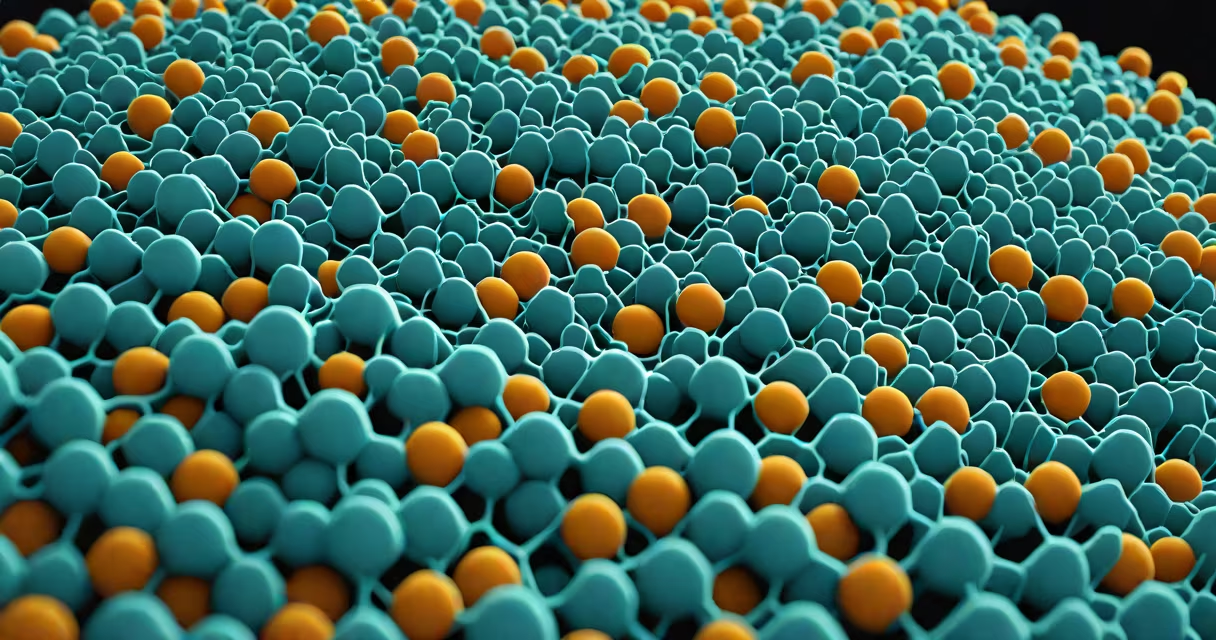
A glycoprotein is a protein molecule covalently bonded to one or more oligosaccharide chains, forming a complex macromolecule essential for cell signaling, immune response, and structural integrity in biological systems.
Glycoproteins are synthesized in the endoplasmic reticulum and modified in the Golgi apparatus. During this process, specific enzymes add sugar residues-such as glucose, mannose, galactose, fucose, and N-acetylglucosamine-to asparagine (N-linked) or serine/threonine (O-linked) amino acids. This modification occurs through enzymatic pathways regulated by cellular machinery.
The addition of sugar groups alters the protein's solubility, stability, and recognition properties. For example, the human erythrocyte surface protein glycophorin A is heavily glycosylated and plays a critical role in blood group antigen expression. Its glycan structures determine compatibility in transfusions and influence susceptibility to malaria parasites.
Glycosylation begins in the rough endoplasmic reticulum. As the nascent polypeptide chain enters the lumen, an oligosaccharyltransferase enzyme attaches a pre-assembled 14-sugar oligosaccharide to an asparagine residue within the consensus sequence Asn-X-Ser/Thr (where X ≠ Pro).
In the Golgi apparatus, glycosidases trim the initial glycan structure, and glycosyltransferases add new sugars in a precise sequence. This stepwise processing creates diverse glycoforms-distinct molecular variants of the same protein-based on tissue type, developmental stage, or disease state.
For instance, the tumor marker CA-125 is a glycoprotein whose altered glycosylation pattern in ovarian cancer patients leads to elevated serum levels detectable via immunoassays. This change results from dysregulated glycosyltransferase activity, not increased protein production.
Glycoproteins are categorized by the site and type of sugar attachment:
| Type | Attachment Site | Common Sugars | Biological Role |
|---|---|---|---|
| N-linked | Asparagine (Asn) | Man, GlcNAc, Gal, Fuc | Protein folding, secretion, receptor function |
| O-linked | Serine or Threonine | GalNAc, Gal, GlcNAc, Fuc | Mucus formation, cell adhesion, immune modulation |
N-linked glycoproteins typically have high-mannose, hybrid, or complex structures. Complex N-glycans often include sialic acid, which influences protein half-life by preventing clearance from circulation.
O-linked glycosylation is more variable and often occurs in mucin-type proteins. Mucins like MUC1, expressed on epithelial surfaces, use O-glycans to form a protective gel layer against pathogens. Aberrant O-glycosylation is linked to colorectal and breast cancers.
Glycoproteins mediate cell-cell communication. They act as ligands for lectins-proteins that bind specific sugar motifs-on neighboring cells or immune receptors. This interaction enables leukocyte rolling during inflammation and sperm-egg recognition in fertilization.
They serve as cell surface markers. Blood group antigens such as ABO are glycoproteins. Type A blood expresses N-acetylgalactosaminyl transferase activity, adding N-acetylgalactosamine to the H antigen precursor. Type B adds galactose. Type O lacks both modifications.
Viruses exploit glycoproteins for host entry. HIV's gp120 envelope protein binds CD4 receptors on T cells via its glycan shield, which masks epitopes from antibodies. This glycan "shield" contributes to immune evasion and complicates vaccine design.
Glycoproteins are not simply "proteins with sugar." The sugar moiety is not a passive decoration-it actively modulates protein conformation, function, and degradation. Removing glycans can abolish biological activity even if the peptide sequence remains intact.
Some assume glycosylation is random. In reality, it is highly regulated. Enzymes like UDP-GlcNAc transferase and mannosidase II ensure correct glycan branching and composition. Mutations in these enzymes cause congenital disorders of glycosylation (CDGs), leading to severe neurological and developmental defects.
For example, CDG-Ia results from mutations in PMM2, an enzyme involved in dolichol-linked oligosaccharide synthesis. Patients exhibit psychomotor delay, seizures, and abnormal serum transferrin glycosylation patterns-diagnostic indicators used clinically.
Monoclonal antibody therapies rely on glycoprotein engineering. Rituximab, used in treating non-Hodgkin lymphoma, is produced in Chinese hamster ovary (CHO) cells. Variability in Fc glycosylation affects antibody-dependent cellular cytotoxicity (ADCC)-a key mechanism of action. High levels of afucosylated IgG improve ADCC by increasing affinity for FcγRIIIa on NK cells.
During my work in a biotech lab, we observed that recombinant insulin analogs with altered glycosylation showed reduced bioavailability in animal models. Despite identical amino acid sequences, the presence of N-glycans disrupted receptor binding kinetics. This highlighted the functional significance beyond primary structure.
Another example: the SARS-CoV-2 spike protein contains multiple N-linked glycosylation sites. Cryo-electron microscopy revealed that glycans form a changing shield around the receptor-binding domain, limiting access to neutralizing antibodies. This insight guided the development of vaccines targeting conserved regions beneath the glycan layer.
Glycoproteins are closely related to glycolipids and proteoglycans, which also carry carbohydrate moieties. While glycolipids anchor in membranes via lipid tails, glycoproteins are typically transmembrane or secreted. Proteoglycans, such as aggrecan in cartilage, feature long glycosaminoglycan chains attached to core proteins.
Every glycoprotein is unique in its glycan profile. Even minor changes in sugar composition-like the addition of sialic acid-can alter immunogenicity, half-life, and cellular targeting. This precision underlies their critical roles in health and disease.