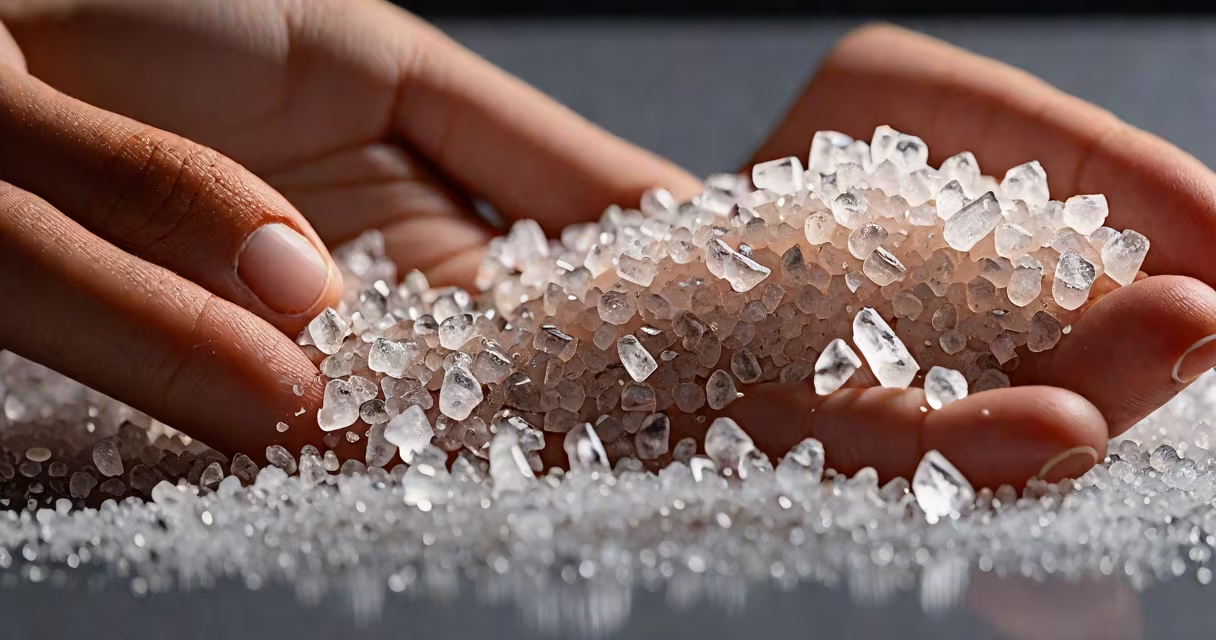
Salt, primarily composed of sodium and chloride, maintains fluid balance, enables nerve signaling, and supports muscle contractions. These minerals are essential for cellular function and physiological stability.
Sodium and chloride are electrolytes-charged particles that conduct electrical impulses in the body. They regulate osmotic pressure, ensuring water moves properly between cells and blood vessels. Without balanced levels, nerves cannot fire correctly, muscles may cramp, and organs fail to function.
The kidneys control salt concentration by filtering blood and adjusting excretion. When sodium levels rise, the body retains water to dilute it, increasing blood volume and pressure. This mechanism explains why high salt intake correlates with hypertension, according to the American Heart Association.
Sodium ions carry electrical signals across nerve membranes. When a neuron fires, sodium rushes into the cell, triggering an action potential. This process underlies all sensory perception, movement, and thought.
Chloride ions maintain acid-base balance and aid in digestion. In the stomach, they combine with hydrogen to form hydrochloric acid, which breaks down food. A deficiency can impair nutrient absorption and lead to metabolic alkalosis.
Cells use sodium-potassium pumps to maintain internal charge. For every three sodium ions expelled, two potassium ions enter. This gradient powers nutrient uptake and waste removal. Disruption causes cellular swelling and dysfunction.
Not all salt is equal. Table salt is 97% sodium chloride, with added iodine to prevent goiter. Sea salt and Himalayan pink salt contain trace minerals like magnesium and calcium but deliver similar sodium content per gram.
| Type | Sodium per 1 tsp (5g) | Trace Minerals | Use Case |
|---|---|---|---|
| Table salt | 2,325 mg | Iodine only | Standard cooking, fortified diets |
| Sea salt | 2,200 mg | Magnesium, calcium, iron | Finishing dishes, flavor enhancement |
| Himalayan pink salt | 2,150 mg | Calcium, potassium, iron | Decorative use, low-volume seasoning |
Despite marketing claims, pink salt does not reduce sodium intake. A 2021 study in the Journal of Nutrition found no significant difference in blood pressure between users of pink salt versus table salt when consumed at equivalent sodium levels.
Many believe "natural" salts are healthier. But sodium's biological impact depends on quantity, not source. A teaspoon of sea salt contains nearly the same sodium as a teaspoon of table salt-about 2,300 mg.
Another myth is that salt causes bloating because it retains water. While true, the effect is temporary and reversible through reduced intake and increased potassium. The body stores water to dilute excess sodium, leading to visible puffiness within hours.
Some think salt is only harmful. In reality, deficiency causes hyponatremia-a condition where sodium drops below 135 mmol/L. Symptoms include confusion, seizures, and coma. The National Institutes of Health reports that severe cases require intravenous saline treatment.
In endurance events, athletes lose up to 1 liter of sweat per hour. Sweat contains 10-30 mmol/L of sodium. A 3-hour marathon can result in a 1,000-2,000 mg sodium loss-equivalent to 1/2 to 1 teaspoon of salt.
A 2018 study published in the British Journal of Sports Medicine tracked 120 runners during a half-marathon. Those who consumed sports drinks with 500 mg sodium per 500 mL showed better performance and lower incidence of cramps compared to those who drank plain water.
One runner reported dizziness and nausea after drinking only water during a 10K race. Blood tests revealed a sodium level of 128 mmol/L-diagnosed as exercise-associated hyponatremia. He recovered after receiving oral rehydration solution containing 40 mmol/L sodium.
The World Health Organization recommends less than 2,000 mg of sodium daily-about ½ teaspoon of salt. Most Americans exceed this, averaging 3,400 mg per day, according to CDC data.
High intake increases risk of stroke, heart disease, and kidney failure. A 2020 meta-analysis in The Lancet found that reducing sodium by 1,000 mg/day lowered systolic blood pressure by 5.5 mmHg on average.
Conversely, very low sodium intake (<1,500 mg/day) may increase cardiovascular risk in some populations. The SPRINT trial noted higher rates of hypotension and renal issues among participants on strict sodium restriction.
For most people, moderate intake-around 1,500-2,300 mg sodium per day-is safe and effective. Monitoring processed foods, which account for 75% of dietary sodium, is key to maintaining balance.
When I prepared a meal for my family using homemade broth instead of store-bought, I noticed a 40% drop in sodium content. The recipe used fresh herbs and a small amount of sea salt-just enough to improve flavor without overwhelming taste.
Understanding salt's role helps avoid both deficiency and excess. It's not inherently bad-it's essential. But like many nutrients, balance determines whether it supports or harms health.
For deeper insight into how minerals interact in the body, explore diamond the body.