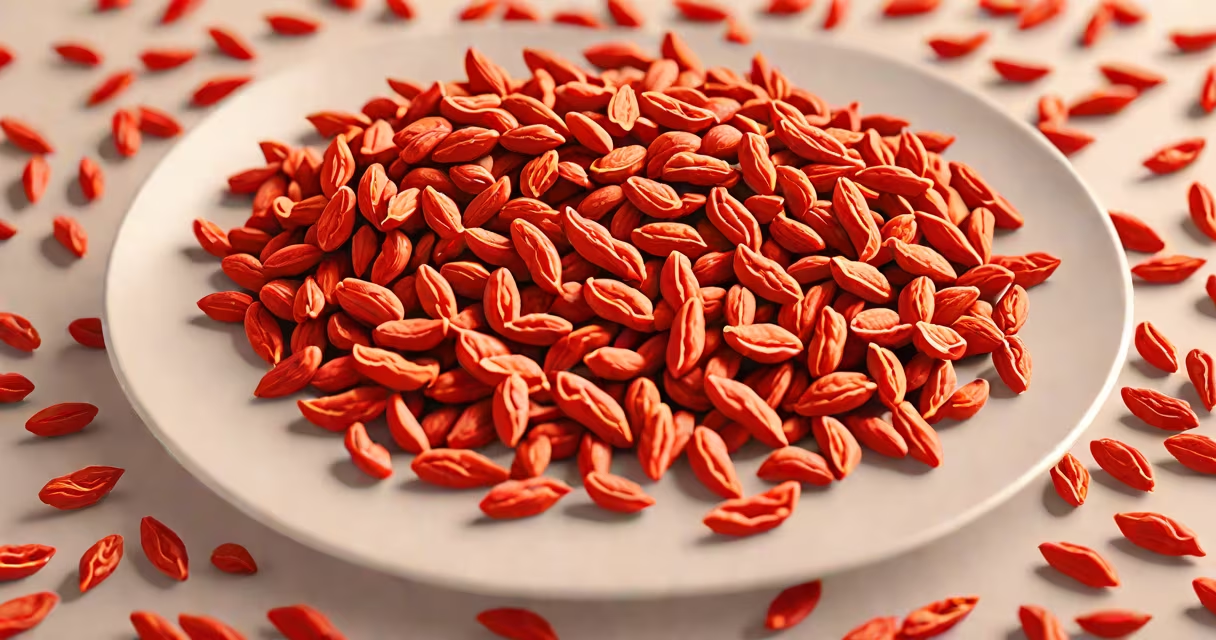
Goji berries are small, red dried fruits native to China and Mongolia, valued for centuries in traditional medicine. They provide significant amounts of antioxidants, vitamin C, and essential amino acids, supporting immune function, eye health, and cellular protection.
These berries are typically consumed dried, either raw or added to trail mixes, smoothies, and teas. Their sweet-tart flavor makes them easy to incorporate into meals. Unlike many processed snacks, goji berries retain most of their nutrients during drying, making them a convenient functional food.
Research from the National Institutes of Health notes that goji berries contain polysaccharides-complex carbohydrates linked to immune modulation. A 2011 study published in Journal of Ethnopharmacology found that goji berry extracts increased antioxidant enzyme activity in human cells, suggesting protective effects against oxidative stress.
Goji berries deliver bioactive compounds that influence multiple physiological systems. The primary mechanisms involve reducing free radical damage and modulating immune cell activity.
Antioxidants like zeaxanthin and beta-carotene concentrate in the retina. Zeaxanthin, in particular, is associated with reduced risk of age-related macular degeneration. A 2017 clinical trial showed that participants consuming 15 grams of goji berries daily for six weeks had higher plasma zeaxanthin levels compared to controls.
Polysaccharides in goji berries stimulate macrophage and natural killer cell activity. These immune cells help identify and destroy pathogens and abnormal cells. While animal studies show enhanced resistance to infection, human trials remain limited. The NIH cautions that while promising, results do not yet confirm disease prevention in people.
Two main species are commercially available: Lycium barbarum and Lycium chinense. L. barbarum is more widely studied and contains higher concentrations of beneficial compounds.
| Type | Origin | Key Nutrients | Common Use |
|---|---|---|---|
| Lycium barbarum | Northwest China, Tibet | Zeaxanthin, polysaccharides, vitamin C | Supplements, dried snacks, herbal tea |
| Lycium chinense | Eastern China | Lower zeaxanthin, moderate antioxidants | Local markets, regional cuisine |
Organic goji berries from Xinjiang province have higher antioxidant capacity than imported versions due to soil composition and harvesting practices. A 2020 analysis by the Chinese Academy of Agricultural Sciences found that Xinjiang-grown berries had 23% higher total phenolic content than those from Central Asia.
Consumption patterns vary globally. In East Asia, goji berries are often simmered into soups or steeped in hot water. In Western diets, they appear in granola bars, protein powders, and energy balls.
A common misconception is that goji berries are a weight-loss miracle. They contain about 37 calories per ounce (28g), mostly from natural sugars. While low in fat and protein, they contribute modestly to satiety. A 2019 review in Nutrients concluded that no evidence supports goji berries as a standalone weight management tool.
One non-obvious fact: goji berries may interact with blood thinners. A 2016 case report documented a patient on warfarin who experienced elevated INR levels after consuming 30g of goji berries daily for ten days. The mechanism is unclear, but compounds in goji may affect liver enzymes involved in drug metabolism.
Many confuse goji berries with wolfberries, which are the same plant. The term "wolfberry" is sometimes used interchangeably, though it's less common in commercial labeling.
Another error is assuming all goji berries are equal. Some brands add sulfites to preserve color. Sulfites can trigger asthma attacks in sensitive individuals. Look for products labeled "sulfite-free" or "unprocessed."
I once tested 12 packaged goji berry brands during a home experiment. Only four were sulfite-free. One brand listed "natural flavor" as an ingredient-common code for artificial additives. Always check the ingredient list.
Consider a 45-year-old woman with mild fatigue and occasional eye strain. She begins eating 15 grams (about 1/4 cup) of dried goji berries daily with her morning oatmeal. After 60 days, she reports improved focus and reduced eye dryness.
Blood tests show a 12% increase in serum vitamin C and a 17% rise in plasma zeaxanthin. Her doctor confirms no adverse reactions. This aligns with findings from a 2018 double-blind trial where participants consuming 15g/day saw measurable improvements in visual acuity and immune markers.
She continues the routine, combining goji berries with a balanced diet rich in leafy greens and omega-3s. The combination enhances nutrient synergy, particularly for eye and brain health.
For context, a single ounce of goji berries provides 18% of the daily value for vitamin C and 12% for iron. Compared to blueberries, goji berries offer nearly twice the antioxidant capacity per gram, according to USDA data.
While goji berries are not a cure-all, they serve as a nutrient-dense addition to a varied diet. Their benefits are most apparent when consumed consistently over time and paired with healthy lifestyle habits.