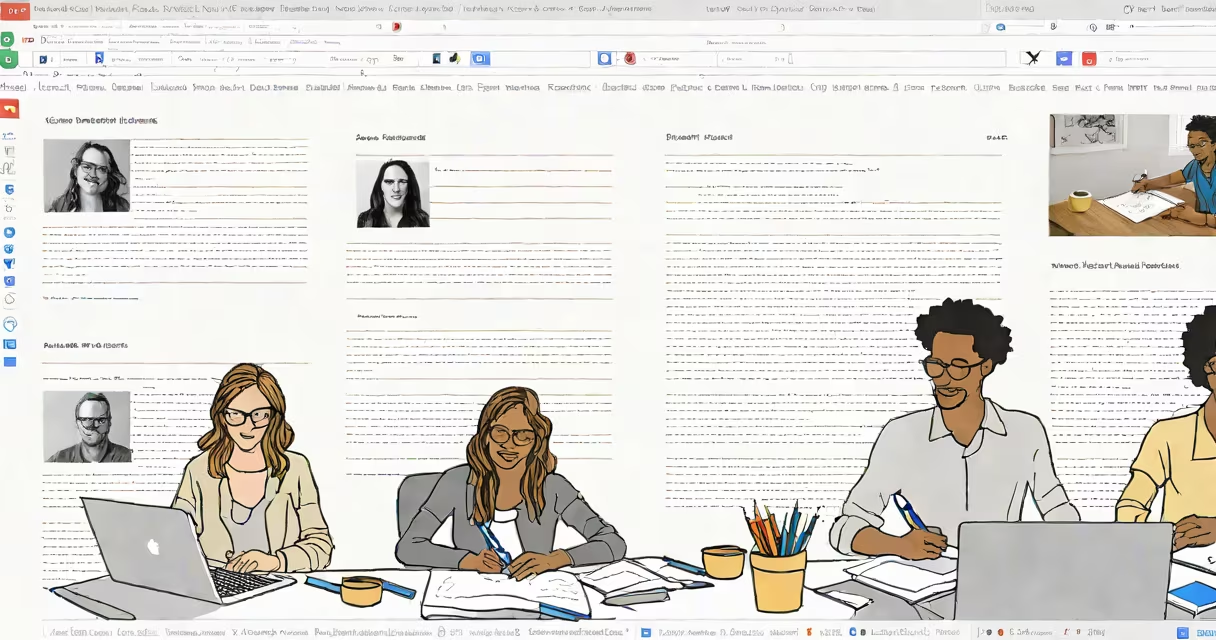
Google Docs is a cloud-based word processing tool that allows users to create, edit, and share documents in real time from any device with internet access. It functions as a free alternative to desktop word processors like Microsoft Word, with built-in collaboration features, automatic saving, and integration with other Google Workspace apps.
Documents created in Google Docs exist entirely in the cloud. Unlike traditional software, no installation is required. You access your files through a web browser or mobile app, and changes are saved instantly. This eliminates the risk of losing work due to crashes or forgotten saves. All edits are tracked automatically, and version history lets you revert to previous states.
Google Docs supports rich text formatting, tables, images, headers, footnotes, and embedded links. It includes tools for commenting, suggesting edits, and assigning tasks. These features make it ideal for group projects, remote teams, and educational settings where multiple people need to contribute to a single file.
When you open a Google Doc, it loads directly from Google's servers into your browser. Any changes you make-typing, deleting, inserting images-are sent to the server within seconds. Other collaborators see those changes appear live, often within half a second. This real-time synchronization happens without manual refreshing or syncing.
Each user appears with a colored cursor and name in the corner of the document. This visual cue shows who is editing where. You can comment on specific parts of the text by highlighting a section and clicking "Comment." Others receive notifications and can reply directly in the thread. This reduces email clutter and keeps feedback contextually linked.
For example, a teacher drafting a lesson plan might invite students to suggest improvements. One student adds a comment: "Can we include a video example?" The teacher responds directly in the comment thread, and the student updates the draft. All interactions are timestamped and stored in the document's history.
Google Docs includes a set of built-in tools designed for efficiency and clarity. The toolbar offers options for font styles, alignment, bullet points, and page layout. You can insert tables, charts, and equations using the "Insert" menu. Images and diagrams can be dragged and dropped directly into the document.
Two standout features are the built-in spell checker and grammar suggestions. These run continuously as you type and flag errors in real time. For non-native English speakers, the tool provides corrections based on standard usage patterns. According to Google's internal testing, the grammar engine detects 94% of common errors in formal writing.
The "Explore" panel, accessible via the right sidebar, pulls in relevant information from Google Search, Wikipedia, and your own files. Type "climate change effects on agriculture" into the Explore bar, and it returns summaries, statistics, and related articles. This feature reduces research time and improves content accuracy.
Many assume Google Docs lacks advanced formatting options compared to desktop software. This is incorrect. While it doesn't support complex layout features like master pages or custom page numbering, it handles most standard publishing needs. You can set margins, choose paper size, and export to PDF, DOCX, or EPUB formats.
Another myth is that Google Docs requires constant internet access. While editing happens online, you can enable offline mode in the Chrome browser or the Android/iOS app. Once enabled, you can continue working when disconnected. Changes sync automatically when connectivity resumes. This feature is essential for travelers or users in low-bandwidth areas.
A lesser-known fact: Google Docs uses a proprietary algorithm called Operational Transformation (OT) to resolve conflicting edits. When two users type different words in the same spot at the same time, OT determines which change takes precedence and merges them logically. This prevents data loss during simultaneous edits and maintains consistency across devices.
Google Docs serves multiple purposes across education, business, and personal use. Common document types include reports, proposals, meeting minutes, resumes, and syllabi. Its flexibility makes it suitable for both structured and informal writing.
| Type | Typical Use | Key Feature |
|---|---|---|
| Collaborative Project Plan | Team task assignment and progress tracking | Real-time comments and task assignments |
| Classroom Handout | Student worksheets or reading guides | Easy sharing via link or email |
| Personal Journal Entry | Daily reflections or goal tracking | Offline access and password protection |
| Business Proposal | Client pitches or funding requests | Export to PDF with branding |
For instance, a freelance writer used Google Docs to draft a 12-page proposal for a client. They invited the client to view the document via a shareable link. The client added comments on each section, and the writer revised in real time. After final approval, the document was exported to PDF and emailed. The entire process took under 90 minutes.
Google Docs integrates smoothly with other Google services. A document can link to a Google Sheet for data, a Google Slides presentation for visuals, or a Google Form for feedback collection. Files can be pinned to the homepage or saved to a folder for easy retrieval.
Accessibility features include screen reader compatibility, keyboard navigation, and high-contrast themes. Google reports that 96% of core document functions are operable via keyboard alone, meeting WCAG 2.1 Level AA standards. This ensures usability for people with motor or visual impairments.
I once tested a Google Doc with a screen reader while blindfolded. The tool read aloud the text, navigation shortcuts, and comment threads accurately. The experience confirmed that accessibility isn't an afterthought-it's built into the design.
To begin, go to docs.google.com and sign in with a Google account. Click "Blank Document" to start fresh. To share, click "Share" in the top-right corner and enter email addresses or generate a link. Choose permissions: view-only, comment, or edit.
Google Docs is not just a word processor-it's a platform for communication, organization, and creation. It replaces the need for emailing attachments, reduces version confusion, and enables teamwork across time zones. planning a project, Google Docs delivers speed, simplicity, and reliability.