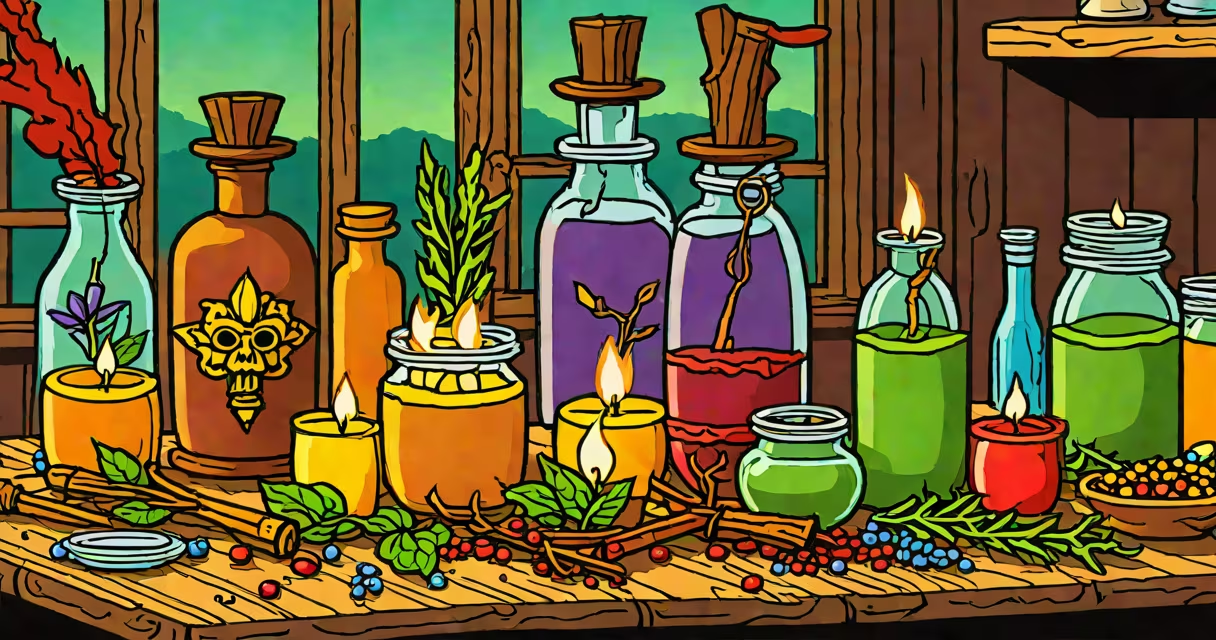
Hoodoo and voodoo are distinct spiritual traditions rooted in African diasporic cultures, with hoodoo originating in African American communities through syncretism of West African, Christian, and Native American beliefs, while voodoo (or Vodou) emerged in Haiti from West African religious systems blended with Catholicism and French colonial influence.
Hoodoo, also known as rootwork or conjure, developed primarily in the American South during the 18th and 19th centuries. It centers on practical magic-using herbs, roots, oils, prayers, and ritual objects to address personal concerns like health, protection, love, or financial gain. Practitioners often work in secrecy, relying on oral tradition and individualized methods rather than formal doctrine. A common practice involves creating mojo bags-small cloth pouches filled with specific ingredients believed to attract or repel certain energies.
Vodou (often spelled voodoo in English) is a structured religion practiced mainly in Haiti and parts of the Caribbean and Louisiana. It draws from Fon, Ewe, and Kongo spiritual systems brought by enslaved Africans. Vodou includes a pantheon of spirits called loa, who serve as intermediaries between humans and the divine. Rituals involve drumming, dancing, possession, offerings, and sacred ceremonies held at temples or homes. Unlike hoodoo, which focuses on individual outcomes, Vodou emphasizes community, lineage, and spiritual alignment with ancestral forces.
| Feature | Hoodoo | Vodou |
|---|---|---|
| Geographic Origin | United States, especially the American South | Haiti, with roots in West Africa |
| Primary Language | English, with African American Vernacular influences | French Creole, Haitian Creole, Kikongo, Fon |
| Core Practice | Individualized rootwork, mojo bags, protective charms | Rituals with loa, drumming, possession, communal ceremonies |
| Structure | Informal, decentralized, passed orally | Formalized, hierarchical, with priests (houngans) and priestesses (mambos) |
| Divine System | Focus on God, Jesus, saints, and spirit helpers; no formal pantheon | Structured pantheon of loa (spirits), including Legba, Erzulie, and Damballah |
Despite overlapping themes-spirit communication, healing, protection-hoodoo and voodoo differ in structure, belief, and expression. Hoodoo is often misunderstood as a form of witchcraft or black magic due to sensationalized portrayals in media. In reality, it functions as a folk-based system focused on tangible results. For example, a person in rural Mississippi might carry a mojo bag with rosemary, red pepper, and a piece of quartz to improve their luck in job interviews, based on a family tradition passed down through generations.
Vodou, meanwhile, is frequently misrepresented as devil worship. This stems from colonial-era propaganda and fear-mongering. According to anthropologist Karen McCarthy Brown, author of *Mama Lola: A Vodou Priestess in Brooklyn*, Vodou is "a living religion grounded in daily practice, kinship, and reverence for ancestors." In a typical ceremony in Port-au-Prince, a houngan might invoke the loa Damballah Wedo through a sacred serpent symbol, using incense, music, and dance to invite spiritual presence.
A key distinction lies in how each tradition treats the sacred. Hoodoo relies on personal intention and symbolic action-placing a candle in a jar with a name written on it to influence a situation. Vodou requires initiation, lineage, and adherence to strict ritual protocols. You cannot simply "become" a Vodou priest; training takes years and is tied to spiritual calling and community approval.
One non-obvious fact: hoodoo's roots extend beyond African American culture. In the 19th century, European-American folk healers and herbalists adopted similar practices under different names-such as "grimoire magic" or "cunning folk" traditions. These were sometimes merged into hoodoo through cross-cultural exchange, particularly in border regions like Louisiana and Texas. This blending created hybrid forms of spiritual practice that were neither purely African nor purely European.
I once attended a small gathering in New Orleans where a hoodoo practitioner demonstrated how to make a "protection jar" using salt, sage, and a photograph of someone they wanted to ward off. She didn't chant or pray aloud. Instead, she whispered a few lines from a hymn her grandmother taught her, then sealed the jar with wax. The act was quiet, deliberate, and deeply personal. That moment clarified something I'd struggled to grasp: hoodoo isn't about spectacle-it's about intent, memory, and material connection.
Both traditions have faced systemic erasure. Hoodoo was criminalized in the Jim Crow South, where practitioners were accused of cursing or stealing. Vodou was outlawed in Haiti under French rule and later suppressed by U.S.-backed governments. Despite this, both continue to thrive. According to the U.S. Census Bureau, over 1.6 million people in the U.S. identify with African diasporic religions, including hoodoo and Vodou, though exact numbers are difficult to verify due to informal practice and stigma.
Understanding hoodoo vs voodoo means recognizing that one is a survivalist, adaptive spiritual toolkit shaped by oppression and resilience, while the other is a full-fledged religion with liturgy, hierarchy, and cosmology. They share ancestry but diverge in purpose and form. Hoodoo responds to immediate needs. Vodou sustains long-term relationships with the unseen.
When discussing hoodoo vs voodoo, avoid conflating them. They are not interchangeable. One is a set of practical techniques rooted in African American life. The other is a complex religious system with deep historical and theological foundations. Confusing the two perpetuates harmful stereotypes and undermines the integrity of both traditions.