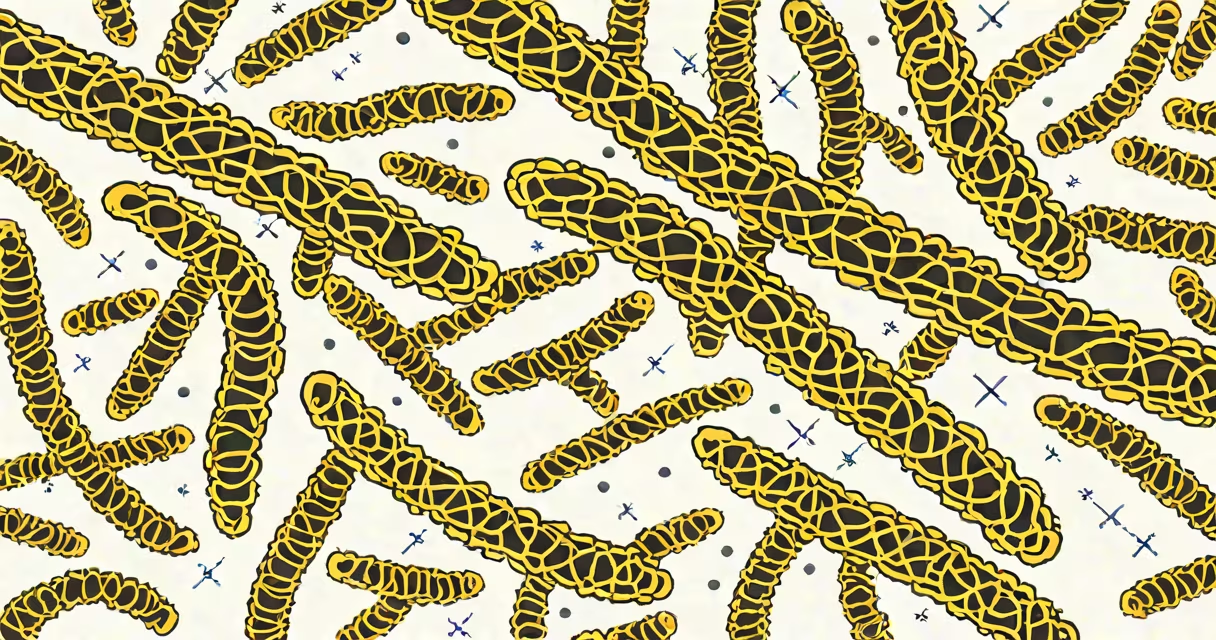
A chromosome is a single, long molecule of DNA wrapped around proteins called histones, forming a compact structure visible under a microscope during cell division. It carries genes that determine inherited traits and ensures accurate distribution of genetic material to daughter cells.
Chromosomes exist in pairs in most human cells-23 from each parent-making a total of 46. These pairs include 22 autosomes and one pair of sex chromosomes (XX or XY), which determine biological sex. During mitosis and meiosis, chromosomes replicate and segregate to maintain genetic continuity across generations.
Each chromosome contains hundreds to thousands of genes arranged along its length. Genes are specific DNA sequences that code for proteins or functional RNA molecules. Mutations in these sequences can lead to inherited disorders such as cystic fibrosis or sickle cell anemia.
During interphase, chromosomal DNA exists as loosely packed chromatin. As a cell prepares to divide, chromatin condenses into discrete, visible chromosomes. This compaction prevents DNA damage and allows precise separation during mitosis or meiosis.
In mitosis, each chromosome duplicates into two sister chromatids joined at the centromere. Spindle fibers pull these apart, ensuring each new cell receives an identical set of chromosomes. In meiosis, homologous chromosomes pair up and exchange segments through crossing over-a process that increases genetic diversity.
For example, during human gamete formation, a diploid cell with 46 chromosomes undergoes meiosis to produce haploid sperm or egg cells with 23 chromosomes. Fertilization restores the diploid state when sperm and egg combine.
Chromosomes consist primarily of double-stranded DNA and associated proteins. The DNA wraps around histone octamers to form nucleosomes-the basic unit of chromatin. These structures further coil into higher-order chromosomal architecture.
| Type | Centromere Position | Shape | Example |
|---|---|---|---|
| Metacentric | Centered | Bar-shaped | Human chromosome 1 |
| Submetacentric | Slightly off-center | Unequal arms | Human chromosome 2 |
| Acrocentric | Very near one end | One long arm | Human chromosomes 13, 14, 15, 21, 22 |
| Telocentric | At tip | Single arm | Not found in humans; common in mice |
Chromosome bands, revealed by staining techniques like Giemsa staining, allow scientists to identify individual chromosomes and detect abnormalities. For instance, the presence of an extra copy of chromosome 21 causes Down syndrome, a condition affecting approximately 1 in 700 live births globally (World Health Organization, 2023).
Chromosomes are not synonymous with genes. A gene is a segment of DNA that codes for a protein or RNA; a chromosome is the entire package containing many genes. Confusing the two leads to misunderstandings about inheritance patterns.
Another misconception is that all chromosomes are equal in size and function. In reality, chromosome 1 is the largest, containing over 200 million base pairs, while chromosome 21 is among the smallest, with about 48 million base pairs. Despite their size differences, all chromosomes contribute equally to cellular function.
Chromosomes do not change between somatic cells. All non-reproductive cells in a person's body have the same set of 46 chromosomes. Variations arise only through mutations or errors in cell division, such as nondisjunction, which can result in conditions like Turner syndrome (45,X) or Klinefelter syndrome (47,XXY).
Chromosome analysis, known as karyotyping, is used clinically to diagnose genetic disorders. For example, a karyotype of a child with developmental delays may reveal a translocation between chromosomes 14 and 21, leading to a diagnosis of translocation Down syndrome.
I once observed a laboratory technician analyze a blood sample from a patient suspected of having leukemia. After culturing the cells and staining the chromosomes, they detected an abnormal fusion of parts of chromosomes 9 and 22-the Philadelphia chromosome-confirming chronic myeloid leukemia. This finding guided treatment with targeted therapy, improving survival rates.
Modern techniques like fluorescence in situ hybridization (FISH) and chromosomal microarray analysis offer higher resolution than traditional karyotyping. These tools detect submicroscopic deletions or duplications linked to neurodevelopmental disorders, such as 22q11.2 deletion syndrome, which affects about 1 in 4,000 individuals.
Chromosomes differ from chromatin, which is the uncondensed form of DNA-protein complexes. Chromatin exists throughout the cell cycle except during mitosis, when it condenses into visible chromosomes.
Chromosomes also differ from plasmids-small circular DNA molecules found in bacteria and some eukaryotes. Plasmids replicate independently of the main genome and are not essential for basic cellular functions. They play key roles in antibiotic resistance and horizontal gene transfer.
Understanding what a chromosome means includes recognizing its role beyond inheritance. Chromosomal instability is a sign of cancer. Tumors often show aneuploidy-abnormal chromosome numbers-which correlates with poor prognosis in breast and colorectal cancers (National Cancer Institute, 2022).
Chromosomes are fundamental units of heredity, carrying the blueprint for life. Their structure enables accurate replication and distribution during cell division, maintaining genetic stability across generations. From diagnosing disease to advancing personalized medicine, chromosomes remain central to modern biology and clinical practice.