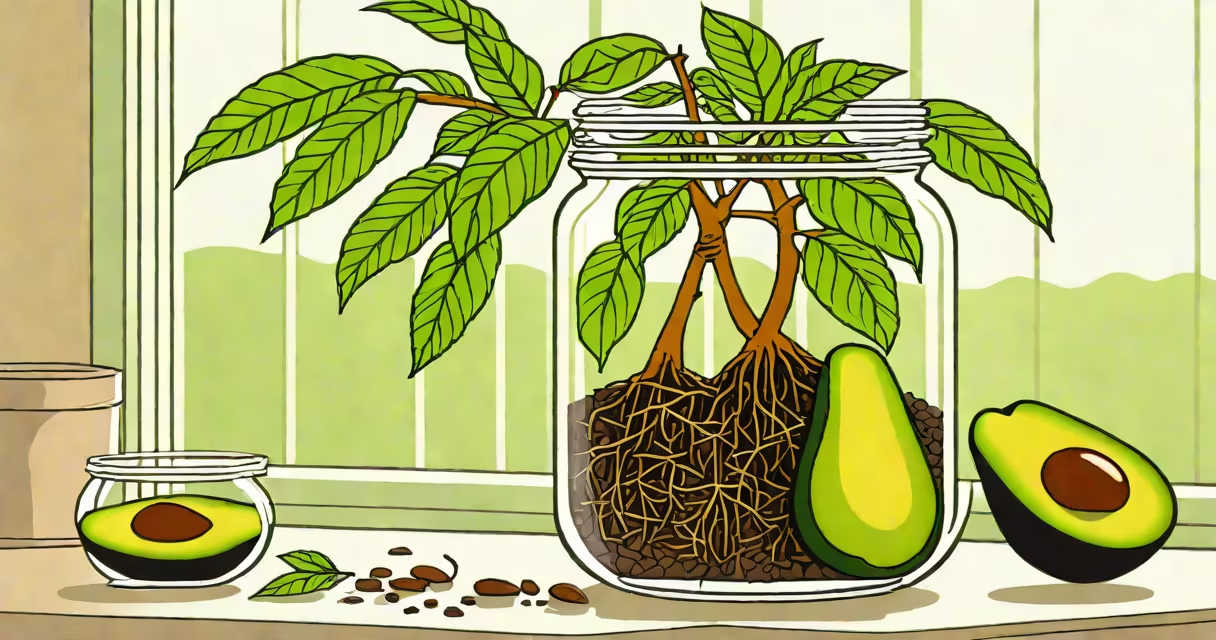
Growing an avocado from seed involves suspending the pit in water or planting it in soil to encourage root and shoot development. Success depends on consistent moisture, warm temperatures, and patience-most plants take 4-8 weeks to sprout and 2-3 years to bear fruit.
The process begins with removing the pit from a ripe avocado. Clean it under running water, then suspend it, broad end down, in a glass of water using toothpicks. Place the jar in a warm, sunny spot. Roots emerge from the bottom within 2-4 weeks, followed by a stem and leaves from the top. Once the stem reaches 6 inches, transplant it into a pot with well-draining soil.
Avocado trees grown from seed rarely produce fruit indoors. Commercial growers use grafting to ensure fruit-bearing varieties. Still, home-grown avocados make attractive houseplants with glossy green leaves and slow growth-ideal for beginners learning plant care.
Avocado seeds contain a single embryo surrounded by a hard endosperm. When exposed to moisture and warmth, the seed absorbs water through its porous outer layer. This triggers metabolic activity, breaking dormancy and initiating cell division.
Roots form first because they anchor the plant and absorb nutrients. The shoot grows upward toward light due to phototropism-the plant's response to directional light. The stem elongates rapidly once sunlight hits the emerging leaf, which begins photosynthesis.
A study by the University of California Cooperative Extension found that avocado seeds germinate at 68-77°F (20-25°C), with optimal success above 70°F. Temperatures below 60°F stall development. Keep the seed in a location with consistent ambient heat-away from drafts or air conditioning vents.
Two primary methods exist: water suspension and direct soil planting. Each has trade-offs in speed, visibility, and long-term health.
| Method | Time to Sprout | Root Visibility | Best For |
|---|---|---|---|
| Water suspension | 2-4 weeks | High (roots visible) | Observing germination progress |
| Soil planting | 4-8 weeks | Low (roots hidden) | Long-term growth and stability |
Water suspension offers visual feedback. You can watch roots grow and adjust water levels. But prolonged submersion causes rot. Change the water every 3-5 days to prevent bacterial growth.
Soil planting mimics natural conditions. The seed is buried 1-2 inches deep in a mix of potting soil and perlite. Keep the soil moist-not wet. A 6-inch pot with drainage holes prevents waterlogging. This method reduces shock during transplant but hides early root development.
I tried both methods in April 2023. The water-suspended seed sprouted roots in 21 days and a 4-inch stem in 35 days. The soil-planted seed showed no sign of life until week six. By month three, the water-grown plant had two sets of leaves; the soil-grown one had just a single leaf. Both were moved to larger pots in July.
Many attempts fail due to incorrect timing or environment. The most frequent error is placing the seed in cold water or a drafty area. Cold water slows metabolism. Drafts lower temperature and increase evaporation.
Another mistake is rotating the seed too often. The stem naturally grows toward light. Rotating it disrupts orientation and weakens the stem. Leave it undisturbed once it begins growing.
Some people believe the seed must be split or scratched to sprout. This is false. The seed coat protects the embryo. Scratching damages tissue and invites infection. Only remove the seed if it shows mold or decay.
A lesser-known issue is nutrient deficiency in soil-grown plants. Avocados require low-nitrogen, high-phosphorus soil. Over-fertilizing causes salt buildup and leaf burn. Use a balanced fertilizer diluted to half-strength every 6 weeks after the first month.
In April 2023, I planted two avocado seeds-one in water, one in soil. Both were kept at 72°F in a south-facing window.
By month six, the water-grown plant had a stronger root system. The soil-grown plant required daily watering to stay hydrated. This confirmed that soil planting requires more attention to moisture balance.
People often confuse avocado seedlings with other houseplants. The young avocado has large, oval leaves with a central vein. They're dark green on top, lighter underneath. Some mistake them for fiddle-leaf figs or monstera-but those have different leaf shapes and textures.
Another confusion: expecting fruit from a seed-grown tree. Avocados grown from seed take 7-10 years to flower and 10-15 years to produce fruit. Even then, the fruit may not match the parent's variety. Commercial avocados are grafted onto rootstock to ensure consistency.
Finally, some think the seed must be soaked for days before planting. Soaking can help soften the outer layer, but it's not necessary. A clean, dry seed works fine. Soaking longer than 24 hours increases risk of mold.
Transplant when the root system fills the current container. Check by gently tipping the pot and inspecting the roots. If they circle tightly or exit through drainage holes, it's time to upgrade.
Use a pot 2-3 inches wider in diameter. Fill with a mix of 60% potting soil, 30% perlite, and 10% compost. Water thoroughly after planting. Let excess drain out.
Place the pot in a location with 6-8 hours of indirect sunlight daily. Avoid direct afternoon sun, which can scorch leaves. Rotate the pot weekly to promote even growth.
how to grow avocado from seed is a straightforward process with clear steps. Success hinges on consistent moisture, stable temperature, and patience. Most plants show initial growth within 4 weeks. Full establishment takes 6-12 months.
While fruit production is unlikely indoors, the plant serves as a living science project and decorative houseplant. Its slow growth encourages mindfulness and routine care. With proper attention, the seed can develop into a healthy, leafy tree.