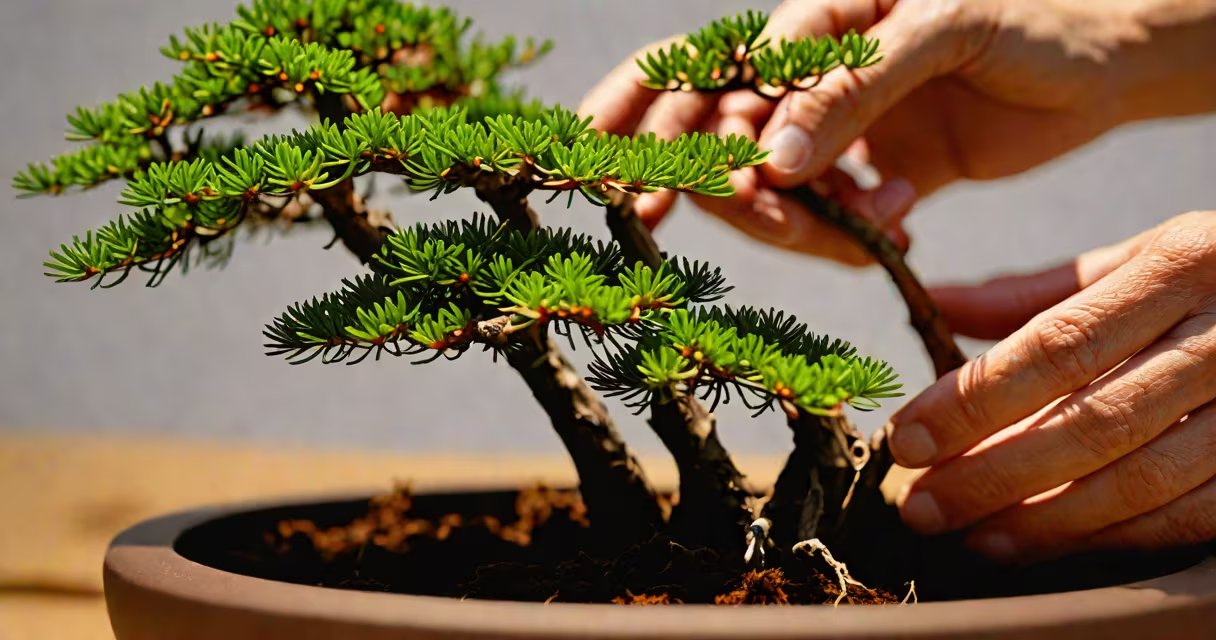
how to make a bonsai tree involves selecting a suitable plant, training it through pruning and wiring, and maintaining it in a small container to mimic the form of a mature tree in nature. This process combines horticultural skill with artistic intent, resulting in a living sculpture that reflects natural landscapes at a reduced scale.
Bonsai is not a single plant species. It is a cultivation practice rooted in Japanese and Chinese traditions, where trees are grown in containers using controlled root development, regular pruning, and careful shaping. The goal is to create a miniature version of a full-sized tree that appears aged, weathered, and balanced. A well-made bonsai tree can live for decades, even centuries, with proper care.
The term "bonsai" translates literally to "tray planting," but the art goes far beyond simply growing a small tree in a pot. It requires consistent attention to branch structure, trunk taper, leaf size, and soil moisture. The most successful bonsai trees look natural despite their artificial constraints, which makes the craft both technical and aesthetic.
Every bonsai begins with a plant selected for its potential to respond to shaping. Not all trees adapt well to bonsai methods. Ideal candidates have small leaves, slow growth, and the ability to withstand frequent pruning and root reduction.
Common species used in bonsai include:
Each species has specific requirements. For example, pines require low humidity and full sun, while ficus thrive in warm, humid environments. Choosing the right species for your climate and indoor/outdoor space is critical to success.
Begin with a young sapling or a pre-shaped specimen. Collecting wild trees is discouraged due to environmental impact and legal restrictions in many regions. Instead, purchase from reputable nurseries or bonsai specialists.
Step 1: Select a container. Use a shallow, unglazed ceramic or clay pot with drainage holes. The pot should be roughly two-thirds the height of the tree's trunk to maintain visual balance.
Step 2: Prepare the soil mix. A standard bonsai mix consists of 60% akadama (a volcanic clay), 20% pumice, and 20% lava rock. This blend drains quickly and supports healthy root development. Avoid garden soil-it compacts and suffocates roots.
Step 3: Remove excess soil from the roots. Trim large roots and cut back the longest ones to encourage fine feeder roots. Do not remove more than one-third of the root mass at once.
Step 4: Place the tree in the pot. Position it slightly off-center for a natural look. Secure it with wire or a stake if needed. Fill with soil, pressing gently to eliminate air pockets.
Step 5: Prune branches. Cut back new growth to two or three leaves. This encourages denser branching and reduces leaf size. Use sharp, clean shears to prevent disease.
Step 6: Wire the trunk and major branches. Use aluminum or copper wire (1.5-2 mm thickness) to shape limbs. Wrap at a 45-degree angle and leave for 4-6 weeks. Remove carefully to avoid scarring.
Step 7: Maintain placement. Place the tree in a location matching its light and temperature needs. Most deciduous bonsai prefer full sun; evergreens may tolerate partial shade.
After six months, the tree should show signs of stabilization-new buds forming, roots filling the pot, and branches holding their shape. At this stage, begin refining details like leaf reduction and branch refinement.
Many beginners overwater bonsai trees. Overwatering causes root rot, which kills the tree within days. A common error is mistaking a dry surface for a dry root zone. Always check soil moisture by inserting a wooden skewer into the center of the pot. If it comes out damp, wait before watering.
Another mistake is aggressive pruning too early. Trees need time to recover from root trimming. Pruning during active growth (spring/summer) is acceptable, but avoid heavy cuts in fall or winter when the tree is dormant.
A lesser-known issue is incorrect wire gauge. Using wire that's too thin bends easily and damages bark. Too thick, and it doesn't conform to curves. Test wire on a spare branch first. Copper wire holds shape better but can burn bark if left too long; aluminum is safer for beginners.
One non-obvious fact: bonsai trees grow slower than their wild counterparts because they're kept in small pots with limited nutrients. This stunted growth is intentional-it mimics aging and creates a sense of maturity. However, this also means they require less frequent repotting-typically every 2-3 years for young trees, every 4-5 years for mature specimens.
Start with a 12-inch juniper sapling collected from a nursery. Choose a 10-inch wide, 3-inch deep ceramic pot. Mix 6 parts akadama, 2 parts pumice, 2 parts lava rock. Remove 40% of the roots and trim longer roots to 2 inches.
Place the tree in the pot, tilt slightly to the left, and fill with soil. Use 1.5 mm aluminum wire to bend the main branch downward at a 60-degree angle. Leave wire in place for five weeks.
Prune back new shoots to two leaves each. Water thoroughly, then place in a south-facing window. Check soil moisture twice weekly. After four months, the branch holds its shape, and new buds appear along the wired section.
This process takes patience. The tree won't look "finished" for at least two years. But each season brings refinement-thinner branches, smaller leaves, and tighter ramification.
Bonsai is not a decorative houseplant. It is not a fad or a trend. It is a disciplined practice requiring ongoing maintenance. Unlike typical potted plants, bonsai trees cannot survive neglect. They demand daily observation and consistent care.
Some confuse bonsai with dwarfed or artificially stunted trees. True bonsai involves shaping through technique-not just cutting down a large tree. A tree grown in a pot without pruning or wiring is not a bonsai.
Also, bonsai is not exclusively Japanese. While the term and formalized styles originated in Japan, similar practices exist in China (penjing), Korea (sangjung), and Europe (topiary). The core principle-creating a miniature field-is universal.
During a visit to a bonsai exhibition in Kyoto, I observed a 120-year-old pine bonsai displayed in a simple black ceramic pot. Its trunk was deeply grooved, branches were sparse and twisted, and the canopy was dense yet airy. The artist had shaped it over decades. That tree wasn't just alive-it told a story of wind, time, and human intention.