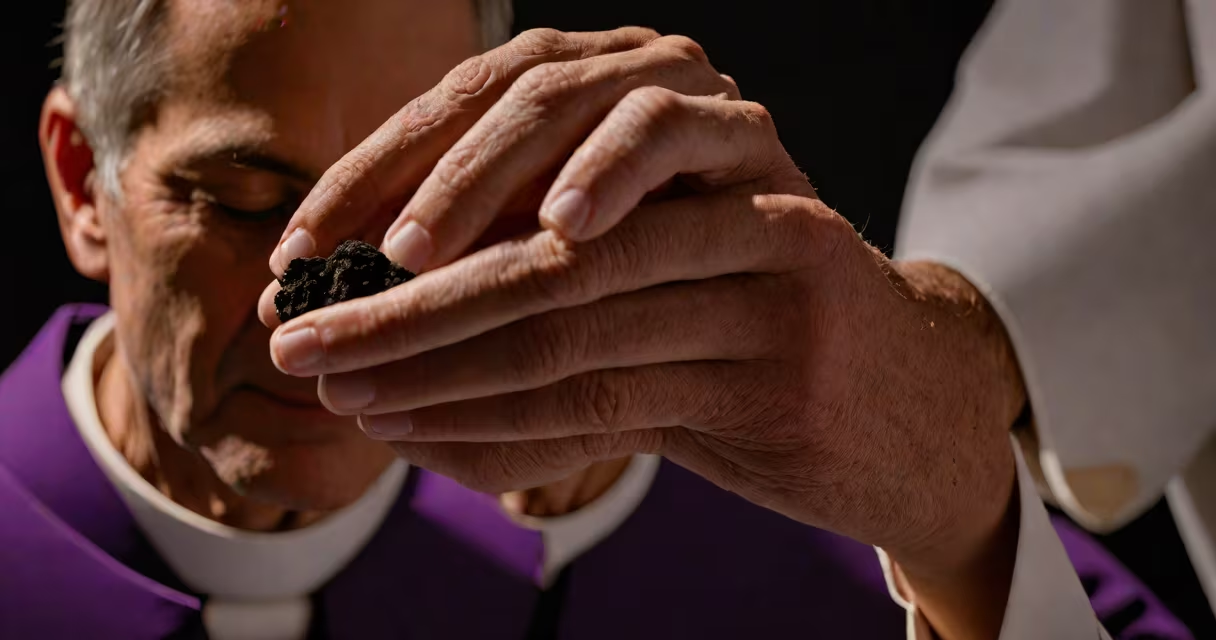
Ash Wednesday marks the beginning of Lent in the Christian calendar, a 40-day period of fasting, prayer, and penance leading up to Easter. It is observed on the first day of Lent, which falls 46 days before Easter Sunday, accounting for six Sundays when fasting is not required.
The day gets its name from the ritual of placing ashes on worshippers' foreheads in the shape of a cross. These ashes are typically made from the burnt palms of the previous year's Palm Sunday. The act is accompanied by the words "Remember that you are dust, and to dust you shall return," drawn from Genesis 3:19. This statement underscores human mortality and calls believers to reflect on their spiritual state.
Lent was formalized in the early Church, with the Council of Nicaea in 325 CE establishing the 40-day observance based on Jesus' 40 days in the wilderness. The practice of using ashes became widespread by the 10th century, particularly in Western Christianity. The Catholic Church, Anglican Communion, and many Protestant denominations observe Ash Wednesday as a solemn day of reflection.
During services, clergy members use ashes-burnt palm fronds collected from the prior year's Palm Sunday-to trace a cross on each person's forehead. The ashes are applied with a finger, often while saying the prescribed words: "Repent and believe in the Gospel" or "Remember you are dust, and to dust you shall return."
Participants may remain in the ash mark throughout the day as a visible sign of faith and humility. Some choose to wash it off later, while others wear it until the evening. The ash is not symbolic only of death-it also represents purification and a fresh start. In medieval times, people wore ashes as a public sign of mourning or contrition, especially during times of crisis.
Ashes are not blessed in the same way as holy water or sacramental bread. They are simply burned and then distributed. The process is simple: palms from the previous year are gathered, dried, and burned into fine ash. The resulting powder is stored in a container and used during the service.
There is only one standard form of ash used on Ash Wednesday: ash derived from palm branches. These palms are saved from the previous year's Palm Sunday celebrations, where congregants carry branches to church. After the service, they are collected, dried, and burned in a fire. The resulting ash is then stored in a small vessel, often a ceramic box or metal container.
Some churches use olive wood or other plant material in rare cases, but this is not traditional or recognized by mainstream Christian authorities. The Roman Catholic Church explicitly states that only palm ashes are appropriate for the rite, citing the *General Instruction of the Roman Missal* (2000), which specifies the use of blessed palms.
| Type | Source Material | Used in | Authenticity |
|---|---|---|---|
| Palm ash | Burnt Palm Sunday palms | Catholic, Anglican, Lutheran, Methodist | Officially recognized |
| Olive wood ash | Burnt olive branches | Rare, experimental | Not recognized by major denominations |
| Other plant ash | Various dried vegetation | Non-traditional or symbolic events | Not authorized |
Using any other material undermines the continuity of the tradition. The Church emphasizes that the ash must come from something previously blessed-palms used in a liturgical celebration. This ensures the ritual remains rooted in sacred history.
Churches around the world observe Ash Wednesday on the first day of Lent. In the United States, approximately 45 million Christians attend services on this day annually, according to the Pew Research Center (2022). The observance is strongest in Catholic and mainline Protestant communities, though many evangelical churches do not formally participate.
Why it matters: Ash Wednesday sets the tone for Lent. It is not merely a reminder of death-it is a call to spiritual transformation. Fasting begins on this day, and many Christians give up something meaningful-such as social media, sweets, or alcohol-as a form of self-discipline. The goal is not punishment but growth: to draw closer to God through sacrifice.
A personal example: In 2021, I attended a service at a small Episcopal church in rural Vermont. The pastor, a woman in her late 50s, stood at the altar with a bowl of ash and a small brush. She placed the mark on each person's forehead with quiet focus. Afterward, a man in his 70s approached me and said, "I've worn this mark for 40 years. It reminds me I'm not in control." His words stayed with me-not because they were profound, but because they were honest.
One common misunderstanding is that Ash Wednesday is a Catholic-only event. While the Catholic Church has a long-standing tradition of observing it, the day is also marked by Anglicans, Methodists, Lutherans, and some Reformed traditions. The Eastern Orthodox Church does not observe Ash Wednesday as such-they begin Lent earlier, on Clean Monday, and do not use ashes.
Another error is equating the ash mark with sin. The cross of ash is not a sign of shame-it is a sign of belonging. It identifies the wearer as someone who has chosen to enter a season of intentional spiritual work. The mark is not meant to shame but to affirm identity within the community of faith.
A lesser-known fact: The ashes are not applied to everyone who attends. In some parishes, only those who have participated in confession or are preparing for Easter sacraments receive the ashes. However, most churches offer them to all attendees, regardless of denomination or belief level. The gesture is inclusive by design.
People often mistake Ash Wednesday for a holiday or festival. It is not. It is a solemn liturgical day. Unlike Christmas or Easter, there is no festive music, decorations, or feasting. The atmosphere is subdued. Worshipers may wear black or dark colors, though this is not required.
It is also sometimes confused with All Souls' Day or All Saints' Day, both of which honor the dead. But Ash Wednesday is not about remembering the deceased-it is about confronting one's own mortality and choosing spiritual renewal. The focus is inward, not commemorative.
Finally, some assume the ash mark must be visible at all times. That is not required. The Church does not mandate wearing the ash beyond the service. Many people wash it off after returning home. Others leave it on until Thursday or Friday. There is no rule. The act is personal.
The meaning behind Ash Wednesday is not a single idea-it is a convergence of memory, repentance, and hope. It begins with dust and ends with resurrection. For millions, it is the start of a process toward Easter, not just a date on the calendar.
If you're reflecting on your own spiritual path, a short reflection on deeper purpose may help clarify your intentions during this season.