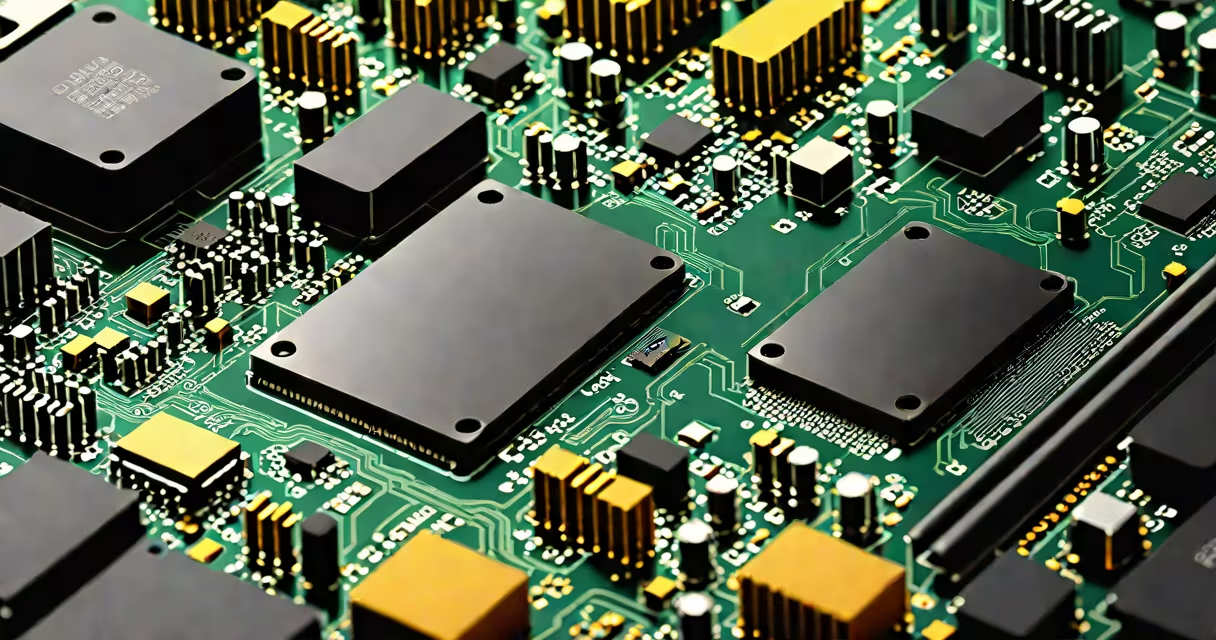
An SSD, or solid state drive, is a type of non-volatile storage device that uses flash memory to store data without moving parts. Unlike traditional hard disk drives (HDDs), which rely on spinning platters and mechanical read/write heads, SSDs access data electronically, resulting in faster performance, lower latency, and greater durability.
SSDs are now standard in modern laptops, desktops, and servers. They deliver faster boot times, application launches, and file transfers compared to HDDs. For example, a typical consumer-grade SATA SSD boots a Windows 11 system in under 10 seconds, while an older 7200 RPM HDD may take 30 seconds or more.
SSDs use NAND flash memory cells to store data. These cells hold electrical charges that represent binary data (0s and 1s). A controller chip manages how data is written, read, and erased across the memory cells. This electronic process eliminates mechanical delays inherent in HDDs.
When you save a file, the operating system sends a request to the SSD's controller. The controller maps the file's location to specific blocks in the flash memory range and writes the data. Reading a file involves the controller retrieving the stored charge patterns and converting them back into usable data.
Unlike HDDs, SSDs don't suffer from seek time-the delay caused by moving a read head across a spinning disk. This absence of mechanical motion allows SSDs to achieve random read/write speeds up to 100,000 IOPS (input/output operations per second), compared to 100-200 IOPS for HDDs.
SSDs come in several form factors and interface types, each affecting speed and compatibility. The most common types are SATA SSDs, NVMe SSDs using M.2 connectors, and PCIe SSDs installed in expansion slots.
| Type | Interface | Typical Speed Range | Use Case |
|---|---|---|---|
| SATA SSD | SATA III (6 Gbps) | 500-550 MB/s sequential read | Basic upgrades for older systems |
| M.2 NVMe SSD | NVMe over PCIe 3.0/4.0 | 2,000-7,000 MB/s sequential read | High-performance gaming, video editing |
| PCIe Expansion Card SSD | PCIe x4 slot | Up to 10,000 MB/s (with PCIe 5.0) | Workstations, AI training, large dataset processing |
For example, a Samsung 980 Pro M.2 NVMe SSD achieves up to 7,000 MB/s read speeds, making it ideal for loading large game levels or rendering 4K video sequences in real time. In contrast, a budget SATA SSD like the Important MX500 maxes out around 550 MB/s, sufficient for everyday computing but insufficient for intensive workflows.
A key distinction often missed: not all M.2 drives are NVMe. Some M.2 SSDs use the SATA protocol, limiting them to ~550 MB/s. Always verify the drive's interface and speed rating before purchasing.
Many users assume all SSDs are equally fast or that larger capacity means better performance. This is false. Capacity affects endurance and cost per gigabyte, not raw speed. A 2TB SATA SSD performs no faster than a 500GB model of the same type.
Another misconception is that SSDs last forever. While they have no moving parts, NAND flash degrades over time due to wear from repeated write cycles. Most consumer SSDs are rated for 600 TBW (terabytes written) over five years. A 1TB drive with 100 GB written daily would reach that limit in about 16 years-well beyond average hardware lifespan.
Some confuse SSDs with RAM. RAM is volatile memory used for active processes during runtime. SSDs are non-volatile storage for long-term data retention. You cannot run an OS from RAM alone-it requires persistent storage like an SSD.
I replaced the 5400 RPM HDD in my 2018 MacBook Air with a 1TB Samsung 970 EVO Plus NVMe SSD. Before the swap, the system took 42 seconds to boot and 18 seconds to launch Adobe Photoshop. After installation, boot time dropped to 8 seconds, and Photoshop launched in 3.2 seconds.
The upgrade required no software changes-just a physical swap and a clean macOS install. The difference wasn't just speed; it was responsiveness. File searches, app switching, and background tasks felt instant. This reflects a broader trend: modern operating systems are optimized for SSDs, and performance gains are most noticeable when the OS and applications reside on flash storage.
SSDs also reduce power consumption. A typical laptop SSD draws 2-3 watts during idle operation, while an HDD consumes 5-7 watts. Over a year, this difference translates to roughly 10-15 kWh saved per device-equivalent to powering a 60-watt bulb for 160-250 hours.
SSDs are foundational to modern computing. They enable faster startup times, quicker software execution, and improved battery life in mobile devices. According to a 2023 report by Statista, over 85% of new laptops shipped globally used SSDs as primary storage, up from 45% in 2018.
SSDs also support advanced features like TRIM, which helps maintain performance by allowing the OS to inform the SSD which blocks are no longer in use. Without TRIM, SSDs gradually slow down over time due to inefficient garbage collection.
For developers and IT professionals, SSDs improve virtual machine performance, container startup times, and database query response. A PostgreSQL database running on an NVMe SSD can execute complex joins 3-5 times faster than on a SATA SSD.
Understanding ssd meaning in computer is essential for anyone building, upgrading, or maintaining a modern system. planning a workstation setup, knowing how SSDs differ from HDDs and from each other ensures better decisions.