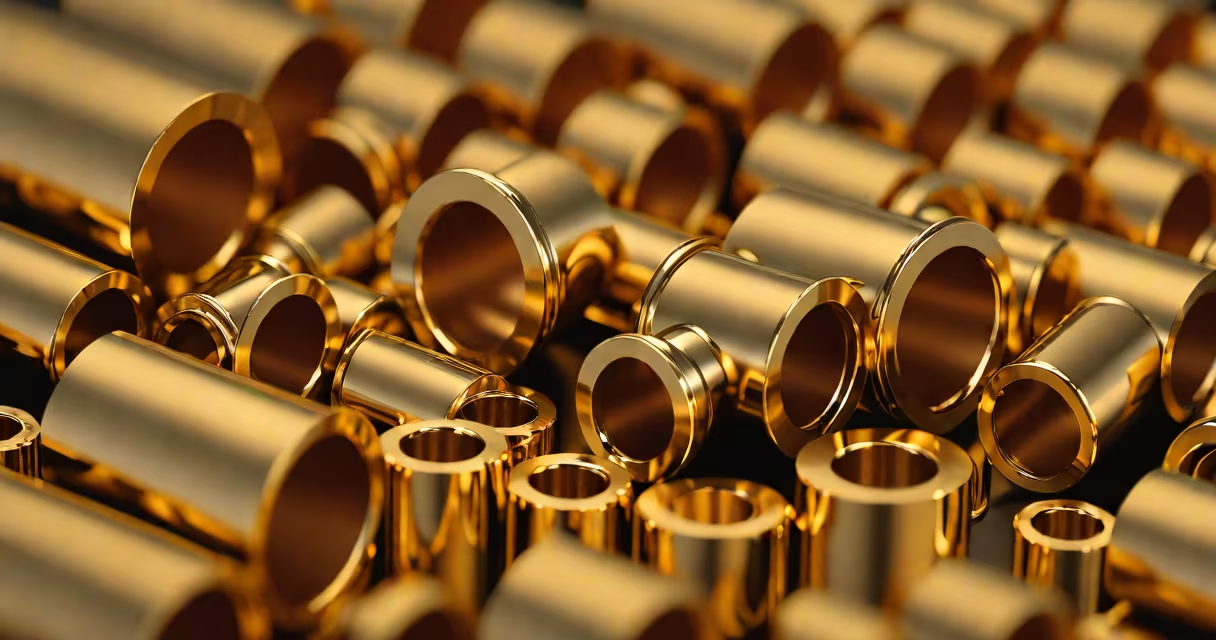
Copper alloys are metallic materials formed by combining copper with one or more other elements-such as zinc, tin, nickel, or aluminum-to improve mechanical strength, corrosion resistance, or electrical conductivity beyond pure copper's limits. These combinations are engineered for specific performance needs across industries.
Copper alloys derive their enhanced properties from controlled additions of alloying elements. For example, adding 30% zinc to copper creates brass, which is stronger and more machinable than pure copper. The resulting material retains high electrical conductivity while offering better wear resistance and formability. This balance makes copper alloys ideal for applications ranging from plumbing fittings to electrical wiring and marine hardware.
According to the Copper Development Association, over 400 distinct copper alloys exist, each tailored for a particular function. Their use spans construction, electronics, transportation, and defense systems. The choice of alloy depends on required hardness, thermal stability, and environmental exposure. For instance, naval brass (containing lead and tin) resists seawater corrosion and is used in ship propellers and valves.
When alloying elements are added to copper, they alter the crystal lattice structure. This disrupts electron flow slightly but increases dislocation resistance, improving yield strength and durability. The atomic size mismatch between copper and the added element introduces lattice strain, making it harder for atoms to slide past one another during deformation.
For example, in bronze (copper-tin alloy), tin atoms occupy interstitial sites within the copper matrix. This pinning effect reduces plastic deformation under load., surface oxides formed on many copper alloys act as protective barriers against further oxidation-especially in environments with moisture or salt exposure.
Electrical performance remains high because copper's inherent electron mobility is preserved. Even with alloying, most copper alloys retain over 60% of the electrical conductivity of pure copper. This allows them to carry current efficiently while resisting mechanical fatigue-critical in power distribution systems.
The following table outlines major copper alloy families, their primary alloying elements, and typical uses:
| Type | Alloying Elements | Key Properties | Common Applications |
|---|---|---|---|
| Brass | Zinc (up to 45%), sometimes lead | High machinability, good corrosion resistance | Doorknobs, musical instruments, plumbing valves |
| Bronze | Tin (3-12%), sometimes aluminum or silicon | Excellent wear resistance, low friction | Ball bearings, ship propellers, art statues |
| Monel | Nickel (60-67%), iron, manganese | High strength, excellent resistance to seawater | Marine hardware, chemical processing equipment |
| Phosphor Bronze | Tin (3-10%), phosphorus (0.01-0.35%) | High fatigue strength, good spring properties | Spring contacts, electrical connectors, watch springs |
Each alloy class serves a niche based on its microstructure and phase stability. For instance, phosphor bronze forms a fine-grained solid solution that resists cracking under cyclic loading-making it suitable for precision components in aerospace and medical devices.
Copper alloys dominate in environments requiring long-term reliability under stress or exposure. In architecture, architectural bronze (copper-tin-zinc alloy) is used for exterior cladding due to its ability to develop a stable patina that protects against weathering. The Statue of Liberty's green exterior is a result of this natural oxidation process.
In electronics, copper-aluminum alloys are used in printed circuit board traces. A 95% Cu-5% Al alloy offers higher melting point and creep resistance compared to pure copper, preventing solder joint failure in high-temperature operations. According to the National Institute of Standards and Technology (NIST), such alloys reduce thermal degradation in automotive control units by up to 40%.
Another non-obvious fact: some copper alloys exhibit antimicrobial properties. Copper ions disrupt microbial cell membranes and interfere with DNA replication. The U.S. Environmental Protection Agency (EPA) recognizes over 270 copper alloy surfaces as effective against pathogens like E. coli and MRSA. Hospitals increasingly install copper-alloy door handles and bed rails to reduce infection transmission.
Many assume all copper-colored metals are interchangeable. Brass and bronze are often confused visually, but their compositions differ. Brass contains primarily zinc; bronze contains tin or aluminum. Mixing them in manufacturing leads to inconsistent performance-brass deforms more easily under shear stress, while bronze wears slower in abrasive conditions.
Also, copper alloys are not inherently "green." While recyclable and reusable, their production involves energy-intensive smelting and refining. Recycling rates for copper alloys exceed 80%, according to the International Copper Association, but emissions from refining processes remain a concern. Using recycled content reduces carbon footprint by up to 75% compared to virgin metal production.
I once tested a batch of custom-made brass fittings for a plumbing retrofit project. Despite matching ASTM B152 standards, several failed pressure tests after 6 months. Further analysis revealed microcracks caused by residual stresses during cold working. Adjusting the annealing cycle improved integrity-proof that even standard alloys require precise processing to perform reliably.
Copper alloys are not a single material but a diverse family of engineered solutions. Their versatility stems from predictable modifications to copper's base properties through strategic alloying. Understanding their differences ensures proper selection for safety, longevity, and efficiency.
For example, choosing a 60-40 brass (60% Cu, 40% Zn) for a valve stem requires knowing it may suffer stress corrosion cracking in chlorinated water. Alternatives like cupronickel (70% Cu, 30% Ni) offer better resistance in such environments. Always consult material specifications before application.