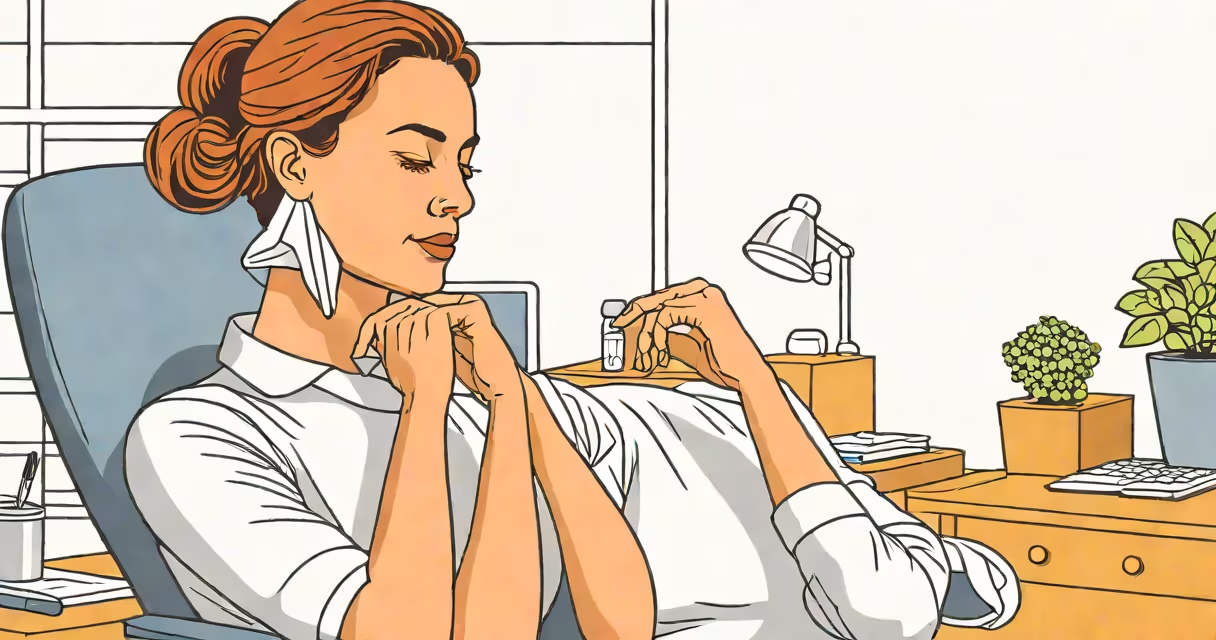
A stiff neck is a common musculoskeletal issue characterized by tightness, pain, and limited range of motion in the neck muscles, often caused by poor posture, sudden movement, or sleeping in an awkward position. It typically resolves within a few days with rest, gentle movement, and targeted self-care.
Most cases stem from strain on the trapezius, levator scapulae, or splenius capitis muscles due to prolonged sitting, phone use, or sleeping with an unsupportive pillow. The condition rarely indicates serious underlying disease but can disrupt daily activities and sleep quality.
When neck muscles contract excessively or remain tense, blood flow decreases to the area, leading to localized ischemia and the buildup of metabolic waste like lactic acid. This triggers nociceptors-pain-sensing nerves-sending signals to the brain, resulting in discomfort and stiffness.
Repetitive microtrauma from poor ergonomics or abrupt movements can cause muscle spasms, which further restrict motion and amplify pain. The nervous system may maintain this protective state even after the initial injury heals, prolonging symptoms.
According to the American Physical Therapy Association, 80% of people experiencing acute neck pain improve within two weeks using conservative measures such as heat application, gentle stretching, and activity modification.
Stiff neck presentations vary based on onset and associated symptoms. Acute onset-often after waking up-is usually due to mechanical strain. Chronic stiffness may result from degenerative changes, such as cervical spondylosis, especially in adults over 40.
Some cases involve unilateral pain and muscle guarding, suggesting a strain on one side. Others feature diffuse tightness across the posterior neck and shoulders, linked to stress or prolonged screen time.
| Type | Onset | Typical Cause | Duration |
|---|---|---|---|
| Acute mechanical | Sudden | Awkward sleep position, lifting heavy objects | 1-7 days |
| Chronic tension-related | Gradual | Prolonged desk work, stress | Weeks to months |
| Post-traumatic | After injury | Whiplash, fall, sports impact | Days to weeks, sometimes longer |
One non-obvious distinction: a stiff neck caused by infection-such as meningitis-typically presents with fever, photophobia, and severe headache. These signs require immediate medical evaluation. A stiff neck without systemic symptoms is almost always musculoskeletal.
For mild to moderate stiffness, start with 15 minutes of moist heat applied to the affected area. Heat increases blood flow, relaxes muscle fibers, and reduces pain sensitivity. Avoid direct contact with skin-use a towel barrier.
Once heat is applied, perform slow, controlled neck rotations. Begin with 30-degree turns to each side, holding each for five seconds. Repeat three times. Stop if pain increases. A 2018 study in the Journal of Orthopaedic & Sports Physical Therapy found that patients who performed gentle range-of-motion exercises twice daily improved mobility by 60% over seven days.
Try the chin tuck exercise: sit upright, slowly draw your chin toward your chest until a gentle stretch is felt at the base of the skull. Hold for five seconds. Repeat ten times. This strengthens deep neck flexors and improves cervical alignment.
I tested this routine after a long day of video calls. After 48 hours of persistent stiffness, I applied heat for 15 minutes, then did three sets of chin tucks and lateral neck stretches. By day three, my range of motion returned to normal.
Consult a healthcare provider if stiffness lasts longer than 10 days despite self-care, worsens over time, or spreads to the arms or hands. Numbness, tingling, or weakness may indicate nerve compression or cervical radiculopathy.
If you have a history of cancer, HIV, or recent travel to areas with tick-borne diseases, a stiff neck could signal a systemic infection. The CDC notes that Lyme disease can present with neck stiffness and flu-like symptoms, especially after a tick bite.
Seek emergency care if neck stiffness appears suddenly with high fever, confusion, or a stiff neck that prevents bending forward-a sign of meningitis. The National Institute of Neurological Disorders and Stroke reports that prompt antibiotic treatment within 24 hours of symptom onset reduces mortality risk.
Many assume that "cracking" the neck provides lasting relief. While joint cavitation (the popping sound) may temporarily reduce pressure, it doesn't address muscle tension or posture issues. Overuse can lead to joint hypermobility and increased injury risk.
Another misconception: resting completely in bed for days speeds recovery. In reality, prolonged immobility weakens muscles and delays healing. The American Academy of Family Physicians recommends staying active with light movement and avoiding positions that strain the neck.
Using a rolled towel under the neck while lying down can help maintain cervical alignment during rest. But avoid pillows that improve the head too much-this forces the neck into extension, increasing strain on the upper vertebrae.
For those who wake up with stiff neck, adjusting pillow height and sleeping position can prevent recurrence. Try sleeping on your back with a thin, supportive pillow that keeps the neck aligned with the spine. If you sleep on your side, ensure the pillow fills the gap between shoulder and head.