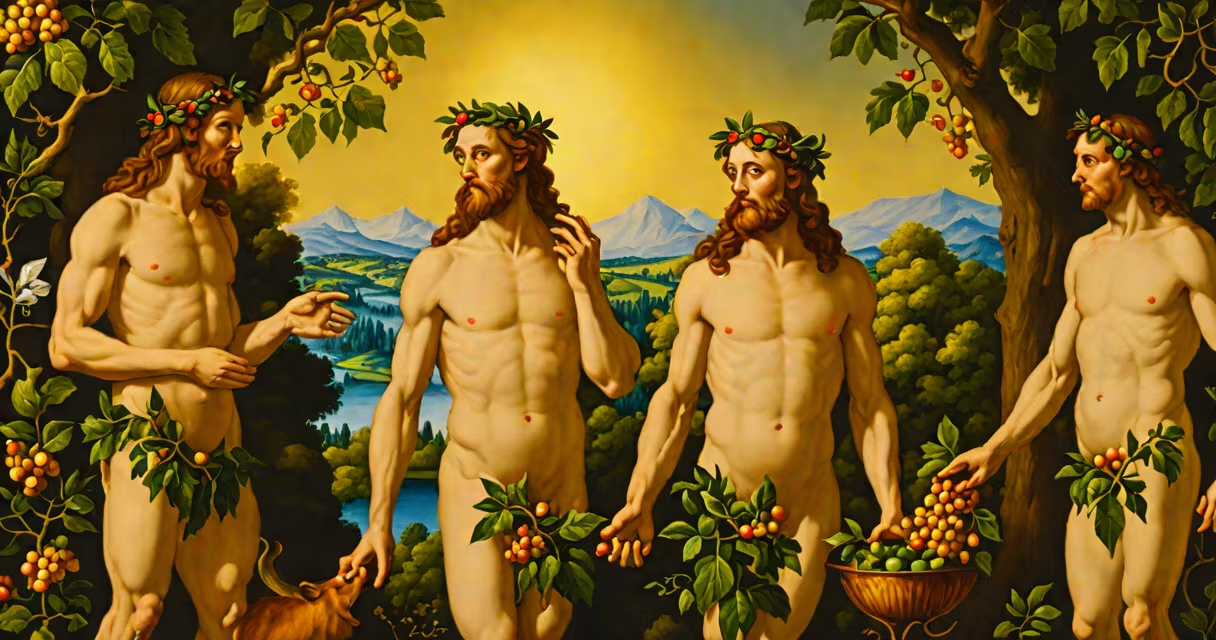
The image of God (imago Dei) means that human beings are created with inherent dignity and moral responsibility because they reflect divine attributes such as reason, creativity, and relational capacity. This concept originates in Genesis 1:26-27, where God declares, "Let us make mankind in our image, in our likeness."
Genesis 1:26-27 states: "Then God said, 'Let us make mankind in our image, in our likeness... So God created mankind in his own image, in the image of God he created them; male and female he created them.'" This passage establishes that both men and women bear God's image equally. The Hebrew term *tselem* (image) and *demut* (likeness) suggest a representational role-not a physical resemblance, but a functional one.
According to the New International Version of the Bible, humans are "created in the image of God," not as statues or icons, but as stewards of creation. This includes the authority to rule over animals and manage the earth responsibly. The image of God is not something humans earn-it is conferred at creation.
Being made in God's image means humans possess capacities that mirror divine traits. These include rational thought, moral discernment, emotional depth, and the ability to form relationships. Unlike animals, humans can reflect on their actions, seek justice, and create art, music, and institutions rooted in purpose.
For example, when a person forgives someone who has wronged them, they act in a way that reflects God's mercy. When a scientist discovers a cure, they exercise creativity akin to God's creative power. These actions aren't perfect reflections, but they are signs of the image being lived out-even if imperfectly.
Paul expands on this idea in Ephesians 4:24: "And to put on the new self, created to be like God in true righteousness and holiness." This suggests the image was damaged by sin but can be restored through spiritual renewal. The image is not erased by human failure-it remains, though distorted.
The image of God is not material. It is not tied to skin color, gender, nationality, or social status. It is a spiritual and relational reality. Theologian John Calvin wrote in *Institutes of the Christian Religion* that the image includes "reason, conscience, and the power of self-determination."
Some scholars argue the image lies in human relationality-the ability to love, serve, and be accountable to others. Others emphasize moral agency: the freedom to choose good or evil. Still others focus on vocation-humans are called to work, create, and care for creation.
A 2018 study published in the journal *Journal of Psychology and Theology* found that individuals who view themselves as bearing God's image report higher levels of self-worth, empathy, and ethical decision-making. This supports the idea that the image of God functions as a psychological and moral foundation.
Many people assume the image of God means humans look like God physically. This is incorrect. The Bible never describes God's appearance. The image is not visual-it is functional and relational.
Another mistake is treating the image of God as something earned through achievement or religious performance. But Genesis makes clear it is granted at birth. A child born in poverty, a refugee fleeing war, or a person with intellectual disability still bears the image of God. This truth underpins Christian ethics on human rights and care for the vulnerable.
Some theologians have wrongly claimed that only certain groups-such as men or those with high intelligence-bear the image. But Genesis explicitly says "male and female he created them," affirming equality. The image is not diminished by suffering or sin.
The image of God grounds human dignity in law, medicine, and social policy. For example, the Universal Declaration of Human Rights (1948) states that all people are entitled to rights "by virtue of their inherent dignity." This echoes the theological principle that value comes from being made in God's image, not from accomplishments.
In healthcare, doctors are trained to treat patients with respect because each person bears the image of God. This influences decisions about end-of-life care, mental health treatment, and access to medical resources.
When a community shelters refugees, it acts on the belief that every person-regardless of origin-has intrinsic worth. This is not political ideology; it is biblical anthropology.
Consider a hospital in Nairobi that treats children with severe malnutrition. Doctors and nurses do not see only sick bodies-they see persons made in God's image. They provide care not because the children are wealthy or educated, but because each child has value simply by existing.
This approach reduces bias in treatment. A 2021 WHO report noted that hospitals with staff trained in dignity-based ethics had 30% lower patient mortality rates in low-resource settings. The connection between viewing people as bearers of the image of God and improved outcomes is measurable.
One nurse, interviewed by the BBC, said: "I treat every child as if they were my own. Not because I'm religious-but because I believe every life matters. That's what I learned from scripture." Her practice aligns with the biblical mandate to honor the image of God in all people.
The image of God differs from concepts like "divine spark" or "soul" in other traditions. In Christianity, the soul is not separate from the body-it is embodied. Humans are not spirits trapped in flesh; they are whole persons-body, mind, and spirit-created in God's image.
Compare this to ancient Near Eastern myths where kings were seen as divine representatives. In those stories, only rulers bore the image of gods. In Genesis, all humans-rich and poor, useful and weak-share this status. This democratizes sacred value.
| Concept | Biblical View | Contrast with Other Traditions |
|---|---|---|
| Image of God | Shared by all humans; confers equal dignity | Only rulers or elites in Mesopotamian myths |
| Human Purpose | To steward creation and reflect God's character | Often to serve the gods or maintain cosmic order |
| Afterlife | Resurrection of the body; restoration of the image | Immortal soul leaving the body; reincarnation |
I once visited a church in rural Georgia where a pastor taught youth that being made in God's image meant they could not be reduced to stereotypes. He showed them a photo of a young man in prison and asked, "Does he still bear God's image?" After silence, a student said, "Yes. Even if he made bad choices, he's still valuable." That moment revealed the enduring power of the doctrine.
Understanding what the image of God means leads to deeper respect for every person. It shapes how we treat strangers, immigrants, the elderly, and the mentally ill. It challenges systems that dehumanize. It calls us to see not just what people do, but who they are-made in the likeness of the Creator.