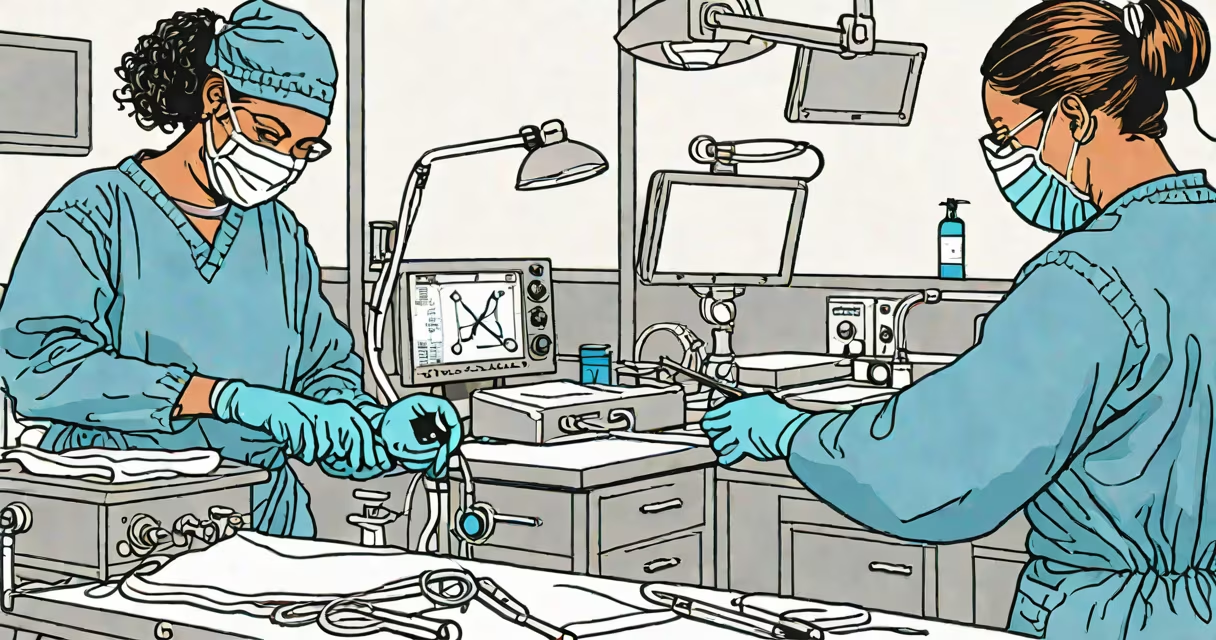
A surgical technician, also known as a surgical technologist, is a healthcare professional who prepares operating rooms, sterilizes equipment, and assists surgeons during procedures by handing them instruments and managing surgical supplies. They work under the supervision of surgeons and registered nurses to ensure safety, efficiency, and sterility throughout surgery.
Surgical technicians are trained to anticipate the needs of surgical teams. Their responsibilities include setting up sterile fields, passing instruments during procedures, counting sponges and instruments before and after surgery, and managing suction devices and electrocautery tools. They play a critical role in minimizing infection risk and supporting successful outcomes.
The U.S. Bureau of Labor Statistics reports that surgical technicians earned a median annual wage of $52,110 in 2022, with employment projected to grow 7% from 2022 to 2032-faster than average for all occupations. This growth reflects rising demand for surgeries due to aging populations and increased access to care.
Before a procedure begins, surgical technicians prepare the operating room by assembling and organizing surgical instruments based on the anticipated procedure. They verify that all equipment functions properly and that sterile drapes and gowns are laid out correctly. This setup ensures minimal delays during surgery.
During surgery, they maintain a sterile environment by monitoring the integrity of gloves, drapes, and instrument trays. They pass instruments such as scalpels, forceps, and clamps to the surgeon without touching the sterile field. They also manage suction, irrigation, and electrosurgery units, adjusting settings as needed.
After surgery, they assist in cleaning and restocking the operating room. They document the count of sponges, needles, and instruments and report discrepancies to the surgical team. Any mismatch triggers a search to prevent retained foreign objects-a serious patient safety concern.
To become a surgical technician, individuals typically complete a postsecondary certificate or associate degree program accredited by the Commission on Accreditation of Allied Health Education Programs (CAAHEP). These programs take 9 to 24 months and include classroom instruction and clinical rotations in hospitals.
Clinical experience is essential. Students spend time in real operating rooms, observing and participating in procedures under supervision. They learn how to handle specialized instruments, manage blood loss, and respond to emergencies like sudden cardiac events.
Upon graduation, candidates may pursue certification through the National Board of Surgical Technology and Surgical Assisting (NBSTSA). Passing the Certified Surgical Technologist (CST) exam grants national recognition and improves job prospects. According to NBSTSA, over 90% of certified surgical technicians work in hospital operating rooms.
While most surgical technicians work in general operating rooms, some specialize in specific areas. Specialization often requires additional training or experience.
| Type | Focus Area | Typical Setting | Key Skills |
|---|---|---|---|
| General Surgical Technician | General surgery, orthopedics, abdominal procedures | Hospitals, outpatient centers | Instrument handling, sterile technique, basic anatomy |
| Cardiovascular Surgical Technician | Heart and vascular surgeries | Specialty hospitals, cardiac centers | Understanding heart anatomy, managing bypass machines |
| Neurological Surgical Technician | Brain and spinal surgeries | Academic medical centers | Working with microscopes, handling delicate implants |
Cardiovascular surgical technicians require advanced knowledge of cardiopulmonary bypass systems. They assist in priming the machine, monitoring oxygenation levels, and troubleshooting alarms-skills that go beyond standard surgical tech training.
Surgical technicians are often confused with surgical assistants or scrub nurses. While both roles involve direct participation in surgery, scrub nurses are registered nurses who have completed advanced education and hold licensure. They make clinical decisions, assess patient status, and may administer medications during surgery.
Another misconception is that surgical technicians perform invasive tasks. They do not make incisions, suture wounds, or prescribe medications. Their role is strictly supportive and procedural. They follow protocols established by surgeons and anesthesiologists.
Consider a typical morning at Mercy General Hospital. At 6:30 a.m., Sarah, a CST-certified surgical technician, arrives to prepare for a laparoscopic cholecystectomy (gallbladder removal). She verifies that the room's surgical lights, anesthesia machine, and electrocautery unit are functional. She lays out sterile drapes and arranges instruments on a back table.
At 7:15 a.m., the surgical team enters. Sarah dons her gown and gloves, performs a hand scrub, and enters the sterile field. As the surgeon makes the first incision, she hands him a trocar and insufflator. During the procedure, she manages suction and passes a grasper when needed. She counts sponges and instruments twice-once before the procedure and once after.
After the surgery ends, she cleans the instruments, disposes of biohazard waste, and resets the room for the next case. Her actions ensured that the procedure ran smoothly and safely. No errors occurred. The patient recovered well and was transferred to recovery.
I once shadowed a surgical technician during a spinal fusion at a Level I trauma center. The pace was intense. Instruments changed every 45 seconds. The technician never hesitated-she knew exactly which tool came next. After the surgery, she reviewed the instrument count with the circulating nurse. When a sponge count didn't match, she initiated a search protocol. That moment underscored how precision and attention to detail prevent life-threatening complications.
A surgical technician is a trained healthcare professional who supports surgical teams by maintaining sterile conditions, preparing instruments, and assisting during operations. They are important to patient safety and surgical efficiency. With proper education and certification, they enter a stable, growing field with clear career paths. Understanding their role separates them from similar titles like scrub nurse or IT technician, each serving distinct functions in healthcare and technology.