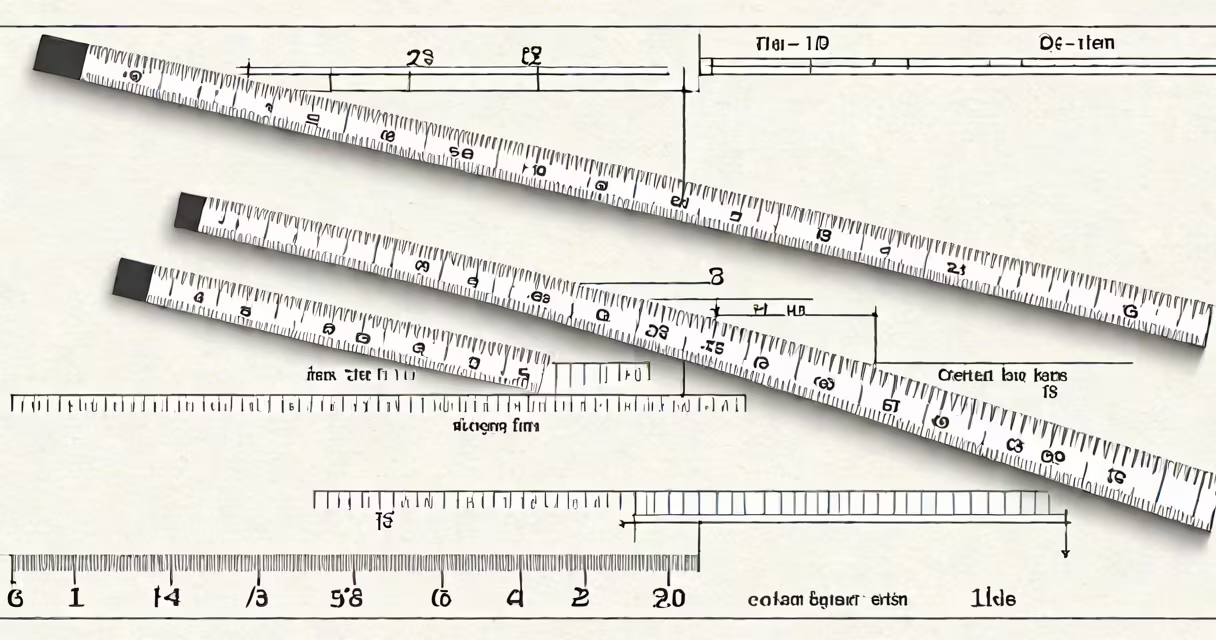
A meter is 100 times larger than a centimeter. One meter equals 100 centimeters, making the meter the larger unit of length in the metric system.
The metric system uses base units and prefixes to define measurements. The base unit for length is the meter. The prefix "centi-" means one-hundredth, so a centimeter is 1/100 of a meter. This relationship holds consistently across all metric measurements.
For example, a standard door in the United States is about 2 meters tall. That's equivalent to 200 centimeters. A typical pencil measures about 18 centimeters long-just under 0.2 meters. These conversions are consistent because the metric system is decimal-based, making calculations predictable and easy.
The metric system builds units using powers of ten. The base unit for length is the meter. Prefixes modify the base unit to represent smaller or larger quantities.
Common metric prefixes include:
This structure allows for straightforward conversions. To convert meters to centimeters, multiply by 100. To convert centimeters to meters, divide by 100.
Understanding the size difference between centimeters and meters helps in everyday tasks. Measuring a room's width in meters gives a manageable number-like 4.5 meters-while measuring the same space in centimeters results in 450 centimeters. The latter is harder to track mentally.
Construction workers often use meters for room dimensions and centimeters for fine adjustments. A kitchen countertop might be 2.4 meters long (240 cm), but the edge detail may require precision to within 1 cm.
One non-obvious fact: the meter was originally defined as one ten-millionth of the distance from the equator to the North Pole along a meridian. This historical definition shows how the unit was designed to reflect Earth's geometry, not arbitrary human standards.
Some people assume that "centi-" means "smaller than a meter," which is correct-but they forget that it's still a fraction of the base unit. A centimeter is not a standalone measurement; it's derived from the meter.
Another common error is confusing centimeters with inches. One inch equals 2.54 centimeters. So a 15-centimeter ruler is about 6 inches long. This confusion often arises in countries using imperial units.
When comparing lengths, always verify the unit. Saying "I measured 100" without specifying the unit leads to errors. Is it 100 meters? 100 centimeters? 100 kilometers? Context matters.
| Centimeters | Meters |
|---|---|
| 1 cm | 0.01 m |
| 10 cm | 0.10 m |
| 50 cm | 0.50 m |
| 100 cm | 1.00 m |
| 250 cm | 2.50 m |
| 1,000 cm | 10.00 m |
Each entry confirms that dividing centimeters by 100 yields meters. This consistency is a core feature of the metric system.
I once built a bookshelf using only centimeter markings on a tape measure. After assembling it, I realized the height was off by 3 centimeters-about 1.2 inches. Switching to meters for layout and centimeters for fine cuts improved accuracy. The lesson: use the right unit for the task.
Scientific research relies on precise units. The International System of Units (SI), maintained by the Bureau International des Poids et Mesures (BIPM), defines the meter as the distance light travels in a vacuum in 1/299,792,458 seconds. This definition ensures global consistency.
According to the National Institute of Standards and Technology (NIST), accurate measurement prevents errors in engineering, medicine, and manufacturing. A misread centimeter can lead to a failed component or incorrect dosage.
For example, a medical device requiring a 5-cm tubing length must be cut precisely. Using meters would make the measurement unwieldy-0.05 meters-while centimeters provide clarity.
The meter is definitively larger than the centimeter. One meter contains 100 centimeters. This ratio is fixed across all applications-from tailoring to astronomy.
If you're working with measurements, always confirm the unit. Converting between them is simple: multiply centimeters by 0.01 to get meters, or divide meters by 100 to get centimeters.
For further reading on measurement tools, a pH meter measures acidity in solutions, using a different kind of scale entirely-another example of how units serve specific purposes.