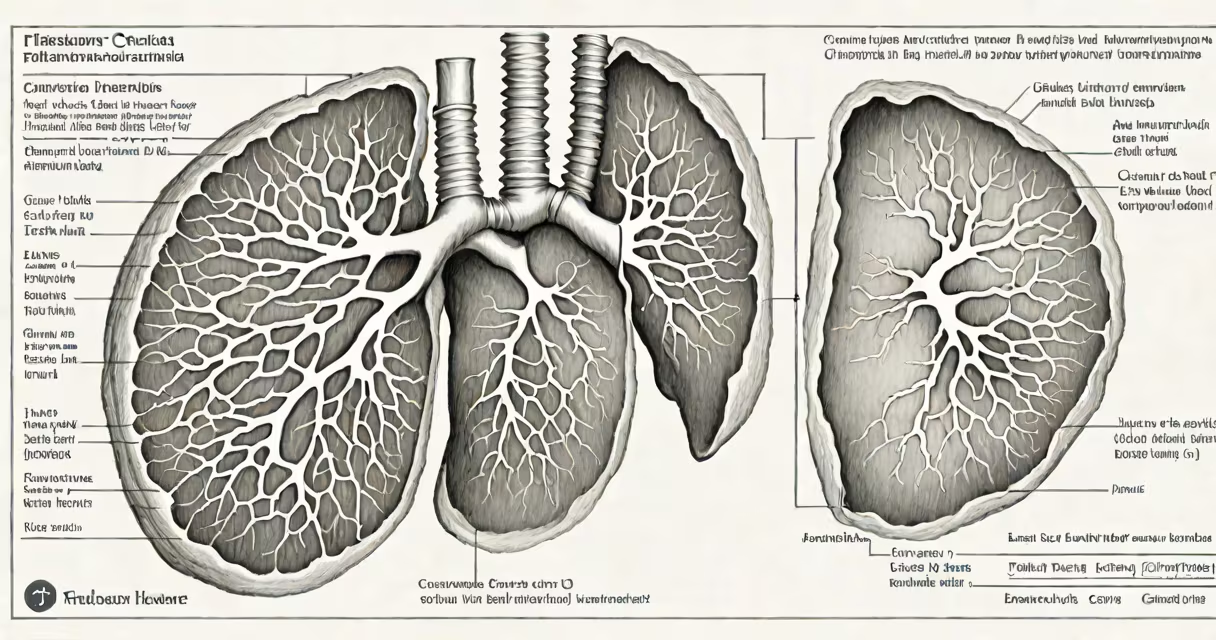
The Fleischner Criteria are evidence-based guidelines developed by the Fleischner Society to assess the likelihood of malignancy in pulmonary nodules discovered incidentally on chest CT scans and to recommend appropriate follow-up imaging based on nodule size, morphology, and patient risk factors.
These criteria were first published in 1997 and revised in 2013 and 2018 to reflect advances in CT imaging and outcomes data. They provide standardized recommendations for managing solid, subsolid, and ground-glass nodules, reducing unnecessary testing while improving early cancer detection.
For example, a 6 mm solid nodule in a low-risk patient requires no follow-up beyond routine screening, whereas a 10 mm nodule in a smoker may require a 3-month follow-up scan to assess stability. The guidelines are widely adopted in clinical practice and referenced in major radiology and oncology resources.
The system categorizes nodules by size and type-solid, part-solid, or pure ground-glass-and assigns follow-up intervals based on the patient's risk profile. The core principle is that smaller nodules have lower malignant potential, so less frequent monitoring is needed.
For solid nodules under 6 mm in diameter, no follow-up is recommended if the patient is low risk (e.g., no history of smoking or cancer). For nodules between 6 and 8 mm, annual follow-up for two years is advised. Nodules larger than 8 mm require more intensive evaluation.
Part-solid and ground-glass nodules carry higher risk. A 10 mm part-solid nodule in a current smoker warrants a 3-month follow-up scan. If stable, annual surveillance continues for at least two years. This reflects data showing that persistent part-solid nodules have a higher probability of harboring adenocarcinoma.
Not all nodules behave the same. The Fleischner Criteria distinguish between three morphological categories, each with different implications:
| Nodule Type | Size Threshold | Follow-Up Recommendation (Low-Risk Patient) |
|---|---|---|
| Solid | <6 mm | No follow-up |
| Solid | 6-8 mm | Annual CT for 2 years |
| Solid | >8 mm | 3-month follow-up CT |
| Part-solid | >6 mm | 3-month follow-up CT |
| Pure ground-glass | >6 mm | 6-12 month follow-up CT |
Ground-glass nodules are particularly significant because they often represent early-stage lung cancer or pre-invasive lesions. A 10 mm pure ground-glass nodule in a non-smoker may still warrant follow-up due to its slow growth pattern and potential for progression.
Non-solid nodules grow slowly. A 12 mm ground-glass nodule that remains unchanged after 6 months has a very low chance of being malignant. However, if it increases in size or develops solid components, further investigation is warranted.
Without standardized guidelines, clinicians might order excessive imaging, leading to patient anxiety, increased healthcare costs, and radiation exposure. The Fleischner Criteria reduce variability in care and improve consistency across institutions.
A 2018 study published in European Radiology analyzed over 10,000 patients with incidentally detected nodules and found that adherence to Fleischner recommendations reduced unnecessary follow-ups by 34% without missing any early-stage cancers.
Another key insight: the criteria are not absolute. They serve as a structure. A clinician may adjust follow-up based on additional risk factors such as family history of lung cancer, occupational exposure, or comorbid conditions like COPD.
Many assume the Fleischner Criteria apply to all lung nodules, including those found on plain chest X-rays. This is incorrect. The guidelines are specifically designed for nodules detected on high-resolution CT scans, which offer superior resolution and sensitivity.
Another misconception is that all nodules require immediate biopsy. The criteria emphasize observation over intervention for small, stable nodules. For example, a 4 mm solid nodule in a healthy 45-year-old nonsmoker has a less than 1% chance of being cancerous. Biopsy would carry greater risk than benefit.
One non-obvious fact: the 2018 update introduced a recommendation for low-dose CT screening in individuals aged 50-80 with a 20-pack-year smoking history. This aligns with U.S. Preventive Services Task Force (USPSTF) guidelines and underscores the role of Fleischner principles in population-level prevention.
I've reviewed hundreds of CT reports during my time as a radiology resident. One case stands out: a 58-year-old man with a 9 mm solid nodule found during a workup for back pain. His primary care provider ordered a PET scan immediately. The Fleischner Criteria would have recommended a 3-month follow-up CT instead-saving the patient a costly, invasive test with no diagnostic gain.
While the Fleischner Criteria guide most decisions, certain scenarios require multidisciplinary input. These include nodules larger than 3 cm, nodules with suspicious features like spiculation or pleural retraction, or nodules in patients with known extrapulmonary cancer.
For complex cases, especially those involving part-solid or ground-glass nodules that grow over time, referral to a thoracic oncologist or pulmonologist is appropriate. The criteria do not replace clinical judgment-they support it.
Patients with high-risk profiles, such as former smokers with multiple nodules or those with a history of other cancers, may need shorter follow-up intervals or earlier biopsy. The guidelines allow for individualization based on patient context.
The Fleischner Criteria differ from other systems like the American College of Chest Physicians (ACCP) guidelines, which focus more on symptom-driven evaluation rather than incidental findings. Fleischner is specifically tailored to asymptomatic nodules seen on CT.
Unlike older protocols that recommended follow-up for all nodules regardless of size, Fleischner uses risk stratification. A 4 mm nodule in a 70-year-old smoker is managed differently than the same nodule in a 30-year-old nonsmoker.
The criteria do not address treatment. They are purely diagnostic and surveillance tools. Once a nodule is confirmed as malignant, management shifts to oncology pathways, including surgery, chemotherapy, or immunotherapy.
The Fleischner Criteria remain a key part of modern pulmonary radiology. They balance vigilance with restraint, ensuring that patients receive appropriate care without unnecessary interventions. Their widespread adoption reflects decades of research and clinical validation.