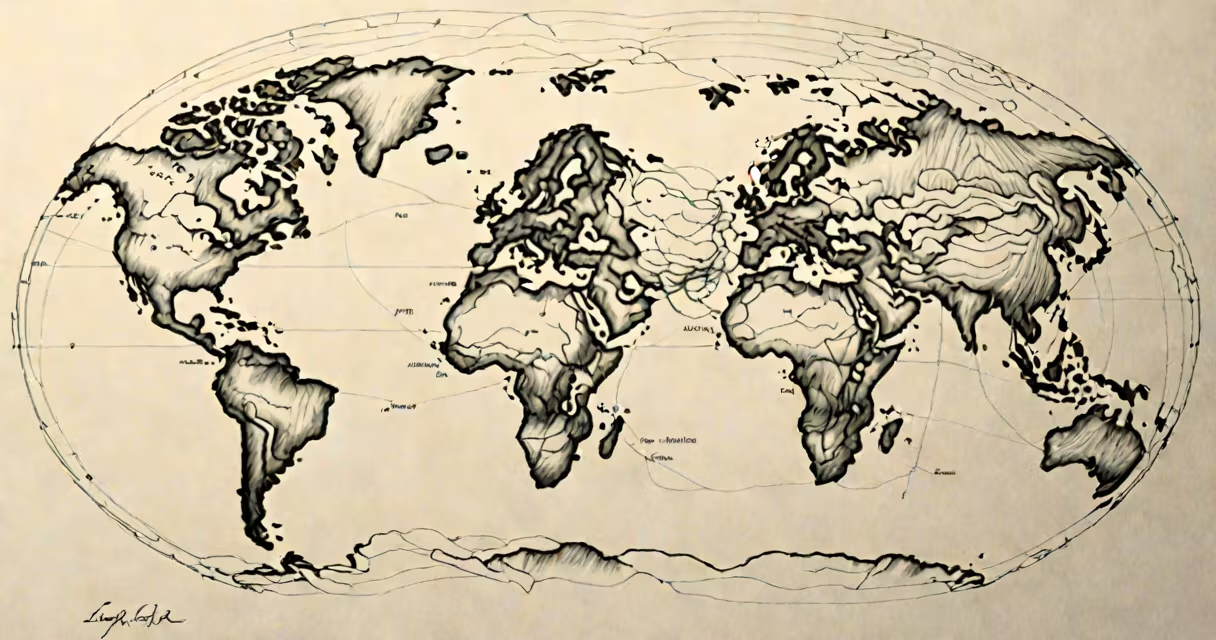
In science, climate describes the long-term average of atmospheric conditions-temperature, precipitation, wind, humidity-over periods of 30 years or more, distinguishing it from short-term weather fluctuations.
Climate is not a single measurement but a statistical summary of patterns observed across regions and time. Scientists analyze historical records, ice core samples, tree rings, and satellite data to reconstruct past climates and project future changes. This differs from weather, which refers to daily or seasonal atmospheric events like storms or heatwaves.
The World Meteorological Organization defines climate as "the average weather in a place over a long period," typically 30 years. This standard allows consistent comparisons across locations and eras. For example, the climate of the Sahara Desert includes high temperatures and low rainfall over decades, while the climate of the Amazon rainforest features consistently warm temperatures and heavy annual precipitation.
Scientists collect climate data from multiple sources: ground-based weather stations, ocean buoys, satellites, and paleoclimate proxies such as ice cores and sediment layers. Ice cores from Antarctica preserve trapped air bubbles dating back 800,000 years, revealing past carbon dioxide levels and temperature trends.
Climate models simulate Earth's systems using equations based on physics, chemistry, and biology. These models incorporate variables like solar radiation, greenhouse gas concentrations, ocean currents, and land surface changes. The Intergovernmental Panel on Climate Change (IPCC) uses ensembles of models to assess global warming scenarios under different emissions pathways.
A 2021 IPCC report confirmed that human activities have caused approximately 1.1°C of global warming since pre-industrial times. This figure results from averaging temperature anomalies across thousands of observation points worldwide, then comparing them to baseline data from 1850-1900.
Climate is shaped by interactions between the atmosphere, oceans, cryosphere (ice and snow), biosphere, and lithosphere (land). These components form feedback loops-for example, melting Arctic sea ice reduces Earth's albedo (reflectivity), leading to more heat absorption and further warming.
Climate classifications follow the Köppen-Geiger system, which divides global climates into five major types based on temperature and precipitation:
| Type | Characteristics | Example Location |
|---|---|---|
| A | Tropical, hot year-round, high rainfall | Manaus, Brazil |
| B | Desert or steppe, low precipitation | Phoenix, Arizona |
| C | Mediterranean, warm summers, mild winters | Barcelona, Spain |
| D | Continental, cold winters, warm summers | Chicago, Illinois |
| E | Polar, consistently cold, low precipitation | Reykjavik, Iceland |
Each category includes subtypes based on finer distinctions-such as dryness thresholds or seasonal variation. The system helps researchers identify shifts in climate zones due to global warming, such as the northward migration of temperate zones.
Climate is often confused with weather. A cold winter day does not disprove global warming. Climate reflects long-term averages; a single event is not evidence of trend. As NASA notes, "Weather is what's happening outside today. Climate is what you expect."
Another misconception is that climate change is purely natural. While Earth's climate has shifted over millennia due to orbital cycles and volcanic activity, current changes exceed natural variability. The rate of CO₂ increase since 1850 is new in the last 800,000 years, according to ice core data from the European Project for Ice Coring in Antarctica (EPICA).
Some assume climate data is speculative. But observational evidence is extensive and cross-verified. Sea levels rose 20 cm between 1901 and 2018, measured by tide gauges and satellite altimetry. Glaciers in the Alps have retreated by 50% since 1850. These are physical records, not model outputs.
Understanding climate informs agriculture, urban planning, public health, and disaster preparedness. Farmers in California use climate projections to choose drought-resistant crops. Coastal cities like Miami and Jakarta plan infrastructure based on projected sea level rise.
I experienced this firsthand during a field study in the Andes. We collected soil moisture and temperature data across altitudinal gradients. Comparing our findings to historical climate records revealed that the treeline had shifted upward by 15 meters over 30 years-a direct response to rising temperatures.
Climate also shapes biodiversity. Warmer oceans disrupt coral reef ecosystems, leading to bleaching events. The Great Barrier Reef lost 50% of its coral cover between 1995 and 2017, primarily due to thermal stress linked to climate change.
Climate in science is not a vague term-it is a precise, measurable structure for understanding Earth's long-term atmospheric behavior. It enables predictions, guides policy, and supports adaptation strategies across societies.