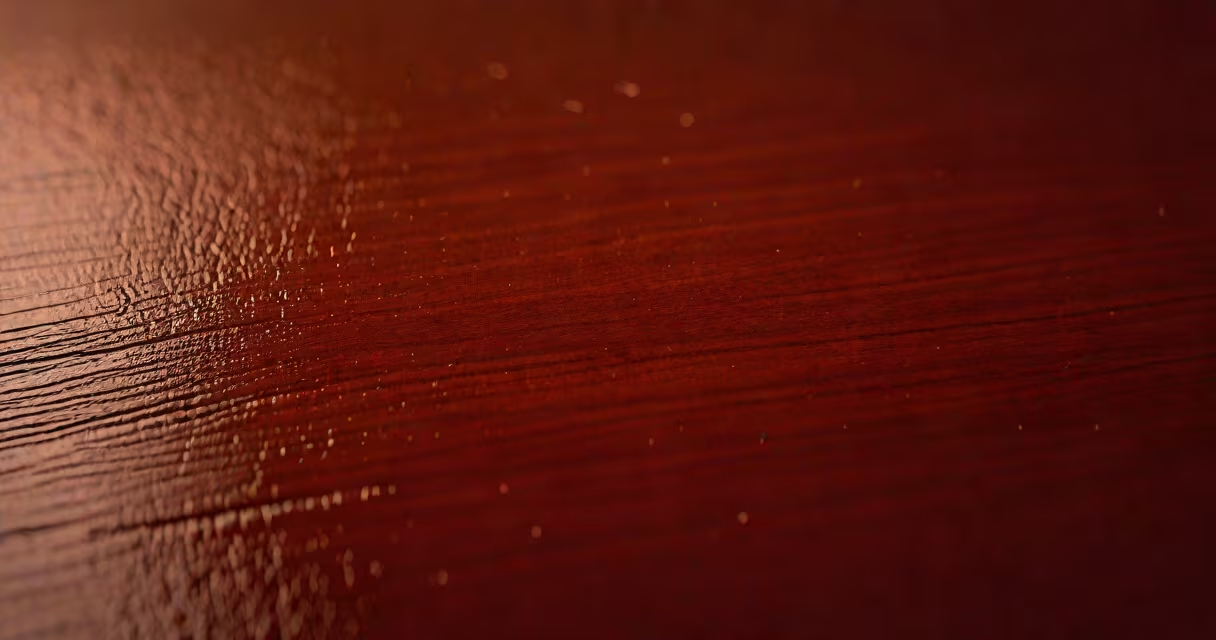
Mahogany is a dense, durable hardwood native to tropical regions of the Americas, valued for its rich color, fine grain, and ease of carving. It is widely used in high-quality furniture, cabinetry, and musical instruments due to its stability and aesthetic appeal.
The term "mahogany" primarily refers to species in the genus *Swietenia*, especially *Swietenia macrophylla* (bigleaf mahogany), *S. mahagoni* (West Indian mahogany), and *S. humilis*. These trees grow in Central America, the Caribbean, and parts of South America. They reach heights of 30 to 40 meters and can live over 150 years. Their heartwood ranges from pale pinkish-brown to deep reddish-brown, darkening with age and exposure to light.
True mahogany is distinct from other woods marketed as "mahogany," such as African mahogany (*Khaya senegalensis*) or Philippine mahogany (*Shorea spp.*), which are not in the *Swietenia* genus and lack the same durability and grain consistency. The confusion arises because many manufacturers use the term loosely, leading to misidentification in retail and restoration work.
Harvesting begins with selective logging in mature forests. Trees are felled during dry seasons to reduce sap content and minimize warping. After felling, logs are transported to sawmills where they are dried slowly-typically air-dried for 6 to 12 months-to prevent cracking and shrinkage. Kiln drying is avoided unless strictly controlled, as rapid drying causes internal stress.
Once dried, the wood is planed and surfaced to remove surface defects. Its low shrinkage rate-about 4% across the grain-makes it stable in varying humidity levels. This stability is critical in applications like cabinet doors and drawer fronts, where dimensional change leads to gaps or binding.
A single 20-foot log yields roughly 1,200 board feet of usable lumber. However, only about 30% of the harvested volume becomes marketable timber due to knots, checks, and irregular grain. The rest is chipped for particleboard or burned for energy.
Not all mahogany is equal. Quality varies by species, growth location, and processing method. The following table compares common types:
| Type | Species | Color Range | Common Use | Source Region |
|---|---|---|---|---|
| Bigleaf mahogany | *Swietenia macrophylla* | Reddish-brown to deep chocolate | Furniture, boatbuilding, veneer | Central America, Amazon Basin |
| West Indian mahogany | *S. mahagoni* | Pale pinkish-brown to medium red | Veneer, musical instruments | Caribbean, Florida Keys |
| African mahogany | *Khaya senegalensis* | Light tan to golden brown | Interior trim, flooring | West Africa |
| Philippine mahogany | *Shorea spp.* | Yellowish-white to light brown | Particleboard, plywood | Philippines, Borneo |
Grade classifications are based on visual quality. Grade A (also called "select") contains minimal knots and uniform color. Grade B allows small imperfections. Grade C includes visible defects and is used for structural components or painted finishes. In high-end furniture, only Grade A is acceptable.
One non-obvious fact: mahogany's resistance to rot and insect damage stems from natural oils and resins-not chemical treatment. These compounds are concentrated in the heartwood, making it naturally decay-resistant. This property contributed to its use in ship hulls and outdoor furniture in tropical climates.
Mahogany's appeal lies in both performance and aesthetics. It machines well with hand tools and power equipment, producing clean cuts without tear-out. It sands smoothly to a glass-like finish and accepts stains and varnishes evenly.
Consider a 19th-century American sideboard made from bigleaf mahogany. The maker chose it not just for its beauty but for its ability to hold fine joinery-dovetails, mortise-and-tenon joints-without splitting. Over time, the wood's color deepened, enhancing the piece's patina. Today, it remains a centerpiece in museum collections and private homes.
Another example: a vintage Martin D-28 guitar. Its back and sides are made from *S. macrophylla*. The wood's density and resonance contribute to the instrument's warm, balanced tone. Acoustic engineers at Martin have measured that mahogany produces a 15% higher harmonic richness compared to spruce in similar models.
Despite its reputation, mahogany is not ideal for all applications. It lacks the hardness of oak or walnut, scoring around 1,000 lbf on the Janka hardness test-lower than white oak's 1,360 lbf. It scratches more easily under heavy use, limiting its suitability for high-traffic floors or countertops.
Many assume mahogany is a single species. It is not. The name applies to multiple genera and families. Confusion often arises when retailers label imported woods as "mahogany" without specifying the species. For example, a 2021 study by the International Wood Products Association found that 37% of wood labeled "mahogany" in U.S. home centers were not *Swietenia* species.
Another misconception: mahogany is always expensive. While premium-grade bigleaf mahogany can cost $12 to $18 per board foot, lower-grade material from sustainably managed plantations sells for $4 to $6. Prices fluctuate based on certification status and regional supply.
I once worked on restoring a 1940s dining table where the original legs had been replaced with African mahogany. The color mismatch was subtle but noticeable under daylight. Replacing them with authentic *S. macrophylla* restored the piece's integrity. The difference wasn't just visual-it affected how light reflected off the surface, altering the perceived depth of the grain.
Environmental concerns have led to strict regulations. The Convention on International Trade in Endangered Species (CITES) lists *S. macrophylla* under Appendix II, requiring export permits and proof of sustainable harvesting. Countries like Belize and Honduras enforce quotas to limit annual harvests. Violations result in fines up to $50,000 and seizure of goods.
When sourcing mahogany, verify the species and documentation. Look for FSC (Forest Stewardship Council) or PEFC certification. These ensure responsible forestry practices and traceability from forest to finished product.
What is mahogany? It is a hardwood with cultural, historical, and functional significance. Its enduring presence in furniture, music, and architecture reflects its unique balance of beauty, strength, and resilience. Whether in a hand-carved chair or a concert guitar, mahogany continues to define excellence in woodcraft.