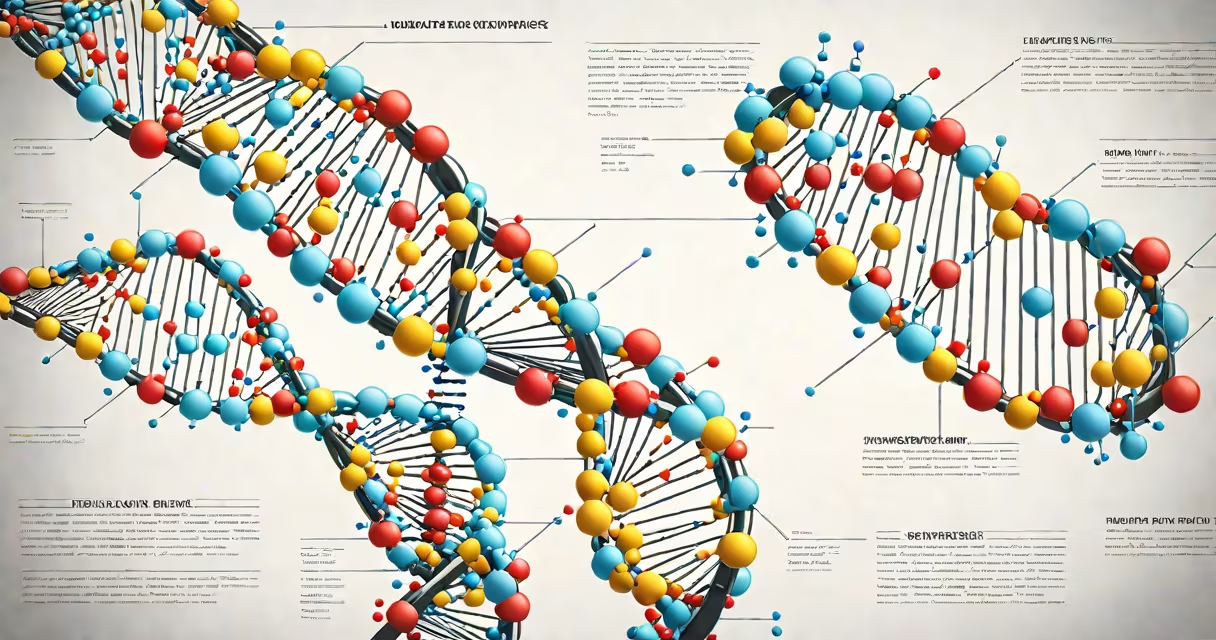
Molecular in biology refers to the study of biological processes at the molecular level-focusing on molecules like DNA, RNA, proteins, and lipids-and how they interact to sustain life. This field explains how genetic information is stored, replicated, and translated into functional traits.
Molecular biology examines the structure, function, and interactions of macromolecules essential to cellular activity. It sits at the intersection of chemistry, genetics, and biochemistry, using tools like PCR, gel electrophoresis, and sequencing to decode biological mechanisms. For example, understanding how a single mutation in the BRCA1 gene increases breast cancer risk relies entirely on molecular analysis.
The term "molecular" in biology doesn't refer to small size alone-it describes systems governed by molecular interactions. These include enzyme-substrate binding, signal transduction cascades, and transcriptional regulation. Without molecular insights, advances in medicine, agriculture, and biotechnology would not exist.
Molecular biology operates on the principle that all life functions stem from molecular events. A cell's behavior-division, metabolism, response to stimuli-is directed by sequences of nucleic acids and the proteins they encode. When a hormone binds to a receptor on the cell surface, for instance, it triggers a cascade of intracellular signaling molecules, altering gene expression.
Key techniques in molecular biology include polymerase chain reaction (PCR), which amplifies specific DNA regions for analysis. A researcher studying a rare genetic disorder might use PCR to detect a deletion in exon 10 of the CFTR gene. After amplification, gel electrophoresis confirms the presence or absence of the fragment. This process, routine in labs since the 1980s, underpins diagnostics, forensics, and research.
Another core mechanism is gene expression-the conversion of DNA information into functional proteins. Transcription copies a gene's sequence into messenger RNA (mRNA), which then undergoes translation in ribosomes to form polypeptide chains. Errors in this process cause diseases such as sickle cell anemia, where a single nucleotide substitution results in a faulty hemoglobin protein.
Molecular biology centers on four major classes of biomolecules:
These molecules don't act in isolation. For example, insulin-a peptide hormone-binds to its receptor on the surface of liver cells. This triggers a phosphorylation cascade involving IRS proteins and Akt kinase, leading to GLUT4 transporter insertion into the membrane. Glucose uptake increases, regulating blood sugar levels. This entire process is governed by molecular interactions, measurable through biochemical assays.
A less obvious but critical insight: molecular biology isn't limited to living organisms. Viruses like HIV hijack host cell machinery by inserting their RNA genome into human DNA via integrase enzymes. This integration allows viral persistence and makes eradication difficult-highlighting how molecular mechanisms define pathogenesis.
Many assume molecular biology is synonymous with genetics. While closely related, genetics focuses on inheritance patterns across generations, whereas molecular biology dissects the physical and chemical basis of those patterns. A mutation in a gene may be inherited (genetics), but its effect on protein folding and function is studied through molecular methods.
Another misconception is that molecular biology only applies to humans. In reality, it drives crop improvement. Scientists have used CRISPR-Cas9 to edit genes in rice, increasing resistance to blast fungus. Field trials in China showed a 40% reduction in disease incidence compared to unmodified varieties-proof that molecular approaches benefit global food security.
Some confuse molecular biology with bioinformatics. The former involves lab-based experiments and wet-lab techniques; the latter uses computational models to analyze biological data. Both are important, but they differ in methodology. For instance, identifying a novel gene requires both experimental validation (molecular biology) and sequence alignment algorithms (bioinformatics).
Molecular biology underpins modern medicine. Cancer therapies like trastuzumab target HER2 receptors on breast cancer cells-identified through molecular profiling. Patients with HER2-positive tumors respond better to this treatment, improving survival rates by 30% in clinical trials (National Cancer Institute, 2022).
In environmental science, molecular techniques detect microbial contamination in water. Polymerase chain reaction (PCR) identifies pathogenic strains of E. coli in samples from rivers. A 2021 study in Environmental Science & Technology found that PCR-based screening detected low-level contamination 10 times faster than traditional culturing methods.
Biotechnology industries rely heavily on molecular tools. Recombinant DNA technology enables the production of human insulin in E. coli bacteria. By inserting the human INS gene into plasmid vectors, scientists produce large quantities of pure insulin for diabetes patients-replacing earlier animal-derived versions that caused immune reactions.
Consider the development of imatinib (Gleevec), a drug for chronic myeloid leukemia (CML). CML arises from a chromosomal translocation between chromosomes 9 and 22, forming the BCR-ABL fusion gene. This gene produces a hyperactive tyrosine kinase that drives uncontrolled white blood cell proliferation.
Researchers identified the abnormal protein through molecular techniques. They then designed a small molecule inhibitor-imatinib-that fits into the ATP-binding site of BCR-ABL, blocking its activity. Clinical trials showed 95% remission rates in early-stage patients. This success story demonstrates how molecular understanding leads directly to targeted therapies.
I once observed a lab session where students used restriction enzymes to cut plasmid DNA and ligate a GFP (green fluorescent protein) gene into it. After transformation into E. coli, colonies glowed under UV light. That moment-seeing a gene's function visualized-was the clearest demonstration of molecular biology's power: turning invisible processes into observable outcomes.
Graduates enter careers in pharmaceuticals, academic research, biotech startups, and public health. The U.S. Bureau of Labor Statistics projects a 6% growth in life sciences jobs from 2022 to 2032-outpacing average occupational growth-driven largely by molecular innovations.
Understanding what is molecular in biology unlocks the mechanics of life itself. It reveals how a single DNA base change can alter protein function, how drugs can be engineered to target specific pathways, and how nature's complexity emerges from molecular interactions. This knowledge is not theoretical-it shapes healthcare, agriculture, and environmental protection daily.