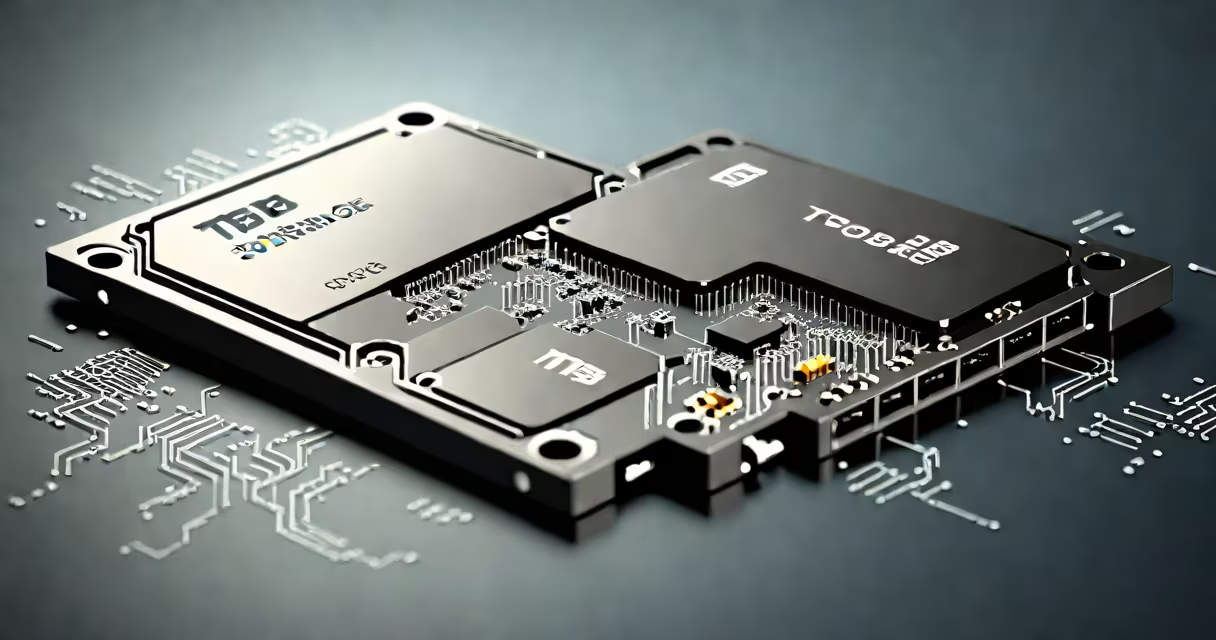
Terabyte (TB) storage refers to a unit of digital information capacity equal to 1 trillion bytes, commonly used to measure hard drives, solid-state drives, and memory cards. It represents a standard benchmark for high-capacity data storage in consumer electronics, servers, and enterprise systems.
One terabyte holds approximately 250,000 digital photos, 250 hours of HD video, or 250,000 songs in MP3 format. This level of capacity supports large media libraries, extensive software installations, and complex workloads such as video editing, machine learning training, and database operations.
Modern devices like gaming consoles, external backup drives, and cloud storage services often advertise capacities in terabytes. For example, a 2TB external SSD can store over 500 hours of 4K video or thousands of high-resolution images. The term "TB storage" describes both the physical medium and the amount of data it can hold.
Storage devices use binary digits (bits) to represent data. A byte equals eight bits. A kilobyte is 1,024 bytes, a megabyte 1,024 kilobytes, a gigabyte 1,024 megabytes, and a terabyte 1,024 gigabytes. This binary system defines how storage space is calculated.
Hard disk drives (HDDs) store data magnetically on spinning platters. A 2TB HDD uses multiple platters stacked vertically, each with tracks and sectors where data is written. Solid-state drives (SSDs) use flash memory chips-no moving parts-allowing faster access times and better durability.
For example, a 2TB SSD in a laptop can boot an operating system in under 10 seconds and load large applications nearly instantly. The speed difference between HDD and SSD becomes critical when handling large files, such as rendering a 4K film sequence or running a virtual machine.
There are two primary types of TB storage: HDD and SSD. Each serves different needs based on cost, speed, and reliability.
| Type | Speed (Read/Write) | Cost per TB | Use Case |
|---|---|---|---|
| HDD (2TB) | 100-200 MB/s | $30-$50 | Backup, archival, bulk storage |
| SSD (2TB) | 3,000-7,000 MB/s | $150-$250 | Operating system, gaming, creative work |
While HDDs offer lower cost per gigabyte, they are slower and more prone to mechanical failure. SSDs deliver faster performance and greater durability, especially in mobile environments.
A common misconception is that all TB storage is equally fast. In reality, a 2TB SSD can be ten times faster than a 2TB HDD. This difference impacts everything from startup time to file transfer rates. For example, copying a 100GB game install takes about 15 minutes on a high-end NVMe SSD but over an hour on a traditional SATA HDD.
Consumers use TB storage in laptops, desktops, and external drives for managing large media collections. Professionals in video production, photography, and software development rely on TB storage to handle large project files without constant offloading.
Enterprises use TB-scale storage in data centers for databases, backups, and cloud infrastructure. According to the U.S. Department of Energy's Office of Science, large-scale scientific simulations require petabytes of storage-equivalent to millions of terabytes-but start with TB-sized nodes for processing.
For example, a 2TB SSD installed in a workstation allows a video editor to work directly on 4K footage without transcoding. This reduces render times and improves workflow efficiency. Without sufficient TB storage, editors face constant delays while transferring files between drives.
People often confuse TB storage with RAM. While both use similar units, they serve entirely different functions. RAM is volatile memory used during active computation, while TB storage is non-volatile and retains data when powered off.
For instance, a computer with 2TB of storage and 32GB of RAM can run multiple applications simultaneously. The RAM handles current tasks, while the TB storage holds the operating system, software, and user files. Misunderstanding this distinction leads to poor hardware choices-buying more storage when the real bottleneck is insufficient RAM.
A lesser-known fact: Not all TB storage is created equal. Some manufacturers advertise "formatted" capacity, which is less than advertised due to filesystem overhead. A 2TB drive may show only 1.8TB available after formatting. This discrepancy arises because manufacturers use decimal (1,000-based) calculations, while operating systems use binary (1,024-based).
I once tested a 2TB external SSD connected to a MacBook Pro. After formatting, the system reported 1.82TB of usable space. This gap is normal but often surprises users expecting full capacity. Always account for this when planning storage needs.
Consider a freelance photographer who shoots 1,000 high-res RAW images per month. Each image averages 30MB. Over 12 months, that's 360GB of raw data. With additional edits, metadata, and backups, a 2TB drive provides ample room.
The photographer connects the 2TB SSD via USB-C. The system recognizes it as 1.82TB after formatting. They create folders by year and event, then use Time Machine for automatic daily backups. After six months, they have 180GB used-well within capacity.
If they had chosen a 1TB drive, they'd need to manage deletions or upgrade within a year. The 2TB drive offers long-term flexibility and avoids constant data management.
Understanding what is TB storage clarifies how much data a device can hold, how quickly it can retrieve it, and what trade-offs exist between cost, speed, and longevity. Whether choosing a drive for personal use or designing a server infrastructure, knowing the real-world implications of terabyte capacity ensures better decisions.